


In recent years, the state-owned Ferguson shipyard in the UK has become a major headache for the nation’s shipbuilding industry. Facing a survival crisis due to negative impacts such as prolonged construction delays and soaring costs, the shipyard now stands on the brink of collapse as its order book is set to clear by 2026.
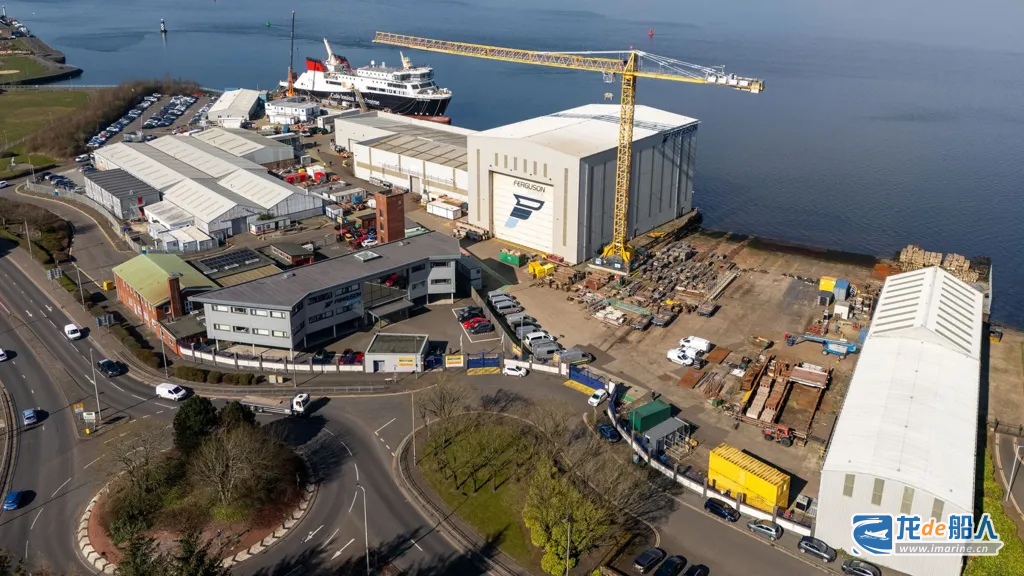
State-owned shipyards are facing a survival crisis, with many calling for “direct order placement”
British media reports that the General and Municipal Workers’ Union (GMB Scotland) recently stated that if the government fails to deliver on its investment commitments or new orders to Scottish shipbuilder Ferguson Marine, it would be tantamount to “deliberate sabotage”.
The union has consistently called on the Scottish Government to ensure that CalMac, the ferry operator for Scotland’s islands, awards a new shipbuilding contract directly to Ferguson Shipyards to help restore its reputation—the shipyard had previously faced severe delays and massive cost overruns while constructing two dual-fuel ferries.
Regarding the union’s proposal for “direct order placement”, Scotland’s Deputy First Minister Kate Forbes stated that Ferguson Shipyards holds “national importance”. The government has previously taken action to preserve jobs, but any contract award must comply with procurement rules and relevant state aid regulations.
Meanwhile, during a recent Scottish Parliament session, Kate Forbes made it clear that the allocation of modernization funds depended on the company’s ability to submit a revised business plan that included new business activities. The parliamentary debate centered on a report by the Public Audit Committee (hereinafter referred to as the “Report”), which criticized past governance failures at the shipyard while also calling for increased support to enhance its competitiveness.
The report warns that unless immediate action is taken to address years of underinvestment and provide the Ferguson shipyard with a “realistic opportunity” to secure new orders, the shipyard’s viability will be at risk.
Louise Gilmour, General Secretary of the Trades Union Congress, views this report as an urgent warning: “The Public Audit Committee has issued the clearest and strongest warning yet about the future of Ferguson’s shipyard. The report demands swift and effective action from the Scottish Government, yet over the past six months we have heard only excuses and seen no substantive measures. Scotland possesses a state-owned shipyard with a proven track record of building generations of small ferries, alongside a state-owned ferry company that urgently requires these vessels. Taking effective action is not complicated.”
In line with the union’s proposal for “direct order placement”, a cross-party coalition comprising community leaders, trade unions, and local politicians urged Scottish First Minister John Swinney in September to directly award Ferguson Shipyard the contract to build the replacement vessel for CalMac’s MV Lord of the Isles ferry.
The replacement vessel project has been ready for tender since summer 2025, yet three months on, no decision timeline has been announced. Kate Forbes reiterated that any contract award must be lawful, with Transport Scotland still evaluating the commercial viability report.
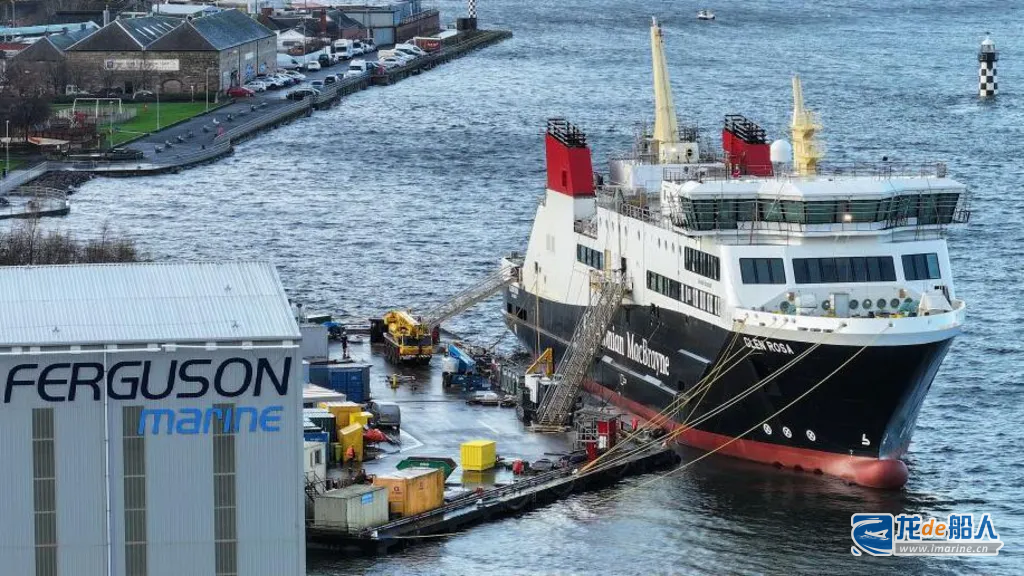
The government pledged to invest £14.2 million, but only 4% of the funds have actually been disbursed.
Reports indicate that nearly 18 months ago, Kate Forbes announced plans to invest £14.2 million over the next two years in Ferguson Shipyards. This funding will be used to install modern equipment such as new cutting machines and semi-automated panel production lines to enhance shipbuilding efficiency.
However, as of October 2025, only £570,000 of this funding had been disbursed, representing approximately 4% of the pledged investment amount.
Scottish Labour MP Daniel Johnson accused the government of creating a “catch-22” situation for Ferguson Shipyards: funding would not be provided unless orders were secured, yet the shipyard could not attract orders without investment.
In response, Kate Forbes stated that the funding commitment to Ferguson shipyard remains valid, but requires the shipyard’s board and new CEO to submit a revised business plan reflecting the new operations. She emphasized: “The funding is available—the key lies in how to access it. The availability of the funds itself is not in question.”
The shipyard’s reputation has been tarnished after building Britain’s first dual-fuel vessels.
As the last remaining shipyard on the lower reaches of the River Clyde in Port Glasgow, Scotland, the Ferguson shipyard is located in an area suffering from severe deprivation of social resources, having lost approximately 1,200 jobs in recent years.
Not only that, but this sole surviving shipyard has also faced significant controversy for building Britain’s first dual-fuel ferries, which has severely damaged its reputation and made it even harder to secure new ship orders.
It is understood that the two LNG dual-fuel ferries that crippled Ferguson shipyard were ordered by CalMac, with the shipbuilding contract signed in 2015. According to the contract, the shipyard was supposed to deliver the two new vessels in 2018. However, due to the high technical requirements of the new vessels, the unfamiliarity of the UK shipyard with the gas propulsion system, and contractual disputes, the delivery of the first vessel, “MV Glen Sannox,” was delayed by seven years to November 2024. The second vessel, “MV Glen Rosa”, is currently scheduled for delivery in June 2026.
Notably, one year prior to securing the order for two LNG dual-fuel ferries (in 2014), Ferguson Shipyard had just been rescued from receivership by economic advisor Jim McColl. After taking on this “hot potato”, the shipyard was dragged back to the brink of bankruptcy and was nationalized by the Scottish government in 2019 to preserve jobs.
Currently, Ferguson Shipyard is still pressing ahead with the construction of the MV Glen Rosa and urgently requires new orders to sustain its operations, as the yard will have no further newbuild contracts after 2026.
Public records indicate that Ferguson Shipyard was established in 1903 and has a 120-year history of development. It has built and delivered over 380 vessels. Including apprentices, the shipyard currently employs only 300 workers.