


On November 20, the onshore construction of the CO₂ Capture, Utilization and Storage (CCUS) project at the Dongfang 1-1 gas field—China’s first offshore carbon-injection-enhanced-gas-recovery demonstration project—was fully completed and has now moved into the offshore installation phase. The project is being executed under an EPC contract by China Offshore Oil Engineering Co., Ltd. (COOEC).
COOEC stated that, once operational, the project will be capable of sequestering over 1 million tonnes of carbon dioxide annually in subsea geological formations—a development of significant importance for driving large-scale, deep-level carbon reduction within China’s offshore energy sector.
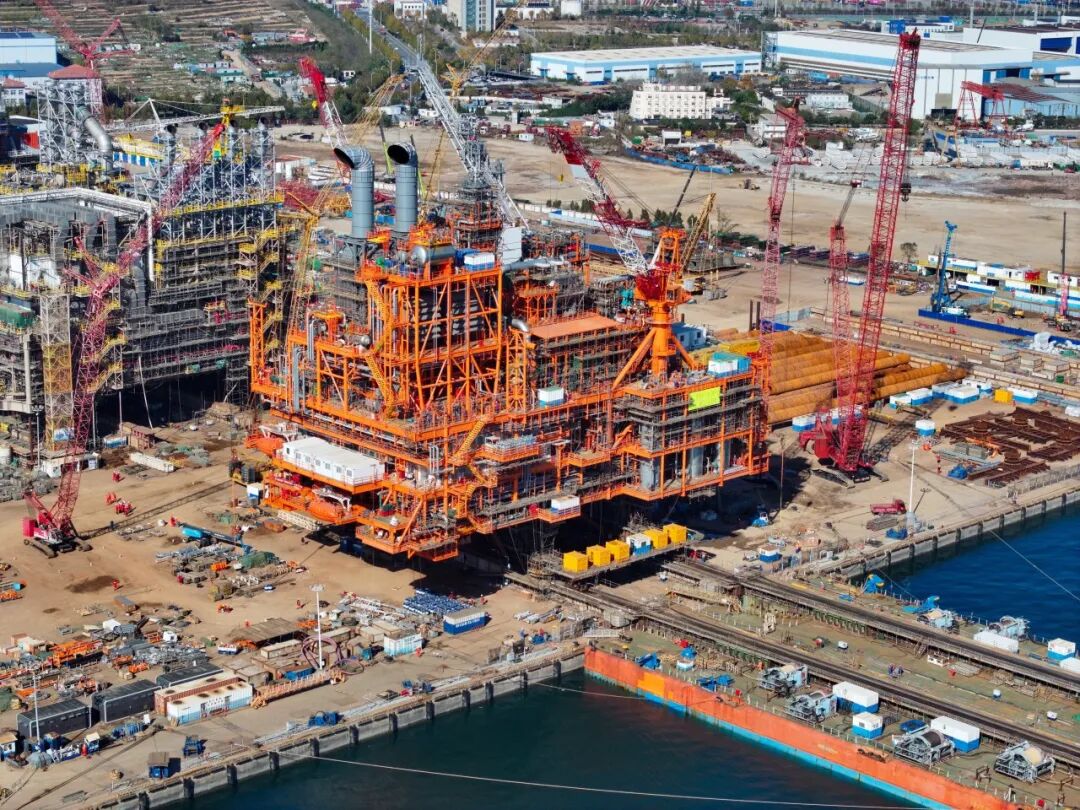
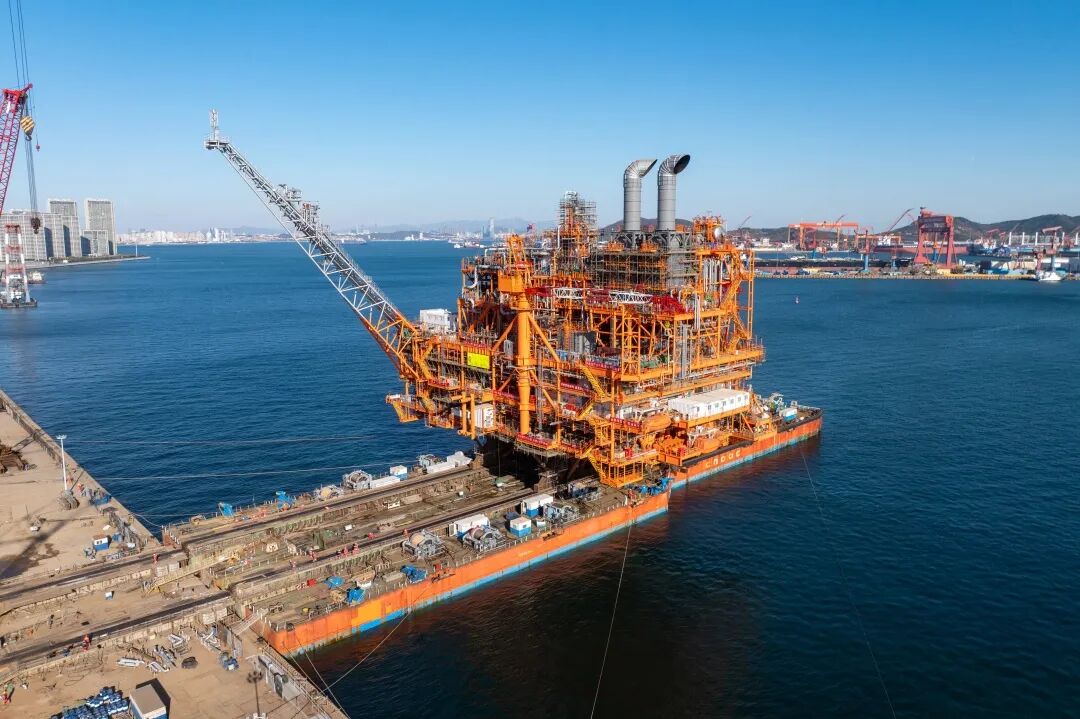
As the core facility of the project, the platform weighs nearly 17,000 tons, stands taller than a 28-story building, and features a total deck area exceeding 10,000 square meters. It houses over 240 units of critical equipment—including cryogenic carbon-capture systems, waste-heat recovery units, and Organic Rankine Cycle (ORC) power generators—along with more than 27,000 meters of piping and 350,000 meters of electrical cabling. In terms of overall scale, the complexity of equipment integration, and the proportion of non-ferrous metal piping, this platform far surpasses conventional offshore platforms.
The platform is equipped with more than 240 sets of key equipment, including a low-temperature decarbonization system, a waste heat recovery unit, and an organic Rankine cycle generator. It features over 27,000 meters of piping and 350,000 meters of cabling. In terms of project scale, equipment integration, and the proportion of non-ferrous metal piping, it far exceeds that of conventional offshore platforms.
The Dongfang 1-1 gas field is China’s first self-operated offshore gas field, as well as the first carbon-rich offshore gas field to be developed and brought into production in the country. Since its commissioning in 2003, the field has produced a cumulative total of over 50 billion cubic meters of natural gas, making a significant contribution to energy security and economic development on Hainan Island. As its primary gas-bearing zones have now reached the middle-to-late stages of development, carbon injection technology—aimed at enhancing gas recovery—has been introduced.
This project has successfully established an end-to-end, closed-loop technical system for the offshore capture, purification, and sequestration of carbon dioxide, as well as its utilization for enhanced gas recovery. Furthermore, it has pioneered a global first: a natural gas decarbonization technology that combines cryogenic distillation with membrane separation. It pioneered a global first in natural gas decarbonization by combining cryogenic distillation with membrane separation. Through the comprehensive localization of key equipment, the project has achieved a significant reduction in energy consumption compared to traditional processes, with a capacity to purify 1.75 million cubic meters of carbon dioxide per day.
Following its offshore installation, the central platform for carbon injection and gas enhancement at the Dongfang 1-1 gas field will be integrated into the Dongfang 1-1 gas field cluster in the Yinggehai Sea off Hainan. This platform will be linked to 12 other platforms in the region, accelerating the realization of large-scale carbon sequestration potential in offshore oil and gas wells. By facilitating the transformation of carbon dioxide from an “emission” into a “resource,” it will help revitalize mature gas fields—which hold reserves on the order of 100 billion cubic meters—and continue to provide stable, reliable energy support for the economic development of the Hainan Free Trade Port.