


Everllence has signed a contract with the Astilleros Zamakona shipyard in Bilbao, Spain to supply 4 × 12V175D-MEV variable-speed Generator Sets (each delivering 2,040kW @ 1800 rpm) for a 5,000-cubic-metre live-fish carrier/well-boat for Norwegian owner, Brønnbåt Nord, the well-boat company based in Harstad, northern Norway. The 86.8-metre battery-hybrid vessel is designed by NSK Ship Design and scheduled for delivery in 2029.
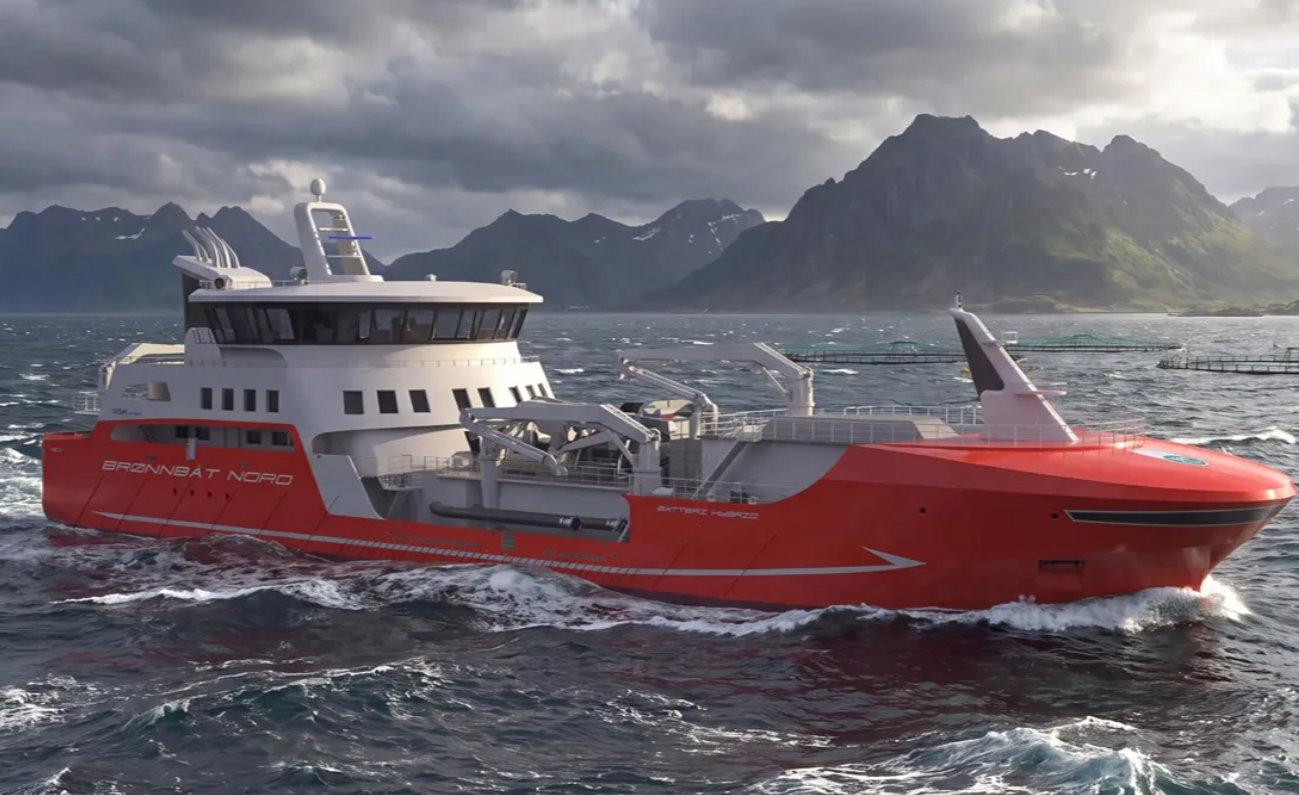
The new vessel is a further development of Brønnbåt Nord’s ‘Caspian’, a 2,800 m3 well-boat that was delivered in 2024 and that also features an Everllence engine set-up with one 8L27/38 propulsion engine and one 12V175D GenSet.
Everllence developed the 175D engine range to supplement and complete its product portfolio in the maritime sector. In three variants of 12-, 16- and 20-cylinders, the engine is available with an output ranging from 1,440 to 4,400 kW and is optimised for propelling offshore support ships, tugs and sundry working vessels. Other, demanding applications like superyachts and navy also rely on 175D power delivery.
The 175D is an extremely eco-friendly engine and designed to minimise operational costs having been designed from the outset for low fuel-consumption. This is coupled with compliance to the latest exhaust-gas-emission standards while also considering future-fuel requirements where it is already cleared for operation on biofuels such as FAME and HVO.
It is also delivered as methanol-ready for later conversion to methanol operation if required. Additionally, Everllence recently announced the 175DF-M, a high-speed, dual-fuel variant designed to operate on both diesel and methanol from the outset with first customer deliveries planned for 2027.
Everllence’s scope of supply for the newbuild well-boat also includes permanent-magnet (PM) alternators. With a smaller footprint than standard asynchronous alternators, these combine a compact, lightweight design with high efficiency across a broad operating-speed range that make them particularly well-suited to variable-speed GenSets. Furthermore, they maximise overall system efficiency, thereby reducing fuel consumption.