

On October 21, Luxembourg-based shipowner Seven Yield announced via its official website that it has entered into long-term time charter agreements with a major Chinese automotive manufacturer. The manufacturer will charter two of Seven Yield’s 7,500-CEU LNG-powered pure car and truck carriers (PCTCs)—the “Siem Confucius” and the “Siem Aristotle”—for a period of five years each.
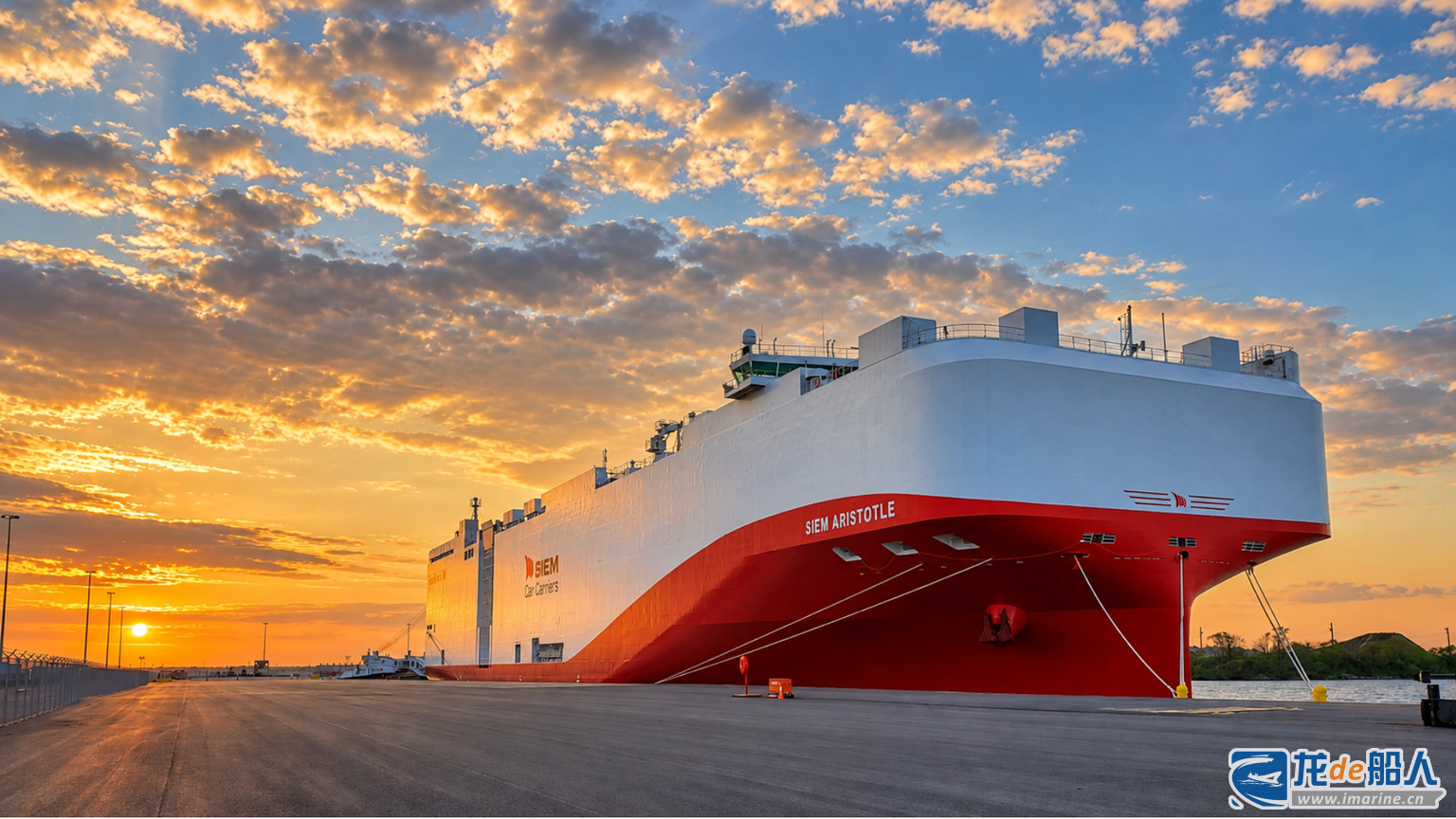
Seven Yield has not disclosed the identity of the Chinese automaker, nor has it revealed the charter rates or the total value of the contracts. The company noted only that these new agreements extend the operational lifespan of the two vessels into the next decade, with the new charters expected to commence in 2027 and 2028, respectively.
According to publicly available information, the “Siem Confucius” and “Siem Aristotle”—commissioned through Siem Car Carriers—are among the world’s first deep-sea vehicle carriers equipped with LNG dual-fuel propulsion systems. Designed by the Shanghai Merchant Ship Design and Research Institute (SDARI) and built by Xiamen Shipbuilding Industry (a subsidiary of Fujian Shipbuilding Industry Group), the vessels were delivered in 2022. Notably, the “Siem Confucius” received the “2021 Best Environmental Award for Deep-Sea Ro-Ro Vessels” from Shippax, a global forum specializing in the Ro-Ro shipping sector.
This 7,500 CEU LNG dual-fuel PCTC has an overall length of 199.9 meters, a beam of 38 meters, and a molded depth of 14.8 meters. It was originally built for the German automaker Volkswagen to support its global vehicle distribution operations, serving as a replacement for conventional-fuel vessels previously used in the company’s transatlantic logistics network.
According to reports, Seven Yield operates a diversified fleet that currently consists of 18 vessels, including 8 PCTCs, 6 Ro-Ro vessels, 2 bulk carriers, and 2 vessels of other types. Based on the company’s latest portfolio data released in September, its fleet has a contracted revenue pipeline of approximately $700 million.