


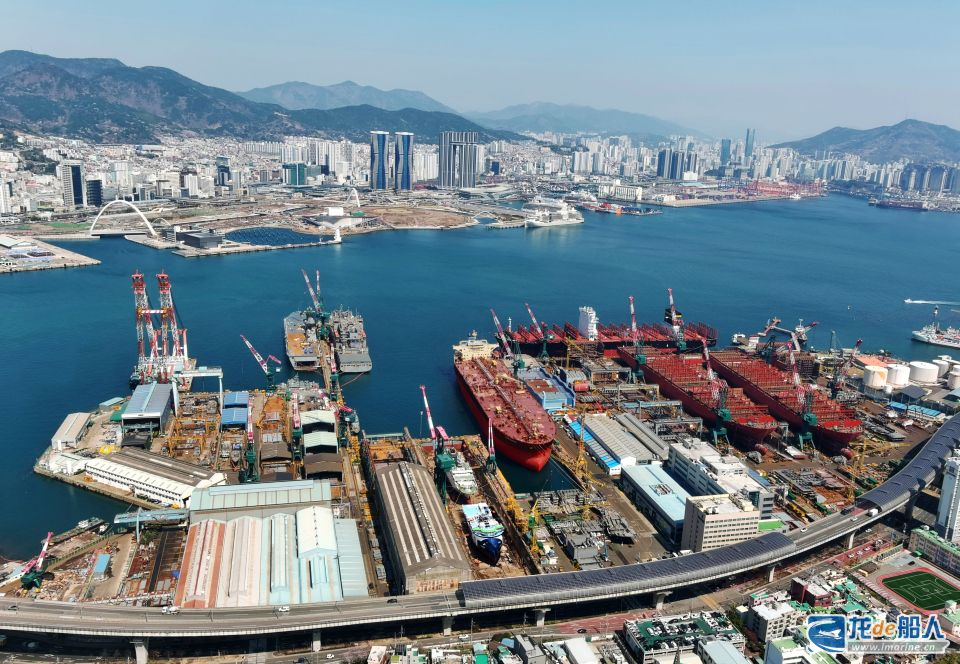
On October 15, South Korean mid-sized shipbuilder HJ Shipbuilding & Construction (HJSC) announced that the U.S. Navy’s 40,000-ton-class logistics support ship, USNS “Amelia Earhart”, has departed following the completion of maintenance work at the company’s Yeongdo Shipyard in Busan.
HJSC secured the maintenance, repair, and overhaul (MRO) contract for the USNS “Amelia Earhart” in December 2025, becoming the first mid-sized South Korean shipbuilder to undertake an MRO project for a U.S. naval vessel. The ship arrived at the Yeongdo Shipyard in January 2026, where it underwent inspections and maintenance of its hull, primary systems, onboard equipment, and facilities, as well as the replacement of various components.
The vessel was originally scheduled for completion and delivery in April 2026. However, after HJ Heavy Industries discovered additional maintenance requirements and defects not covered by the original contract, the repair plan was adjusted with the approval of the U.S. Navy. Due to this expansion in the scope of work, the completion date has been pushed back to October of the same year.
HJ Shipbuilding & Construction stated that the successful execution of the MRO contract for the USNS Amelia Earhart will help the shipbuilder secure further MRO projects for U.S. naval vessels.
According to an analysis of the South Korean shipbuilding industry, this project marks an important milestone for South Korea’s mid-sized shipbuilders. The industry, which has traditionally focused on commercial shipbuilding and repair, is now entering the U.S. naval vessel maintenance market, which is expected to provide opportunities for shipbuilders to diversify their revenue streams and make better use of existing shipyard infrastructure and engineering expertise.
The USNS Amelia Earhart is a logistics support ship that supplies ammunition, food, cargo, and fuel to U.S. Navy aircraft carriers and combat vessels. Measuring 210 meters in length and 32 meters in width, it has a maximum speed of 20 knots and can carry up to 6,000 tons of military supplies and 2,400 tons of fuel. It has been in service since 2008.