


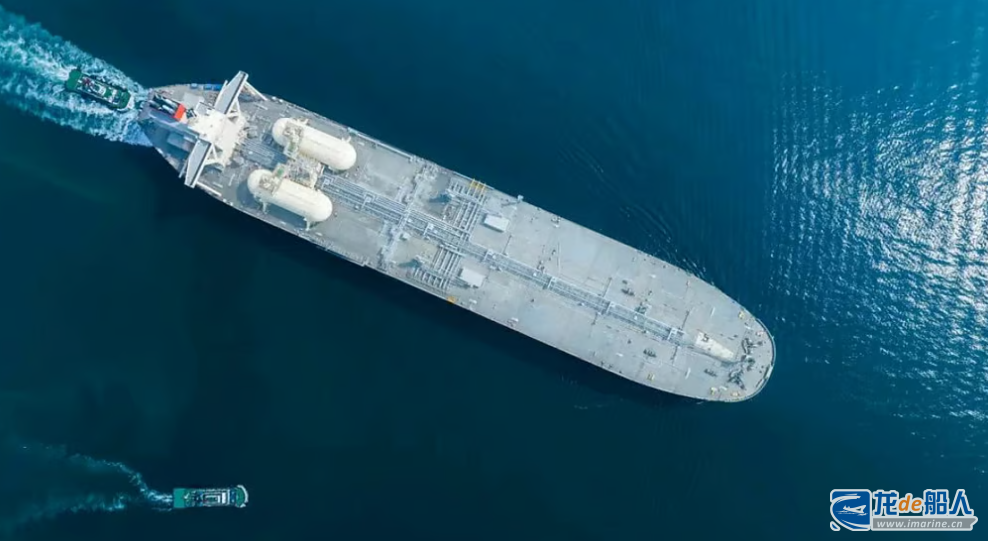
As the conflict between the U.S. and Iran reshapes trade routes and drives demand for long-haul crude oil transport, the number of Very Large Crude Carriers (VLCCs) ordered by global shipowners for 2026 delivery has already more than doubled the total orders placed for 2025; the investment value of this ordering spree exceeds $20 billion, marking the highest level in at least 25 years.
Data from the shipping analytics platform Signal Group shows that, so far in 2026, global shipowners have placed orders for a total of 217 VLCCs—124 more than the 93 orders placed throughout all of 2025, representing an increase of approximately 133.33 percent. With several months remaining in 2026, this suggests that the year-over-year growth in orders is likely to rise further.
In terms of investment scale, based on price data from Clarkson Research, the average cost of a VLCC is currently around $130 million, meaning the total investment for these 217 new vessels far exceeds $20 billion.
This surge in orders signals growing market recognition of the trend toward long-haul crude oil transport from the Atlantic Basin—a shift driven by buyers diversifying their sourcing to reduce reliance on Middle Eastern oil. It also reflects a widespread expectation among global tanker owners that long-haul crude oil trade will remain resilient, even as the world gradually moves away from fossil fuels.
Rebecca Galanopoulos, an analyst at the shipping analytics firm Veson Nautical, noted: “We believe that shipowners betting on increased long-haul transport volumes from the Atlantic to Asia are the primary driver behind this resurgence in VLCC orders.”
Strait of Hormuz Blockade Prompts Shipowners to Build Ships “Urgently”
Before the outbreak of the U.S.-Iran conflict, approximately one-fifth of the world’s crude oil and liquefied natural gas (LNG) supplies were transported through the Strait of Hormuz. However, since the Strait of Hormuz has effectively been blocked, crude oil produced in the Persian Gulf must now be transported via the Strait of Hormuz to the Gulf of Oman, where it is transshipped onto large oil tankers before being transported to its final destination.
Transporting crude oil produced in the Persian Gulf out of the region and transshipping it to other areas will inevitably require more shipping capacity and increase laytime, thereby driving market demand for higher-capacity VLCCs and Suezmax tankers and, in turn, spurring shipowners’ interest in newbuilds.
In addition, Middle Eastern oil-producing countries have found that most shipowners are unwilling to risk transporting oil through the Strait of Hormuz due to the threat of Iranian attacks, so they have decided to place their own shipbuilding orders and build their own fleets. This is also one of the reasons behind the surge in VLCC orders.
Aging VLCC Fleet Drives Demand for Newbuilds
Beyond the global repercussions stemming from the situation in the Strait of Hormuz and the resulting impact on crude oil shipping volumes, fleet renewal is a key driver behind the current surge in VLCC orders.
Data from Veson Nautical indicates that, following years of industry crisis and overcapacity, approximately 20% of the global VLCC fleet is now over 20 years old, making fleet renewal increasingly urgent.
Separately, securities firms estimate that—beyond the existing orderbook—there is demand for the replacement of over 130 VLCCs, with an average annual replacement requirement of 40 vessels projected over the next decade.
Allied Shipbroking noted: “Recent VLCC construction contracts scheduled for delivery in 2029 and 2030 demonstrate shipowners’ confidence that demand will persist into the medium term.”
Additionally, as the market prices for secondhand tankers far exceed the cost of newbuilds, some shipowners are opting for a “more favorable” route to acquire additional capacity: ordering new vessels directly from shipyards.
A case in point is the “Pinios”, a 306,000 DWT VLCC delivered by Hengli Heavy Industries earlier this year; Greek owner Dynacom Tankers sold the vessel to Dubai-based trader Onex DMCC for a staggering $200 million. Given the ship’s valuation of approximately $179.4 million, the final sale price reflects a premium of over $20 million paid to secure immediate capacity. This vessel is among the VLCCs deployed in the Gulf of Oman.
Taking the “Pinios,” a 306,000 DWT VLCC delivered by Hengli Heavy Industries earlier this year, as an example, Greece’s Dynacom Tankers sold it to Dubai-based trading firm Onex DMCC for a staggering $200 million. The vessel was valued at approximately $179.4 million; compared to the final sale price, the buyer paid a premium of over $20 million to acquire existing shipping capacity. The vessel is one of the VLCCs deployed in the Gulf of Oman.