


In 2026, the shipping industry saw a revival of the shipbuilding boom seen in 2007, with the volume of orders signed climbing to an all-time high; in the tanker market in particular, new orders led all ship type sectors.
According to the latest report from Clarksons, new shipbuilding orders in 2026 are on track to set a record. Between January and August 2026, orders for 2,128 new vessels were confirmed globally, totaling 59.7 million compensated gross tons (CGT)—a growth rate comparable to the 2007 peak and double the average of the past decade.
Clarksons analysts noted: “Strong demand for new vessels stems from the long-term positive outlook across various shipping sectors, underpinned by the need for fleet renewal; consequently, there is robust appetite for new orders across major shipping segments.”
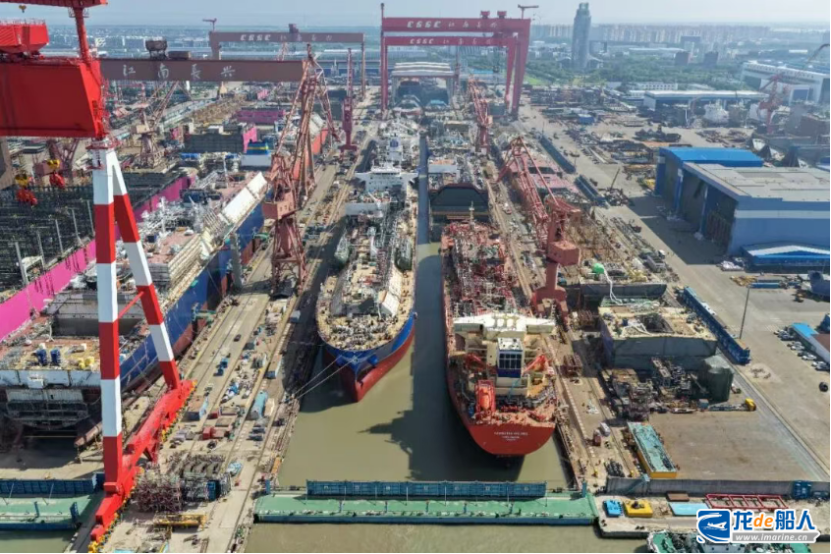
In terms of order value, the scale of investment through August 2026 has also reached exceptionally high levels. Clarksons estimates that investment in new vessels so far in 2026 stands at approximately $177.2 billion—a 31% year-on-year increase—putting it on track to match the record set in 2007. The shipbroker noted, “Robust order volumes and rising newbuild prices are jointly driving up the scale of shipbuilding investment.”
Across the various shipping sectors, the tanker segment is leading the current wave of new orders; data from Clarksons shows that 646 vessels totaling 86.8 million deadweight tons (DWT) were ordered between January and August 2026, making 2026 the busiest year for tanker orders in nearly two decades.
Specifically, crude oil tankers dominated the market with 272 vessels totaling 67.7 million DWT—a record high since 1973—while demand for product tankers remained robust, accounting for 236 vessels totaling 16.4 million DWT; orders for chemical tankers totaled 138 vessels and 2.6 million DWT.
Meanwhile, shipbuilding activity across the broader shipping market remains at a high level.
Clarksons data indicates that, as of August 2026, global shipowners had ordered 403 bulk carriers totaling 40.5 million DWT—44% above the 10-year average. The pace of container ship ordering matched the record levels seen in 2024–2025, with orders totaling 537 vessels and 3.4 million TEU, concentrated primarily on vessel sizes below 8,000 TEU.
During the same period, in the gas carrier sector, global shipowners ordered a total of 104 liquefied petroleum gas (LPG) carriers with a combined cargo capacity of 7.7 million cubic meters—surpassing the 2024 historical peak by 14%—and 69 liquefied natural gas (LNG) carriers with a total capacity of 11 million cubic meters, marking the strongest performance since the record-breaking levels seen in 2022.
In terms of shipbuilding nations, Chinese shipyards continued to lead the global newbuild market from January to August 2026, securing approximately 75% of orders by capacity. By vessel segment, their share of container ship orders rose to 91%, while their shares for bulk carriers and crude oil tankers stood at 90% and 80%, respectively. South Korean shipyards followed with an overall market share of 15%, though they led the LPG and LNG carrier sectors, capturing 65% and 59% of the capacity share, respectively.