


On August 12, Yang Ming Marine Transport Corporation (“Yang Ming”) held its 414th Board Meeting and approved the Company’s financial results for the first half of 2026.
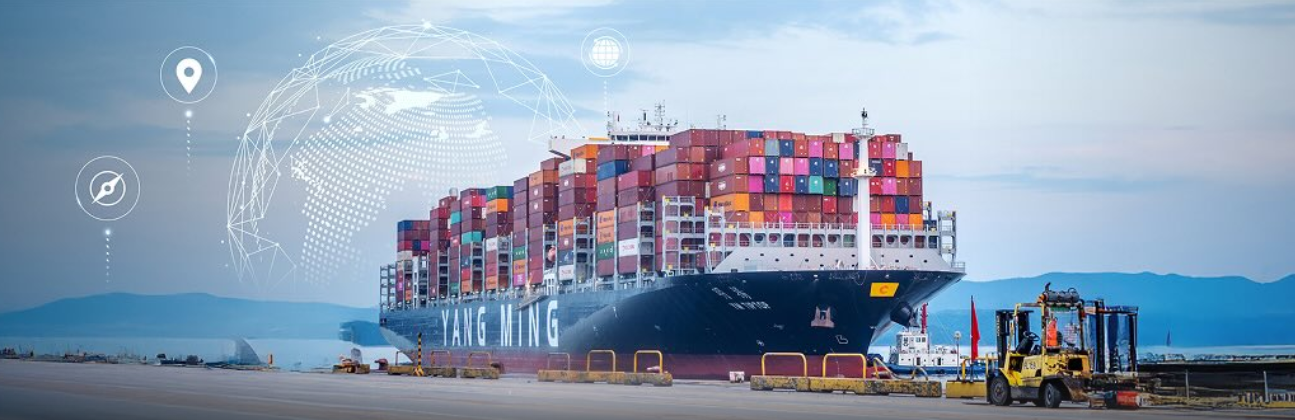
During the second quarter of 2026, changes in tariff policies and rising energy costs drove import booking demand on the Asia-Europe and Transpacific trades, bringing forward the traditional peak season and supporting higher rate levels. Consolidated revenue for the second quarter reached NT$45.92 billion (US$1.45 billion), with an after-tax net profit of NT$5.73 billion (US$0.18 billion) and earnings per share (EPS) of NT$1.64, outperforming the first quarter. For the first half of 2026, consolidated revenue totaled NT$84.58 billion (US$2.68 billion), while an after-tax net profit reached NT$7.17 billion (US$0.23 billion), with EPS of NT$2.05.
According to the International Monetary Fund’s (IMF) July 2026 World Economic Outlook, global GDP growth is projected at 3.0% for 2026, slightly down from the 3.1% forecast in April, while the 2027 forecast was revised up from 3.2% to 3.4%.
The conflict in the Middle East, trade fragmentation, and a correction in expectations regarding AI-related profitability will weigh on the global economic outlook. Meanwhile, July 2026 reports by Alphaliner and Drewry forecast global container fleet capacity growth of 4.2% and 4.4%, respectively, while container demand is projected to grow by 2.5% and 2.1%, reflecting the impact of higher fuel costs and freight rates. Looking ahead to the third quarter, the Asia-Europe and Transpacific trades have entered the traditional peak season, with cargo demand expected to support market conditions. Congestion at major ports such as Shanghai and European ports worsened during the second quarter due to adverse weather, short-term shipment surges, and terminal operational bottlenecks. Conditions in the third quarter remain to be seen. Nevertheless, geopolitical developments and the impact of tariff policies will continue to shape cargo flows and capacity deployment. Yang Ming will continue to closely monitor cargo demand, adjust fleet deployment and sailing plans as needed, and strengthen port contingency management and cost control to enhance schedule reliability and operational competitiveness.