


Through its joint-venture shipping subsidiary, Hanwha Shipping, Hanwha Ocean has officially launched its business as a shipowner of Very Large Crude Carriers (VLCCs). This move is expected to help Hanwha Ocean shift away from a profit model centered on shipbuilding and accelerate its strategy to diversify its value chain across the maritime sector.
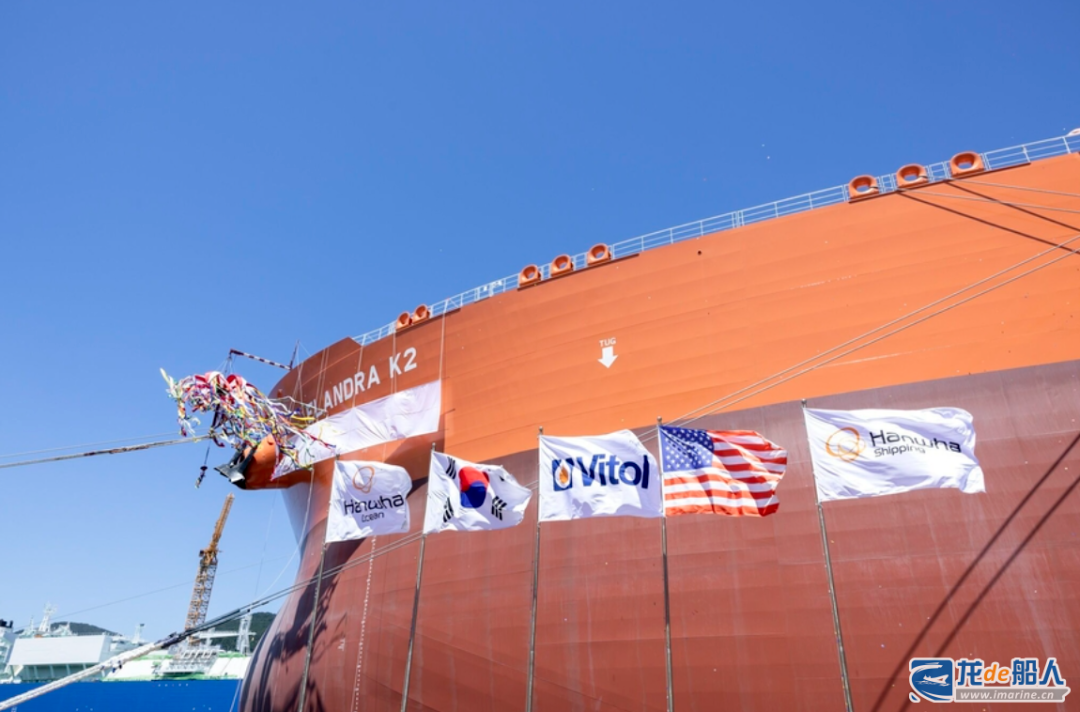
Hanwha Shipping announced on August 8 that it had officially taken delivery on July 31 of the 320,000 DWT VLCC “Elandra K2”, hull number H5519, built for it by Hanwha Ocean. Hanwha Ocean held a joint naming ceremony for H5519, H5520, and H5521 at its Geoje Shipyard the previous day (July 30); the remaining two vessels will also join the Hanwha Shipping fleet in sequence as construction progresses.
This VLCC has a total length of 331 meters and a beam of 60 meters, and is equipped with an exhaust gas desulfurization system. Upon delivery, it will be chartered on a long-term basis to the Vitol Group, the world’s largest crude oil trading company.
The “Elandra K2” is reportedly the first self-owned vessel to join Hanwha Shipping’s fleet since the company’s inception. Established in April 2024, Hanwha Shipping is 50% owned by Hanwha Ocean USA International LLC, a U.S.-based subsidiary of Hanwha Ocean.
Hanwha Ocean stated that the shipping platform was established to validate eco-friendly and digital ship technologies in actual operation and to build partnerships with client companies.
Hanwha Shipping’s acceptance of the “Elandra K2” marks the first realization of Hanwha Ocean’s business concept of directly ordering and owning vessels through its own shipping subsidiary, thereby establishing an actual fleet.
As early as its regular shareholders’ meeting in March 2024, Hanwha Ocean amended its articles of incorporation to include vessel leasing and shipping operations within its business scope, thereby laying the groundwork for expansion into these sectors. This move enabled Hanwha Ocean to break away from the traditional business model—in which vessels were simply built and delivered to external owners—and establish a business structure that encompasses vessel ownership and revenue generation from chartering.