


On July 29, CSSC Guangzhou Shipyard International, jointly with China Shipbuilding Trading Co., Ltd. (CSTC), signed a contract with Nanjing Tanker Corporation (NJTC) for the construction of four 50,000 DWT chemical/product oil tankers (MR).
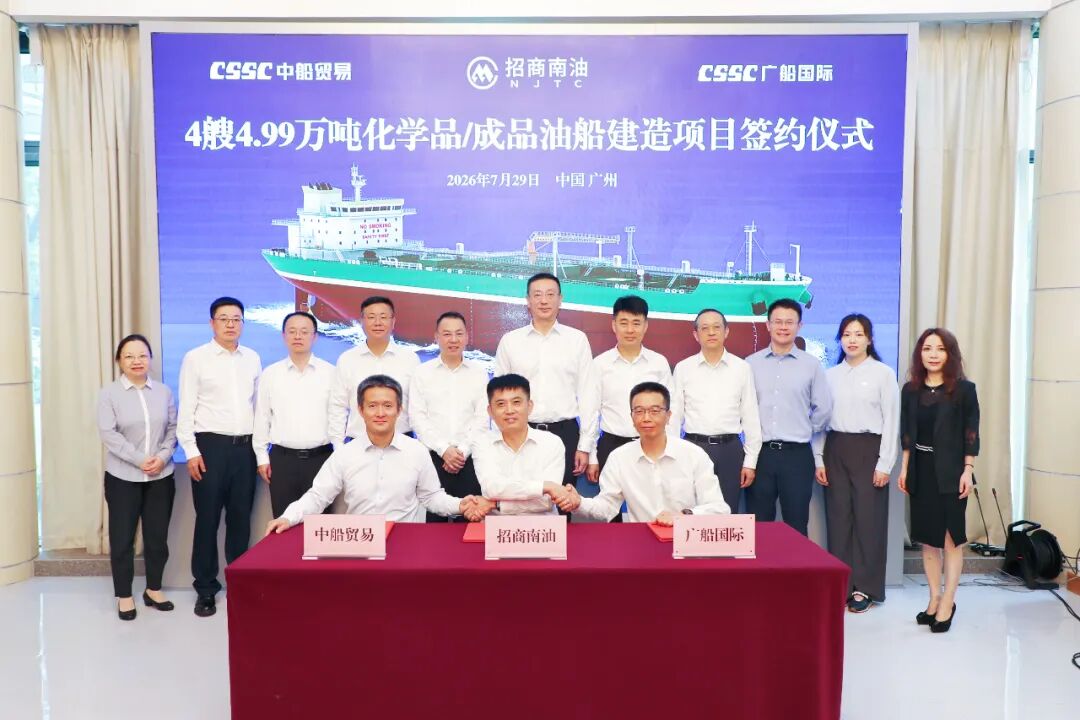
On July 17, NJTC announced plans to invest up to US$182.8 million—through its wholly-owned subsidiary, Nanjing Tanker Corporation (S) Pte. Ltd., or a designated party—to build four 50,000-dwt, energy-efficient MR oil/chemical tankers (flying flags of convenience) at Guangzhou Shipyard International; the new vessels are scheduled for staggered delivery between 2028 and 2029.
Guangzhou Shipyard International (GSI) stated that the newly contracted vessel is a premium, independently developed product tanker. It is an upgraded and optimized version based on the company’s mature 16th-generation MR (Medium Range) design, tailored to meet actual operational requirements, and serves as a benchmark model for the company.
The vessel has an overall length of 183 meters, a beam of 32.2 meters, and a structural draft of 13.2 meters. It features a deadweight of approximately 49,900 tonnes and a service speed of 14.5 knots. Its emissions comply with IMO Tier III standards, and its EEDI (Energy Efficiency Design Index) meets Phase III requirements.
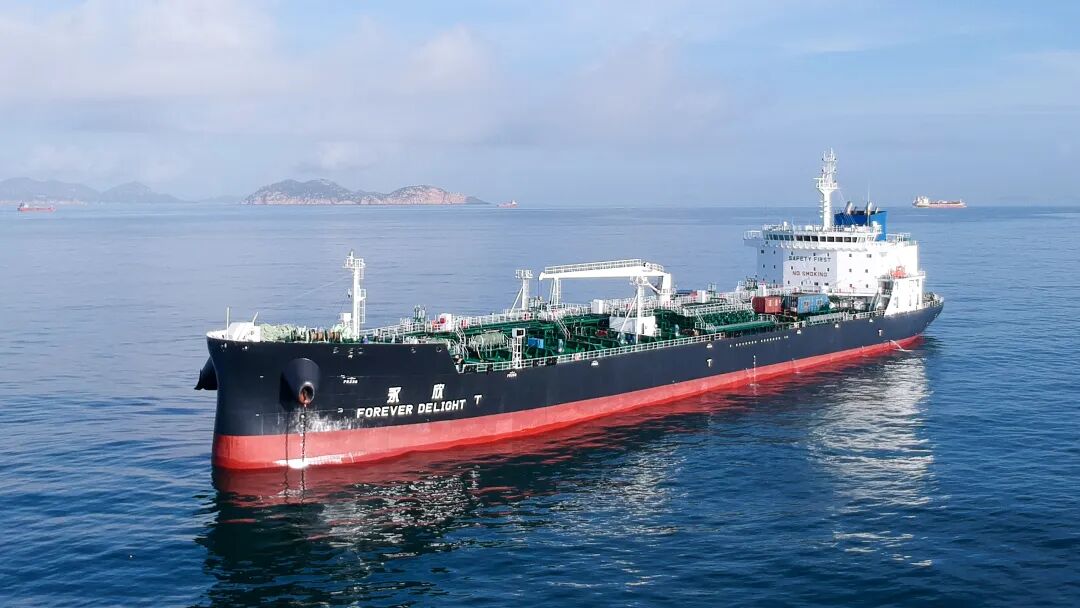
This vessel design not only boasts excellent performance specifications but also focuses on energy-saving optimization across the entire operational lifecycle. It offers advantages such as strong port compatibility, low lightship weight, reduced energy consumption, and superior cargo oil system compatibility, achieving world-leading standards in its class regarding energy efficiency, environmental performance, and port adaptability.
From the outset, the design of this vessel type fully addresses both current and future needs for the green transition; it is compatible with low-carbon alternative fuels—such as biofuels—to meet immediate operational emission reduction requirements, while also incorporating provisions for a future upgrade to a methanol dual-fuel propulsion system, thereby establishing a smooth transition path for shipowners from current compliant operations to future zero-carbon shipping.