


South Korea’s Gunsan Shipyard had been unable to build or secure orders for complete vessels for nearly four years. However, shortly after signing an acquisition agreement, the shipyard finalized a letter of intent and is now poised for a true “relaunch.”
Recently, JE Ocean Heavy Industries announced that it had signed an LOI with an Oceanian shipowner for the construction of four 114,000 DWT crude oil/product tankers.
Although an LOI is not legally binding, shipowners and shipbuilders typically reach a consensus on details such as vessel type, technical specifications, and price range before signing such an agreement; barring major unforeseen developments, these usually convert into formal shipbuilding contracts. Given this context, South Korean media outlets believe JE Ocean Heavy Industries is likely to secure its first batch of new orders even before finalizing the acquisition of HD Hyundai Heavy Industries’ Gunsan Shipyard.
Reportedly, JE Marine Heavy Industries is a joint venture established by the South Korean private equity fund Ecoprime Marine Pacific and HJ Heavy Industries specifically to operate the Gunsan Shipyard. Ecoprime Marine Pacific is also the largest shareholder of HJ Heavy Industries.
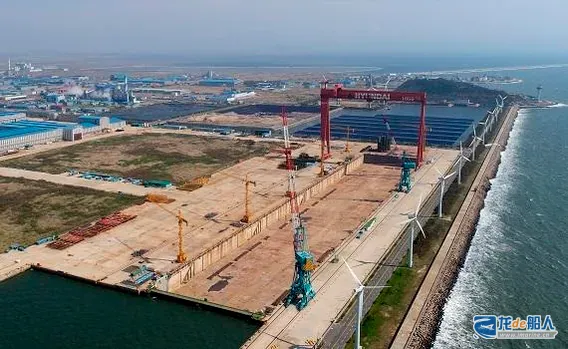
On June 26, JE Marine Heavy Industries signed a definitive agreement to acquire all relevant tangible assets of HD Hyundai Heavy Industries’ Gunsan Shipyard for 780 billion KRW, and the parties are currently proceeding with the subsequent acquisition steps. JE Marine Heavy Industries plans to finalize the acquisition by December 31, 2026; following facility overhauls and upgrades to shipbuilding equipment, it intends to commence shipbuilding operations in early 2027 and deliver the first newly built vessel in 2028.
Regarding the prospective orders, JE Marine Heavy Industries revealed that the new vessels will feature a next-generation tanker design independently developed by HJ Heavy Industries. Engineered for both environmental performance and operational efficiency, the vessels are equipped with high-efficiency propulsion systems that reduce fuel consumption by more than 10% compared to conventional ships of the same class. Capable of transporting both crude oil and a variety of refined petroleum products, these vessels offer the flexibility to be deployed according to market conditions.
According to South Korean media reports, the Oceanian shipowner that signed a letter of intent with HJ Shipbuilding & Construction had already inquired about reserving shipbuilding slots at the Gunsan shipyard—even back when HD Hyundai Heavy Industries and Ecoprime Marine Pacific had only just reached a preliminary agreement on the acquisition of the yard’s assets.
However, given that the Gunsan Shipyard has not built a complete new vessel in nine years, the South Korean shipbuilding industry believes the shipowner’s willingness to secure the yard’s capacity in advance is a testament to HJ Shipbuilding & Construction’s shipbuilding capabilities. This aligns with Ecoprime Marine Pacific’s original intent in acquiring the Gunsan facility: to resolve the long-standing production constraints—such as limited site area and dry dock size—faced by HJ Shipbuilding & Construction’s Yeongdo Shipyard through joint operations, thereby achieving order synergies and building a world-class shipbuilding group.
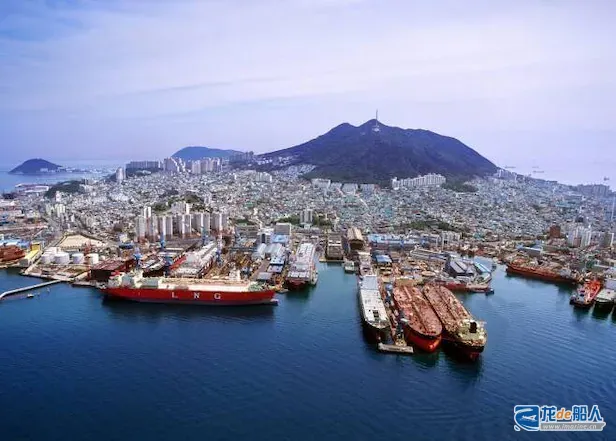
It is reported that HJ Heavy Industries’ Yeongdo Shipyard covers an area of only 260,000 square meters and features a 300-meter-long dry dock, rendering it incapable of constructing large vessels. The shipyard primarily builds medium-sized commercial vessels—such as container ships—and specialized ships, with an annual capacity of six to seven commercial vessels. In contrast, the Gunsan Shipyard is vast, spanning 1.8 million square meters and boasting a dry dock capable of handling million-ton-class vessels (700 meters in length), a 1,650-ton gantry crane, and 1.4 kilometers of quay frontage. A representative from HJ Heavy Industries stated, “The dry dock at the Gunsan Shipyard can simultaneously construct two Very Large Crude Carriers (VLCCs), each approximately 300 meters long with a deadweight tonnage exceeding 200,000 tons.”
Although the new owner is actively planning the future direction of the Gunsan Shipyard, the facility has not undertaken the construction of a complete vessel for nine years, resulting in a loss of skilled workers and the aging of shipbuilding equipment and facilities. Consequently, there is a view within the South Korean shipbuilding industry that the shipyard is unlikely to handle technically complex vessel types in the short term and is better suited for constructing vessels such as oil tankers and container ships.
Serving as a U.S. Navy MRO (Maintenance, Repair, and Overhaul) base may become another major line of business for the Gunsan Shipyard in the future. Given HJ Heavy Industries’ long-term goal of securing U.S. defense shipbuilding contracts, industry observers in South Korea anticipate that the Gunsan Shipyard will undertake a portion of such projects.
Representatives from HJ Heavy Industries stated: “Currently, the workforce at the Gunsan shipyard is sufficient only to maintain operations in the hull block workshop; building complete vessels would require additional personnel. However, the required staffing levels and utilization plans can only be determined once the acquisition process is fully completed, likely around the end of the year.”
Data indicates that the Gunsan Shipyard was once the newest shipyard under HD Hyundai Heavy Industries. Established during the market peak prior to the global financial crisis with a total investment of 1.2 trillion KRW, construction began in early 2008 and operations officially commenced in late 2009, making it one of the world’s largest single-site shipyards at the time.
At its peak, the Gunsan Shipyard employed over 6,000 workers and had an annual production capacity of approximately 20 vessels. However, due to the prolonged slump in the global shipbuilding market, orders for the yard’s core products—bulk carriers and container ships—shrank drastically; consequently, operations were suspended in 2017. Production resumed in October 2022, and a sale agreement was signed in June 2026.