


Driven by both its defense and commercial shipbuilding businesses, Hanwha Ocean, a leading South Korean shipbuilder, has emerged from the financial difficulties that plagued it for years, but it still faces approximately $1.7 billion in restructuring debt that remains unresolved.
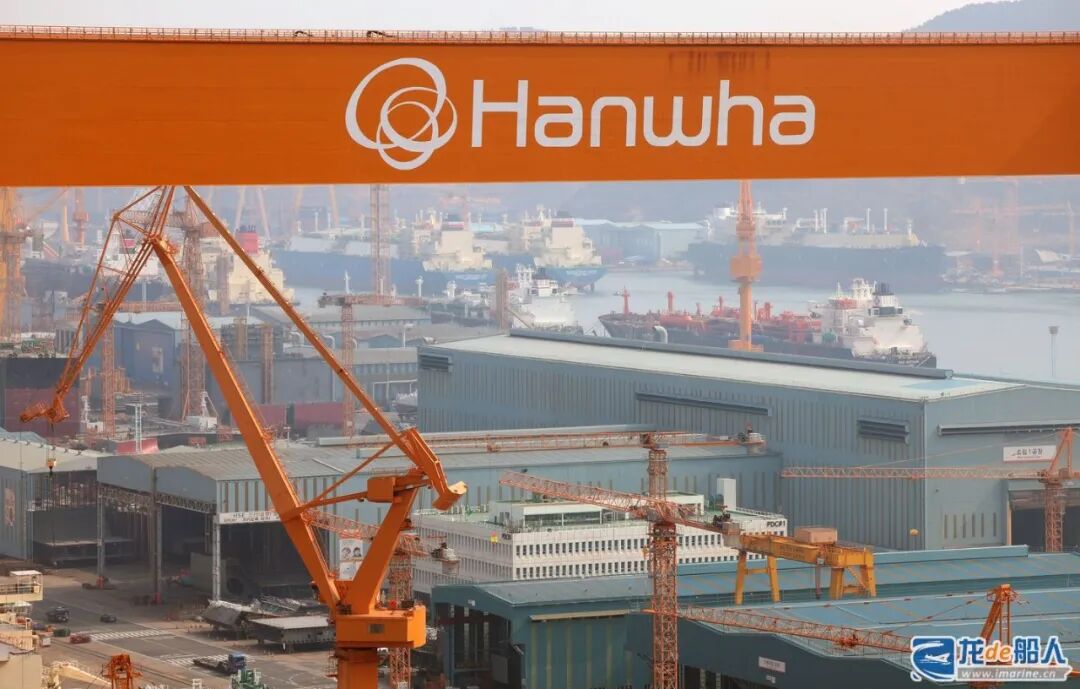
Hanwha Ocean, formerly known as Daewoo Shipbuilding & Marine Engineering (DSME), received trillions of won in financial support from the South Korean government during its years-long restructuring to keep the major shipbuilder afloat. In recent years, although Hanwha Ocean’s profitability has improved significantly, South Korean shipbuilding observers note that the issue of repaying the remaining public funds (i.e., restructuring debt) is drawing increasing attention.
Currently, Hanwha Ocean’s liquidity remains weak. As of the end of 2025, it held approximately 778.5 billion won (about $560 million) in cash and cash equivalents, an increase from the previous year (588.3 billion won), but still far below the scale of its outstanding restructuring debt.
According to sources in the South Korean shipbuilding industry, this debt restructuring took place more than a decade ago. Starting in 2015, the Korea Development Bank and the Export-Import Bank of Korea began providing large-scale financial support to what was then Daewoo Shipbuilding & Marine Engineering to help stabilize its financial situation. Based on financial reports, the total value of Hanwha Marine’s capital increases and convertible bonds that year exceeded 6 trillion won (approximately $4.3 billion at the exchange rate at the time).
At the time, Daewoo Shipbuilding & Marine Engineering faced an existential crisis due to multiple issues, including massive losses in its offshore engineering business, disputes over financial accounting, and persistent operating deficits. To resolve these challenges, the company’s creditors repeatedly implemented measures such as capital reductions, new share issuances, and the provision of ultra-long-term convertible bonds to maintain normal business operations.
While Daewoo Shipbuilding & Marine Engineering was struggling, Hanwha Group first attempted to acquire it as early as 2008, when the target was valued at approximately 6 trillion won, but the deal ultimately fell through. It wasn’t until 2023 that Hanwha Group succeeded in acquiring Daewoo Shipbuilding & Marine Engineering and renamed it Hanwha Ocean, by which time the purchase price had fallen to about 2 trillion won (approximately $1.4 billion at the exchange rate at the time).
Since joining Hanwha Group, Hanwha Ocean’s profitability and overall business performance have continued to improve, benefiting from a recovery in the commercial ship market and favorable prospects in the defense and specialty vessel markets. In 2025, Hanwha Ocean’s operating profit exceeded 1 trillion won (approximately $719 million); In the first quarter of 2026, it achieved an operating profit of 441.1 billion won (approximately $317 million), a year-over-year increase of 70.6%.
Despite the significant improvement in its business performance, Hanwha Ocean still carries a massive debt burden in the form of approximately 2.33 trillion won (approximately $1.68 billion) in convertible bonds still held by the Export-Import Bank of Korea.
These restructured bonds originated during the operational crisis at Daewoo Shipbuilding & Marine Engineering and were created by converting existing loans into ultra-long-term convertible debt. The conversion price at the time was set at 40,350 won per share (approximately $29 at the exchange rate at the time). If the debt-to-equity swap is fully completed, approximately 57.8 million new shares will be issued, equivalent to about 19% of the current outstanding shares.
For Hanwha Ocean, since this bond carries a relatively low interest rate and a 30-year maturity, immediate repayment is not required. However, industry insiders in South Korea suggest that Hanwha Ocean may ultimately need to consider a phased cash repayment plan. If the Export-Import Bank of Korea chooses to convert the bonds into shares, it could dilute the equity of existing shareholders, and a large-scale stock issuance could also impact the secondary market.
Some observers point out that using call options to repay part of the debt in cash would help reduce uncertainty and protect the interests of existing shareholders. Others note that while the bond has a low initial interest rate, its structure involves a gradually increasing interest rate, which could lead to a heavier burden over time.