

Seatrium Limited has released its business update for the first quarter ended 31 March 2026 (1Q2026), reporting steady project execution and a net order book of S$15.5 billion across 24 projects with deliveries through 2033. Two legacy projects—TSHD1 Frederick Paup and WTIV1 Maersk Viridis—were delivered, while ongoing projects advanced in line with expectations.
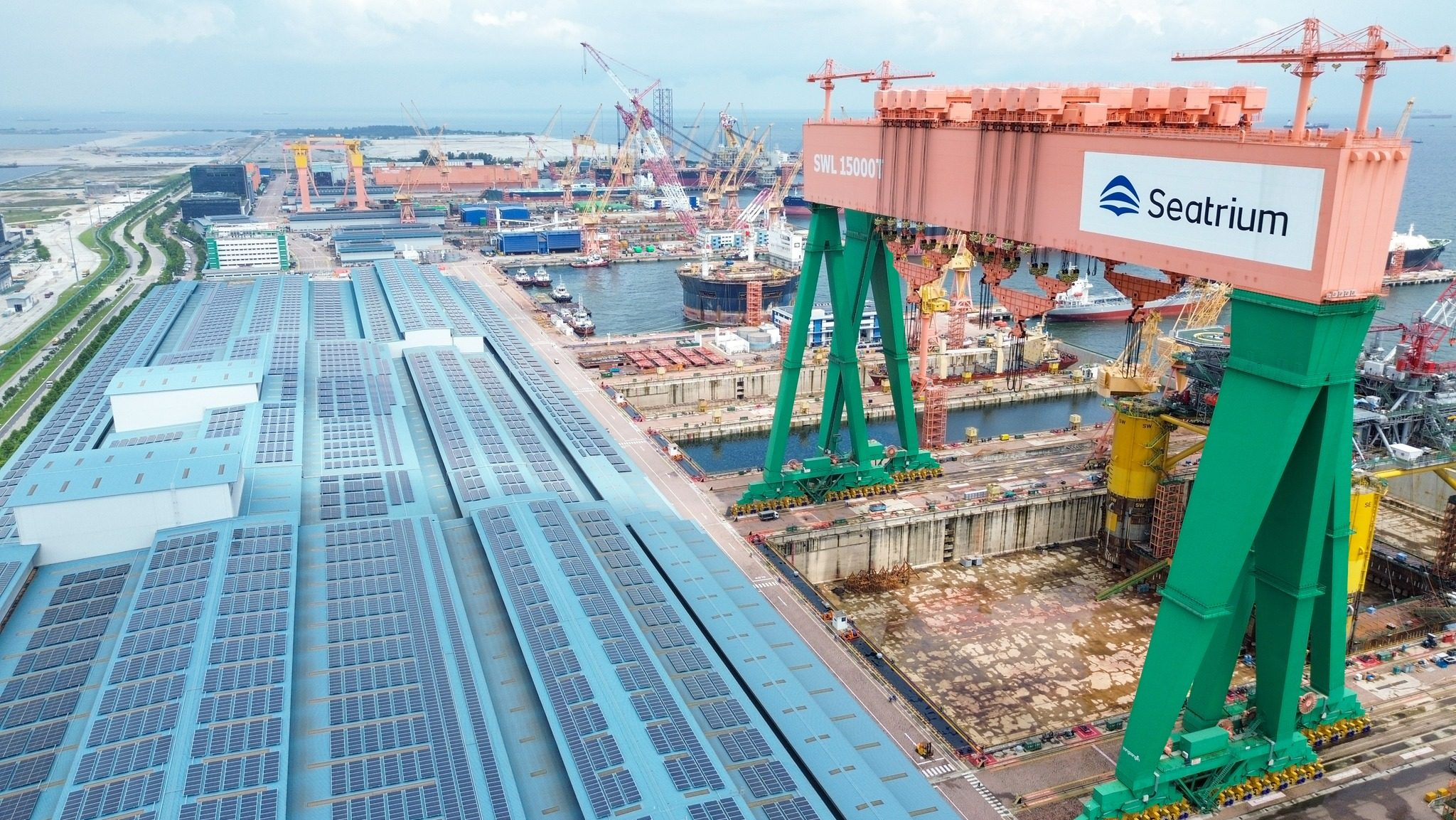
In 1Q2026, Seatrium secured its eighth FSRU conversion project, LNGT Karadeniz, from Karpowership—the first of three FSRU conversions from an earlier LOI, also including integration of up to six new-generation Powerships.
As at 31 March 2026, Seatrium’s net order book stood at S$15.5 billion, comprising 24 projects and providing revenue visibility through to 2033.
Pipelineopportunitiesremainrobustat>S28 billion over the next 24 months, diversified across Oil & Gas, Offshore Wind, and Conversions. Energy security and transition themes have grown more prominent due to Middle East uncertainties. While elevated oil prices support offshore energy investments, project sanctions or order wins are expected to materialise progressively. Customers remain disciplined on capital deployment, focusing on capital efficiency, risk-sharing, and project economics.
Leveraging market leadership, proven capabilities, and a global presence rooted in Singapore, Seatrium is well-positioned to capture these pipeline opportunities.
The company remains focused on converting pipeline opportunities to grow its order book, prioritising higher-quality projects for world-class customers. It also aims to strengthen its margin profile through higher-value projects, cost structure optimisation via financial discipline and strategic divestments, and operational execution discipline—driving long-term total shareholder returns through sustainable growth.
CEO Chris Ong noted that the company carried forward FY2025 momentum into the new financial year, with steady execution and margin improvements. Following completed divestments, Seatrium is well-positioned for further gross margin gains. Despite an evolving geopolitical landscape, its diversified business across traditional, transition, and clean energy aligns with energy transition and security priorities, while its global presence offers agility and resilience.