


The Chosun Ilbo reported that, as high-priced engine orders secured during the shipbuilding industry’s upswing are being delivered and recognized as revenue in this quarter, HD Hyundai Marine Engine and Hanwha Engine are expected to see their operating profits in the second quarter of 2026 rise significantly by 80% to 100% year-over-year. The operating profit margins of both companies are projected to reach two to three times the average level of South Korea’s domestic manufacturing sector.
The market widely expects that the profit levels of these two South Korean engine manufacturers will continue to rise from the second half of this year through next year. Currently, global new ship orders are heavily concentrated in Chinese shipyards, and as marine main engines—the core power source of ships—are in high demand, a large volume of orders continues to flow to these two companies.
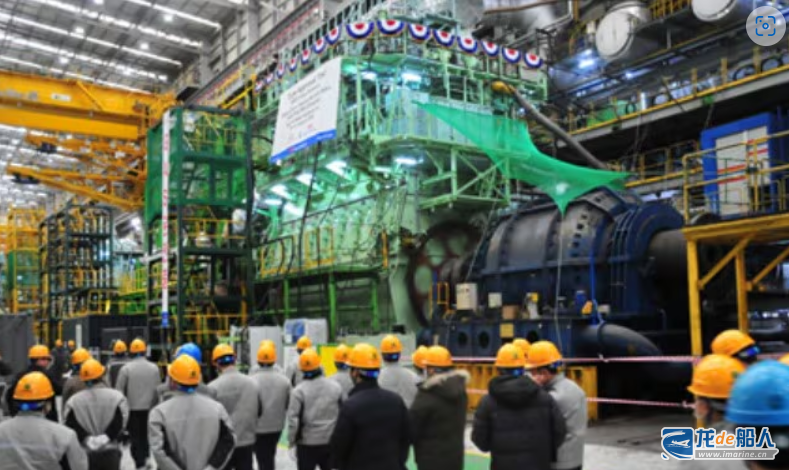
Based on data from South Korean financial information provider FnGuide, HD Hyundai Marine & Engine’s second-quarter operating profit is expected to reach 35.5 billion won, a 103% increase from the same period last year. The operating profit margin is projected to be 24.2%, up 6.6 percentage points from 17.6% in the same period last year. This is more than three times the 6.9% operating profit margin for South Korea’s domestic manufacturing sector reported by the Bank of Korea for last year.
Hanwha Engine’s second-quarter operating profit is expected to reach 60.4 billion won, a 78.8% increase from the same period last year. The operating profit margin is projected to be 15.7%, up 7 percentage points from 8.7% in the same period last year.
Since being incorporated into the Hanwha Group in early 2024, Hanwha Engine (formerly HSD Engine) recorded a double-digit operating profit margin for the first time in the fourth quarter of last year and is expected to maintain a profit margin of over 10% for three consecutive quarters.
According to industry analysts, the profitability of these companies has improved as the expensive engine orders they secured between 2023 and 2024 have begun to be reflected in their financial results. This period coincided with a super-boom in the shipbuilding industry, when high-margin dual-fuel (DF) engine orders poured in. Typically, it takes two to three years from the time an order is placed until the engine is delivered and the final payment is settled.
As for HD Hyundai Heavy Industries Engine, as of April of this year, approximately 75% of its order backlog consisted of orders received in 2024. Bae Ki-yeon, an analyst at Meritz Securities, stated, “Since HD Hyundai Heavy Industries Engine (formerly STX Heavy Industries) was fully integrated into the HD Hyundai Group in July 2024, its engine sales growth has continued to accelerate,” adding, “This year and next, all orders secured between 2023 and 2024 will be fully fulfilled, and profitability will improve across the board.”
The growth momentum of these companies is closely tied to the prosperity of South Korea’s three major shipbuilders. According to FnGuide statistics, the combined operating profit of HD Korea Shipbuilding & Offshore Engineering (HD KSOE), Hanwha Ocean, and Samsung Heavy Industries for the second quarter is projected to be approximately 1.9 trillion won. This figure represents an increase of about 81% compared to the same period last year.
The three major shipbuilders are all expected to post operating profit margins of over 10% in the second quarter. Among them, HD KSOE is projected to have an operating profit margin of 15% in the second quarter, the highest of the three. Ocean and Samsung Heavy Industries are expected to post operating profit margins of 14% and 12%, respectively, in the second quarter.
The strong second-quarter performance was driven by the delivery of high-value-added vessels ordered two to three years ago, which were reflected in the financial results. Since the contracts were signed in U.S. dollars, the strong exchange rate (depreciation of the Korean won) at the time of reporting also contributed to the increase in profits. From 2023 to 2024, the USD/KRW exchange rate fluctuated around 1,300 won, while in the second quarter of this year, it hovered around 1,500 won.
Kang Kyung-tae (transliteration), an analyst at Korea Investment & Securities, said, “As for HD KSOE, second-quarter performance is expected to be strong across all divisions, including merchant ships, offshore, and engine machinery,” adding, “Exchange rate effects across all business divisions are expected to contribute 27 billion won to operating profit.”
HD Hyundai Heavy Industries’ Engine Division, together with the Engine & Machinery Division of HD KSOE, shares the responsibility of meeting the engine needs of the shipbuilding companies within the HD Hyundai Group. It can be said that they have benefited from the boom in orders received by the group’s shipbuilding affiliates.
HD Hyundai maintains a vertically integrated engine product portfolio within the group, ranging from large to small and medium-sized engines. The Engine Machinery Division of HD KSOE manufactures large engines used as propulsion systems for large vessels, as well as medium-sized engines (under its own Himsen brand) for large marine generators. HD Hyundai Heavy Industries Engine, meanwhile, focuses primarily on low-speed engines for marine propulsion.
An HD Hyundai official stated, “Since engines are the core components of ships, the Group’s shipbuilding companies procure engines from affiliated companies to ensure a stable supply.”
Among South Korea’s three major shipbuilders, Hanwha Ocean and Samsung Heavy Industries are in different situations. In addition to purchasing engines from its affiliate, Hanwha Engine, Hanwha Ocean also sources engines from the HD Hyundai Group. Since Hanwha Engine specializes in large, low-speed engines for large vessels, Hanwha Ocean purchases low-speed engines for the propulsion systems of small and medium-sized vessels from HD Hyundai Heavy Industries Engine.
Samsung Heavy Industries does not have its own engine division or specialized engine affiliate. It sources a significant portion of its engines from Hanwha Engine. Hanwha Engine’s predecessor, HSD Engine, was a joint venture between Korea Heavy Industries (now Doosan Enerbility), Samsung Heavy Industries, and Daewoo Shipbuilding & Marine Engineering (now Hanwha Ocean) . At that time, HSD Engine secured all of Samsung Heavy Industries’ orders for large, low-speed engines, and this relationship has continued to the present day. However, Samsung Heavy Industries has recently increased its procurement from the HD Hyundai Group and is working to diversify its supply channels.
In particular, the influx of orders from Chinese shipyards has greatly contributed to the improvement in performance. Most of these orders are for dual-fuel (DF) engines, a technology in which South Korea holds a competitive edge. So far this year, China has secured more than 70 percent of global ship orders.
According to Clarksons Research, of the 42.95 million CGT in global ship orders during the first half of this year, China accounted for 72% of the total with 31 million CGT. South Korea ranked second with 7.97 million CGT (17%).
Of the 15 marine engine supply contracts signed by HD Hyundai Heavy Industries’ Engine & Machinery Division in the first half of this year, 12 were orders from Chinese shipyards, such as Wuhu Shipyard and Nantong Xiangyu Shipbuilding & Offshore Engineering Co., Ltd. (Nantong Xiangyu SOE) . Orders destined for China accounted for approximately 74% (about 490 billion KRW) of the total contract value.
Of Hanwha Engine’s marine engine supply contracts for the first half of the year (totaling 1.4341 trillion won), approximately 45% (643.9 billion won) came from companies in Asia. Hanwha Engine did not disclose the identities of the contractors, citing commercial confidentiality, but the shipbuilding industry speculates that most of the orders from the Asian region came from Chinese shipyards. The securities industry forecasts that Hanwha Engine’s quarterly operating profit next year will exceed 100 billion won.
An industry insider in the shipbuilding sector stated, “Due to carbon emissions regulations, demand for dual-fuel vessels powered by liquefied natural gas (LNG), methanol, and other fuels is on the rise, and Chinese shipyards are beginning to adopt South Korean engines in terms of technical capabilities and delivery schedules.” “In many cases, shipowners also specify the use of South Korean-made engines when commissioning vessels from Chinese shipyards.”