


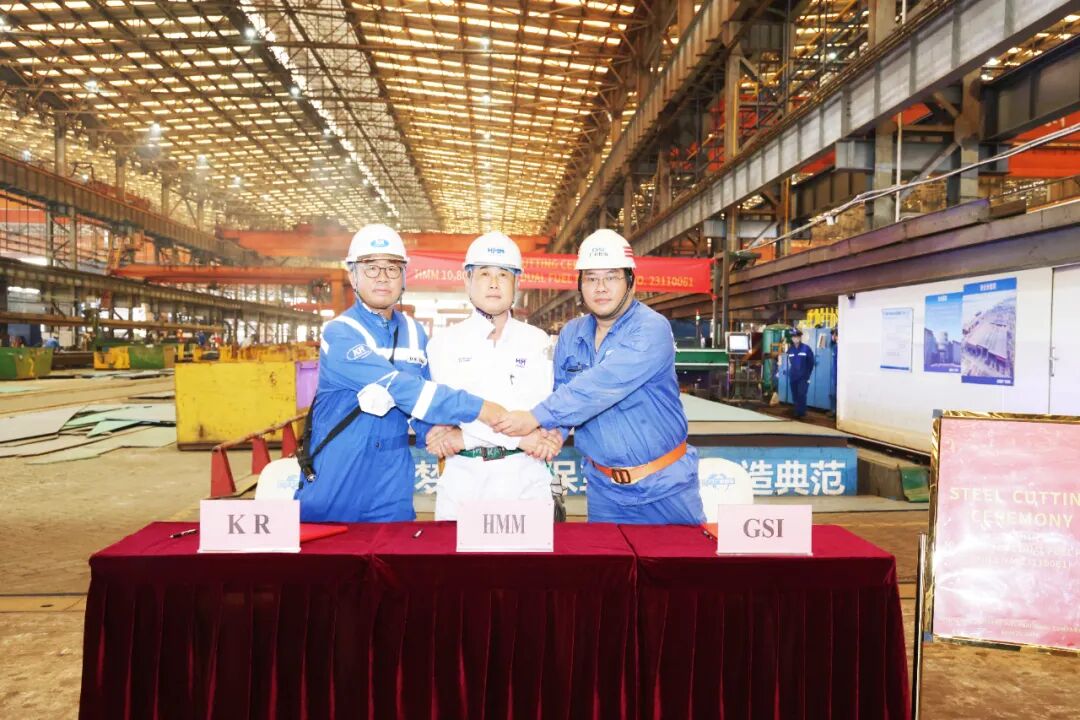
On April 20, CSSC’s Guangzhou Shipyard International (GSI) officially kicked off construction of the fourth 10,800 CEU LNG dual-fuel powered Pure Car and Truck Carrier (PCTC) for the South Korean shipping company HMM. The batch construction and rhythmic production of this vessel series have further solidified GSI’s leading position in the global market for high-end car carriers.
 3
3
Jointly developed by GSI and the Shanghai Ship Research and Design Institute (SDARI), this series of vessels represents the world’s largest (with a capacity of 10,800 vehicles) and most technologically advanced dual-fuel PCTCs currently in existence.
This PCTC maintains the high-specification configuration established by the lead vessel in the series: it employs a dual-fuel propulsion system utilizing both LNG and conventional fuel oil, powered by a MAN B&W 8S60ME-GI engine. Integrated with Exhaust Gas Recirculation (EGR) technology, the vessel complies with the most stringent international Tier III NOx emission standards, achieving a reduction in carbon emissions of over 30% compared to traditional fuel-powered vessels. Furthermore, the vessel design incorporates pre-installed interfaces for ammonia and methanol fuels, providing ample scope for future low-carbon upgrades throughout its entire lifecycle.
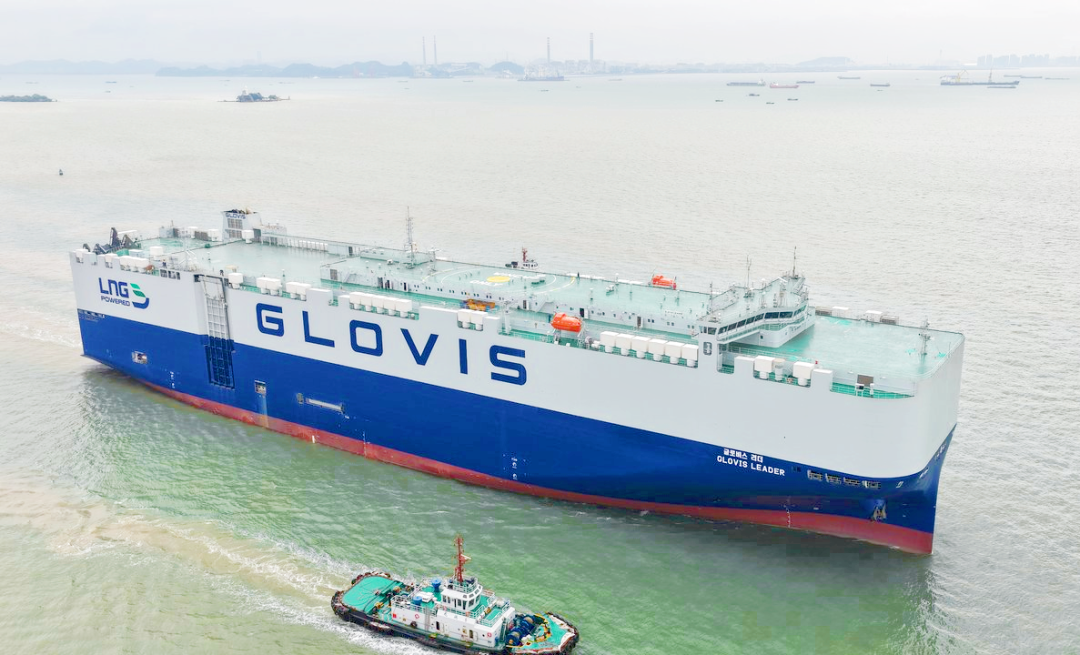
The design and construction of this vessel fully incorporate prior experience in building car carriers, featuring further optimizations in cabin layout, deck load-bearing capacity, and Ro-Ro cargo flow. It is capable of flexibly transporting electric vehicles, heavy-duty trucks, and various types of Ro-Ro cargo, thereby catering to the increasingly diversified, electrified, and heavy-duty transport demands of the global automotive trade.
It is understood that the continuous commencement and batch construction of the 10,800 CEU vessel series fully demonstrate GSI’s comprehensive capabilities in areas such as lean management, process technology innovation, and supply chain collaboration. From the first vessel to the fourth, GSI and HMM—with mutual technical trust serving as their cornerstone—have jointly driven the continuous upgrading of green vessel standards, thereby providing the global automotive industry with more efficient, low-carbon, and reliable maritime transport solutions.