


According to recent data released by the Japan Ship Exporters’ Association (JSEA), Japanese shipbuilders have order backlogs extending to 2029, reaching 24.0728 million gross tons (GT) as of December 31, 2025. Japan’s ability to build up shipbuilding capacity for the next three years is primarily due to the low transparency of Japanese shipbuilders, with most orders being privately signed contracts by domestic companies.
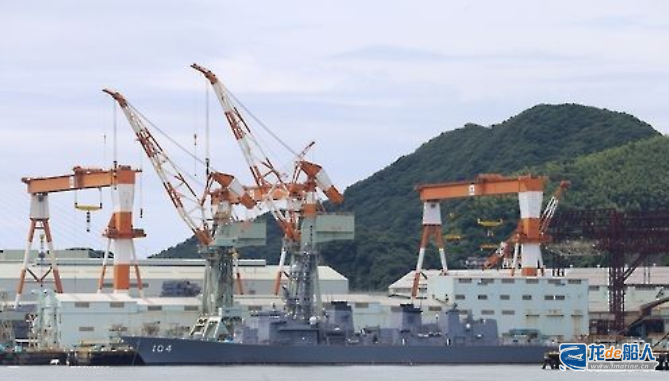
Despite a robust order book and supportive policies to revitalize the shipbuilding industry, Japanese shipbuilders’ order volumes have declined for four consecutive years due to factors such as labor shortages.
According to JSEA data, in fiscal year 2025 (April 2025 to March 2026), new ship orders for Japanese shipbuilders totaled 9.04 million gross tons, a 15% decrease year-on-year. This was mainly due to a decline in the operating rate of Japanese shipbuilders, which could not keep up with the current booming shipbuilding demand.
As of the end of March 2026, Japanese shipbuilders held an order backlog of 29.35 million gross tons, equivalent to three and a half years of production capacity. This means that their existing orders are booked until 2029, leaving them completely unable to meet further shipbuilding demand. However, driven by the replacement cycle of ships built around 2010 and market demand for environmentally friendly fuel-powered vessels, global shipbuilding demand is projected to reach 90 million gross tons by 2035, a 30% increase from 2024.
Regarding the continued shipbuilding boom, Imabari Shipbuilding, Japan’s largest shipbuilder, stated: “Domestic shipyards can no longer meet the shipbuilding needs of Japanese shipowners alone, let alone take on new orders from overseas shipowners.”
Due to capacity constraints, Japanese shipbuilders’ market share in the new shipbuilding market will be further reduced. Over the past decade, Chinese shipbuilders have accounted for more than 40% of the global shipbuilding volume, and South Korean shipbuilders have accounted for about 30%, with the gap between Japan and these two countries widening continuously.
For example, in 2024, Chinese shipbuilders accounted for 54% of global new ship orders, South Korean shipbuilders accounted for 28%, and Japanese shipbuilders’ market share dropped to 13%. In 2025, Chinese and South Korean shipbuilders accounted for 66% and 19.6% of global new ship orders, respectively. Although Japan still ranked third in the world, its market share further declined to 9%.
To revitalize its shipbuilding industry, Japan has introduced a number of support policies aimed at addressing the current situation where the country’s shipbuilding capacity cannot meet demand. For example, the Japanese government has listed shipbuilding as one of its 17 strategic sectors, planning to invest 350 billion yen in the industry with the goal of doubling its capacity by 2035 (compared to 2024).
In addition, Japanese media cited labor shortages as the main reason for the decline in shipyard operating rates, with some shipyards unable to operate at full capacity due to insufficient manpower. Despite major Japanese shipbuilders increasing their recruitment efforts, they have still been unable to fill the manpower gap.
Japan’s second-largest shipbuilder, Japan Marine United (JMU), announced that it will recruit 1.4 times more new employees in 2026 than the previous year. However, the company faces a persistent labor shortage as employees who joined during the last shipbuilding boom retire. JMU plans to recruit approximately 100 new employees each in 2025 and 2026. Tsuneishi Shipbuilding has already raised starting salaries for recent university graduates since 2025 to attract more new employees.
To address the labor shortage, Japanese shipbuilders are pushing forward with the introduction of shipbuilding robots. For example, Japan Shipbuilding Industry Corporation is independently developing welding robots, and Imabari Shipbuilding is using artificial intelligence (AI) to link multiple robots and reduce manual labor. The Japanese government has also successively introduced policies to support the research and development of AI robots needed by the shipbuilding industry.–拟两个英文标题