


South Korean media reports that the Ministry of Trade, Industry and Energy recently announced plans to invest 320 billion won (approximately $218 million) by 2026 to enhance the global competitiveness of South Korea’s shipbuilding industry in AI-driven and eco-friendly shipbuilding sectors.
The report indicates that this budget represents a 23% year-on-year increase, with a strategic focus on eco-friendly vessels, autonomous navigation, and digital shipyard systems to address intensifying global competition amid decarbonization and automation trends.
Specifically, investments in the eco-friendly ship sector reached 187.3 billion won (approximately $128 million), marking a 9.1% year-on-year increase, aimed at mastering core technologies such as zero-carbon fuel propulsion systems.
Investment in the autonomous navigation sector reached 37.8 billion won (approximately $26 million), surging 86% year-on-year. The South Korean government plans to launch a large-scale pilot project involving over 30 domestically operated vessels to collect critical operational data needed to advance autonomous navigation technology development.
Investment in digital shipyard systems reached 94.9 billion won (approximately $65 million), marking a 42.3% year-on-year increase. The focus lies in applying automation technologies throughout the entire manufacturing and ship operation processes to enhance production efficiency and safety.
Meanwhile, South Korea also stated it would support the localization of marine auxiliary equipment and strengthen support for small and medium-sized shipbuilding enterprises.
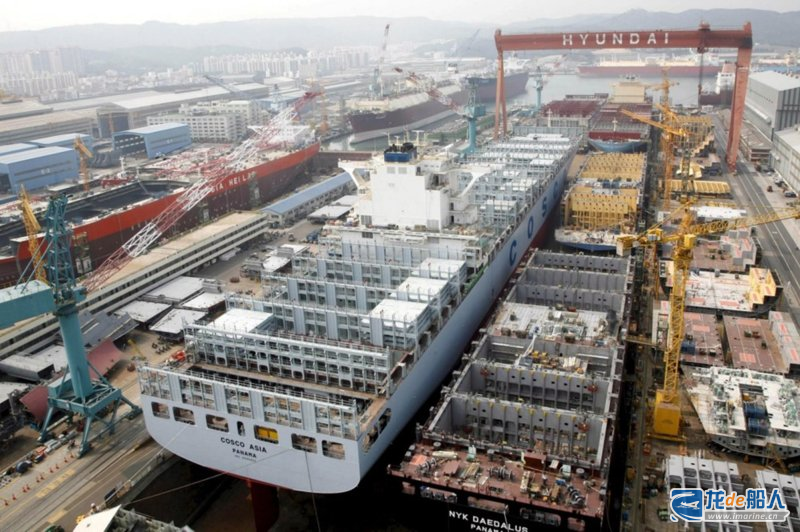
Beyond the government level, major South Korean shipbuilders are also expanding related investments. For instance, HD Hyundai Heavy Industries is advancing the commercialization of advanced autonomous navigation systems through its subsidiary Avikus, with plans to establish a next-generation digital shipyard by 2030. The company is simultaneously developing dual-fuel engines capable of running on liquefied natural gas, ammonia, and methanol.
Hanwha Ocean focuses on ammonia-powered vessels and offshore wind turbine installation vessels, with electrification as its future growth engine. Samsung Heavy Industries plans to more than double its design automation rate by 2030 through a smart shipyard platform and is collaborating with robotics companies to develop automated welding and heavy-duty lifting systems.
HJ Heavy Industries is also seeking to enter the commercial icebreaker sector, leveraging its experience in building the South Korean research icebreaker “ARAON” to meet the growing shipping demand along the Arctic route.