


The Royal Navy’s next-generation Fleet Solid Support (FSS) project is facing difficulties due to steel supply disruptions. Liberty Steel UK’s Liberty Steel Dalzell, which had previously been selected to supply marine steel plates for the project, has run out of funds for raw material procurement and has been unable to commence formal production, leaving the project’s core marine steel plate supply prospects uncertain.
The Guardian recently cited multiple sources as saying that “the Liberty Steel Dalzell has no cash flow to purchase steel billets,” and the report pointed out that the Royal Navy’s shipbuilding project is facing supply chain risks.
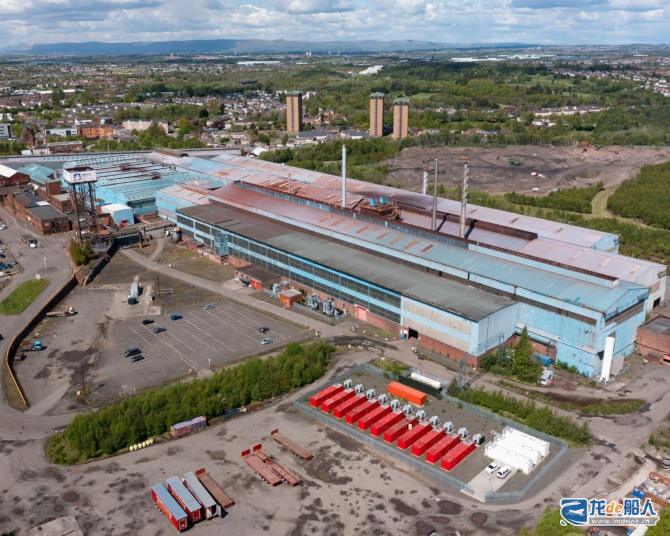
Steel mills lacking funds to purchase raw materials… halt production of marine steel plates
Reports indicate that the Liberty Steel Dalzell had previously secured a contract to supply steel plates for three Royal Navy logistics support ships. Originally slated to produce 34,000 metric tons of shipbuilding steel plates under the contract, production has stalled due to an inability to procure the basic raw material for steel processing—steel billets.
It is reported that the Liberty Steel Dalzell relies on purchasing steel billets from British Steel, which are then rolled and processed into marine steel plates. However, the plant’s inability to pay for these billets has forced the interruption of its billet supply chain.
Sources revealed that the small-scale trial production conducted at the Dalzel plant in November 2025 yielded only about 1,000 tons of steel plates, equivalent to “roughly three days’ output” by factory standards. Plant employees are currently receiving only 80% of their wages and remain on standby status.
The production disruption at Liberty Steel Dalzell is reportedly directly related to the liquidity crisis at GFG Alliance, the parent company of Liberty Steel. In 2021, Greensill Capital, which had served as a core financing channel for GFG Alliance, declared bankruptcy, putting continuous pressure on the metals business under the leadership of GFG Alliance Chairman Sanjeev Gupta.
The Guardian has revealed that Sanjeev Gupta has lost control over some of his assets, the Liberty Steel Dalzell has failed to submit financial statements for five consecutive years, and the UK Serious Fraud Office (SFO) is conducting a long-term investigation into suspected fraud.
It is understood that this logistics support ship project is a core asset of the Royal Navy’s logistical support capabilities, providing ammunition, food, and other supplies to aircraft carrier strike groups. The project was jointly awarded to Spain’s state-owned shipbuilder Navantia and UK shipbuilder Harland & Wolff. In 2025, Navantia acquired Harland & Wolff, which was under bankruptcy administration, and initiated upgrade and renovation projects for the latter’s four shipyards.
The lead ship of this logistics support vessel project was originally slated for construction by Harland & Wolff. However, due to the shipyard’s ongoing upgrades, the contract has now been transferred to the Cadiz shipyard in Spain. This marks the first time a British naval vessel will be built in Spain. According to the schedule, the lead ship, RFA Resurgent, is expected to be delivered in 2031. Yet, if steel plate supply delays persist, the UK shipbuilding industry fears subsequent construction processes could face widespread disruption.
National security and sovereignty face challenges… “Without steel, there are no ships.”
Regarding the current situation of the Royal Navy’s three logistics support ships, Scottish metals industry giant David Murray has publicly called on the UK government to intervene. According to The Guardian, Murray argues the government should pressure Liberty Steel to hand over operational control of the Liberty Steel Dalzell, with Murray himself offering to invest £50 million to restore the facility to full operation.
David Murray stated bluntly: “Shipbuilders like Harland & Wolff and BAE Systems are just 17 miles from the Liberty Steel Dalzell. If the UK government allows the nation’s industry to lose its ability to independently supply shipbuilding steel plates, it would be an extremely serious policy failure. We cannot rely entirely on imports in the future, and no one can predict when a crisis might strike.”
Regarding the “steel shortage” situation disclosed by sources, Liberty Steel stated, “We are currently fulfilling Navantia’s order as per the contract, and trial production is expected to resume shortly.”
The report states that the Liberty Steel Dalzell incident reveals a crucial issue: numerous defense projects in the UK that tout “domestic sourcing” and “supply chain stability” can be jeopardized by liquidity crises in intermediate processing stages. As the UK simultaneously advances its naval development and industrial policies, the financial soundness of basic manufacturing sectors such as steel and shipbuilding, as well as the national-level risk management system, are facing a new round of tests.