


On 29 October 2026, COSCO SHIPPING Holdings Co., Ltd. (“COSCO SHIPPING Holdings”) announced its quarterly results for the third quarter of 2026.
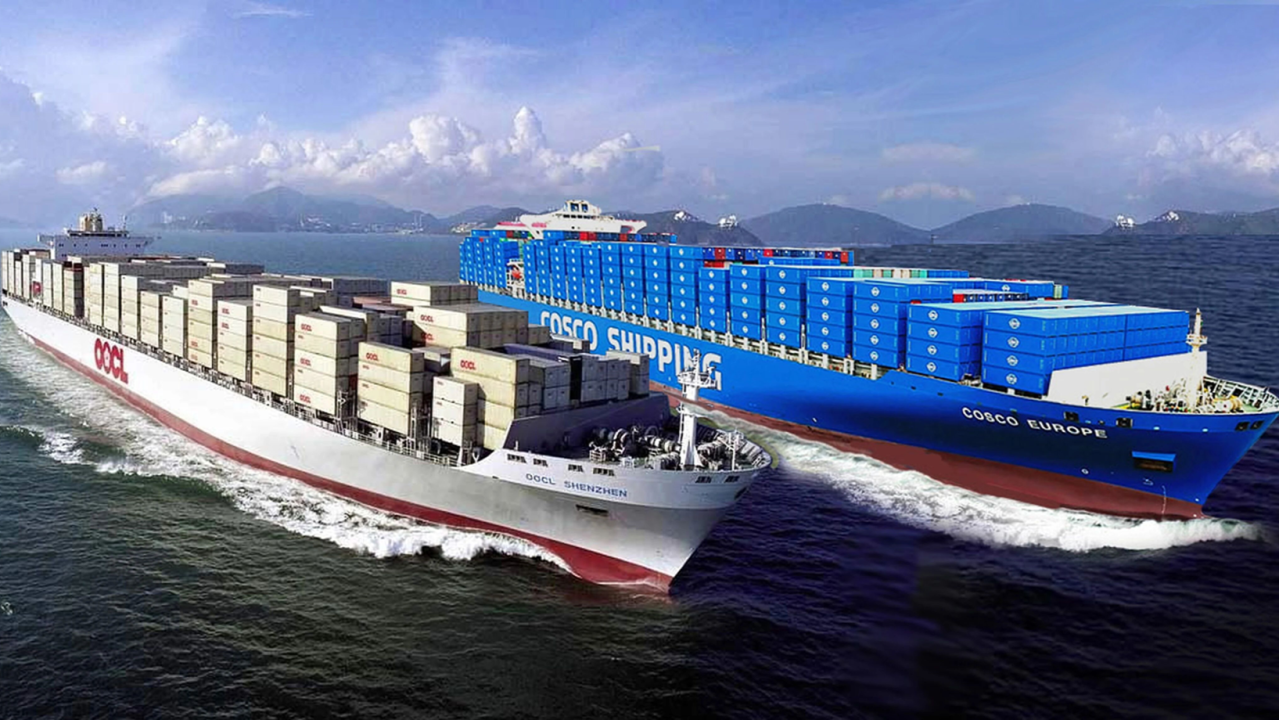
In the first three quarters of 2026, the container shipping market encountered various challenges, including geopolitical tensions, port congestion in various regions and wide fluctuations in fuel prices, while global merchandise trade demand remained generally resilient amid a volatile environment. Against this backdrop, COSCO SHIPPING Holdings remained committed to the customer-centric approach. The Company dynamically optimized its global route network and slot allocation, bolstered the synergy between port and shipping operations, accelerated the transformation towards digital intelligence and green development, and ramped up lean cost management. As a result, its operational quality and efficiency were further strengthened.
Remarkable Profit Growth Reflecting Strong Resilience. In the third quarter, the Company realized operating revenue of RMB 75.69 billion, up by 29.39% year-on-year; its EBIT climbed by 69.61% year-on-year to RMB 23.19 billion. The Company’s net profit surged by 81.91% year-on-year to RMB 19.24 billion; and the net profit attributable to the shareholders of the Company climbed by 80.73% year-on-year and 128.45% quarter-on-quarter respectively to RMB 17.23 billion. In the first three quarters, the net profit attributable to the shareholders of the Company amounted to RMB 30.65 billion, up by 13.22% year-on-year.
Simultaneous Growth in Shipping Volume and Revenue of Core Businesses. In the third quarter, the container shipping business segment handled shipping volume of 7.21 million TEUs, representing an increase of 4.46% year-on-year. This segment generated revenue of RMB 73.30 billion, up by 30.35% year-on-year. Meanwhile, the container terminal business segment handled a total throughput of 8.76 million TEUs, representing an increase of 2.38% year-on-year. This segment generated revenue of RMB 3.31 billion, up by 7.44% year-on-year. In the first three quarters, the container shipping business segment handled shipping volume of 21.49 million TEUs, representing an increase of 6.47% year-on-year; the container terminal business segment handled a total throughput of 25.66 million TEUs, representing an increase of 2.46% year-on-year.
Maintaining Sound Financial Position. In the first three quarters, the cash inflow generated from operating activities grew by 19.83% year-on-year to RMB 47.91 billion; as of 30 September 2026, the Company’s debt-to-asset ratio was 41.36%.
Safeguarding Shareholders’ Interests. The Company implemented the fifth round of A-share repurchase plan between 6 July and 30 September, 2026. Up to now, it has repurchased and cancelled a total of 961 million of A-shares and H-shares in the five rounds of share repurchase plan. In addition, the interim cash dividends for 2026 were distributed on 23 October.
For the year to date, COSCO SHIPPING Holdings has consistently advanced the integrative development of “container shipping + ports + related logistics” businesses. While strengthening its core shipping operation, the Company ramped up full-chain service capabilities and expedited the transformation towards digital intelligence and green development, with an aim to create a global supply chain network with wider coverage, seamless connectivity, greater resilience and stronger risk management capability.
Reinforced global shipping network to create resilient trade corridors. COSCO SHIPPING Holdings adhered to the approach to meeting global customers’ demand. Through an integrated layout of “hubs + corridors + networks,” it continuously enhanced the accessibility and resilience of its global shipping and logistics corridors. In the third quarter, the Company dynamically optimized capacity allocation on the U.S. Southwest and Asia-Europe routes, strengthened the collaborative development of port and shipping operations and the connectivity for cargo collection and distribution. The Company achieved 12.98% and 14.64% year-on-year cargo volume growth on the Trans-Pacific and Asia-Europe routes, respectively, along with 61.20% and 25.74% year-on-year revenue growth, respectively from the routes. Meanwhile, the Company expanded its presence in emerging and regional markets including Latin America, Africa and Southeast Asia, and launched new shipping routes, including Far East–East Coast South America Service (ESA3), China–Cambodia–Thailand Service 4 (CCT4), and upgraded services including the Asia/South Africa Express Liner Service (ZAX3) and Australia East Service (A3X). Riding on the opening of the Pinglu Canal, the Company rolled out rail-water-sea intermodal transport services in September, which combine rail freight, the Pinglu Canal and ocean shipping to provide hinterland markets with more efficient and convenient global access and full-chain logistics solutions. In the third quarter, the cargo volume handled by the Company’s Intra-Asia routes (including Australia) and other international routes (including Latin America and Africa) grew by 1.85% and 3.09% year-on-year respectively, with corresponding revenues from these routes rose by 18.13% and 18.73% year-on-year respectively.
Deepened integration of full-chain services to efficiently respond to customers’ needs. COSCO SHIPPING Holdings focused on large-scale development of its full-chain services and ramped up its capabilities across the entire value chain including products, sales, operations and management, customer services and revenue. It drove deep integration of resources across shipping, ports and logistics segments. In the third quarter, the Company launched several international freight train services to Central Asia, opening up new cross-border logistics channels between Asia and Europe. In addition, it inaugurated China’s first dedicated sea-rail line “running perpendicular to the shoreline and directly to a container terminal” in Xiamen Ocean Gate Terminal, thereby enabling seamless connection of sea-rail intermodal transport. Additionally, the new “China–Peru–Brazil” sea-air intermodal route was officially launched, resulting in a reduction of approximately 10 days in transit time when compared to normal sea freight. With the integration of full-chain resources and synergistic channel expansion, the Company leveraged integrated supply chain and the advantages of cross-region collaboration to develop customized outbound logistics solutions for customers in the sectors such as photovoltaics, lithium batteries, new energy vehicles and cross-border e-commerce. These solutions enhance the stability of end-to-end delivery and provide greater flexibility for customers’ supply chain management. In the first three quarters, the revenue from container shipping business segment other than ocean shipping amounted to RMB 37.15 billion, representing a 12.92% year-on-year increase.
Looking ahead, global container shipping demand is expected to remain relatively resilient, with trades within the Global South countries and intra-regional trades remaining the drivers for market growth. However, the intertwined complexities brought by persistent geopolitical conflicts, shifts in the international trade landscape, port congestion and supply chain disruptions will pose mounting challenges to the stability of global supply chain. In this context, the trajectory of the Middle East situation will emerge as a critical variable influencing the future supply-demand dynamics of the shipping market.