


HD Hyundai Heavy Industries is withdrawing from a previously planned joint venture with India’s state-owned Cochin Shipyard to manufacture ship hull blocks, opting instead to partner with a local Indian government to build a large-scale shipyard.
HD Hyundai Group recently announced its decision to scrap plans for the joint venture—valued at approximately 620 billion won (about US$449 million)—with Cochin Shipyard; however, the two companies will continue to collaborate on technical matters such as design and procurement support.
A representative from HD Hyundai stated: “In July 2025, HD Hyundai signed a Memorandum of Understanding (MoU) with Cochin Shipyard covering areas such as design, procurement support, production efficiency improvements, and shipbuilding workforce training, and the two parties subsequently continued consultations regarding this cooperation. Following further discussions, a decision has been made to terminate preparations for the joint venture to build a new hull block manufacturing plant.”
Earlier, Indian media cited multiple anonymous sources as saying that HD Hyundai Heavy Industries has shifted its focus to a large-scale greenfield shipyard project with a total investment of $4 billion; consequently, it has adopted a lukewarm attitude toward the joint project with Cochin Shipyard to build a hull block fabrication facility and has effectively decided to abandon its participation in the joint venture.
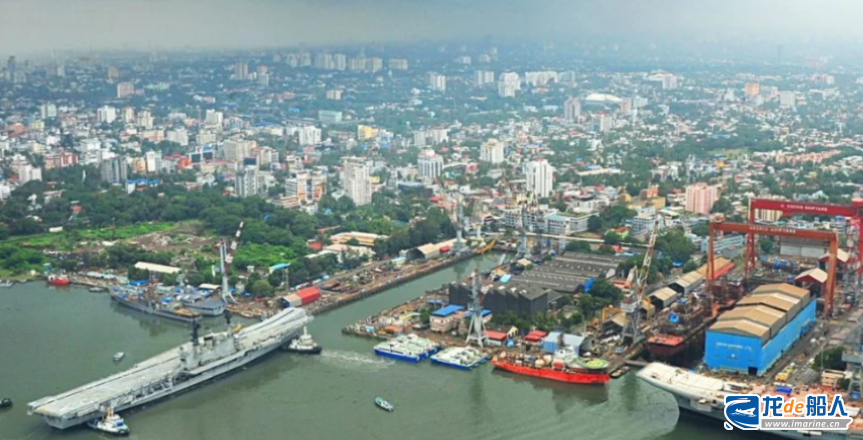
According to reports, the joint venture between HD Hyundai Heavy Industries and Cochin Shipyard was originally planned to construct a shipblock fabrication plant with an annual production capacity of 120,000 tons on an 80-acre site adjacent to Cochin Shipyard. The project received in-principle approval under India’s National Shipbuilding Mission (NSM) in July 2026 and was originally intended to operate in conjunction with Cochin Shipyard’s Dry Dock No. 3 to support the shipyard’s construction of large commercial vessels.
Analysts in the South Korean shipbuilding industry view HD Hyundai Heavy Industries’ decision to halt the project as a calculated move. They believe that owning a large-scale shipyard in India offers a greater strategic advantage for entering the local shipbuilding market than merely holding an equity stake in auxiliary production facilities. The group plans to reallocate the capital and technical personnel originally earmarked for the joint-venture hull block factory to the large-scale wholly-owned shipyard project, thereby enhancing execution efficiency.
Although the joint venture ship block factory project has fallen through, the existing partnership between HD Hyundai and Cochin Shipyard remains unchanged. HD Hyundai Heavy Industries, a subsidiary of the group, will continue to provide technical support to Cochin Shipyard—including basic design and the supply of Everllence-licensed engines—to help Cochin Shipyard successfully advance the project for six 1,700-TEU feeder container ships for France’s CMA CGM.
HD Hyundai Heavy Industries is currently prioritizing a project to build a large, wholly-owned shipyard in the Tuticorin region of Tamil Nadu, southern India. With a total investment of $4 billion, the project entails a large-scale greenfield shipbuilding industrial cluster boasting an annual shipbuilding capacity of 2.5 million gross tons (GT).
Tamil Nadu, where the project is located, is one of the sites selected by the Indian government for a shipbuilding industrial cluster. The state government successfully attracted investment from HD Hyundai by offering incentives and subsidies, as well as expanding infrastructure. Additionally, the Tuticorin region was deemed an ideal location because its climatic conditions—such as temperature and precipitation—closely resemble those of HD Hyundai Heavy Industries’ Ulsan shipyard.
The timing of HD Hyundai’s huge investment in the Indian shipbuilding market comes at a critical stage when India is making every effort to promote the development of the country’s shipbuilding industry. Currently, India ranks 20th-22nd in the global shipbuilding industry, accounting for less than 1% of the global new shipbuilding market. India spends about US$70 billion to US$75 billion on overseas shipping services every year, but only about 7% of the ships owned by Indian shipowners are built by Indian shipyards.
To enhance India’s market position in the global shipbuilding industry, India previously announced that it would provide $3 billion in direct shipbuilding subsidies and $2.4 billion in infrastructure investment for its domestic shipbuilding industry. This investment program will run through 2036 and may be extended to 2047. These funds will be used to support India’s development goals of “ranking among the top 10 in the global shipbuilding industry by 2030 and becoming one of the world’s top five shipbuilding powers by 2047.”