


UC San Diego has signed a contract with Chilean shipbuilder Asenav to construct a new hybrid-powered research vessel. The project has an estimated duration of 24 months, with delivery expected in July 2028; the vessel will be used to conduct marine scientific research operations along the Eastern Pacific coast.
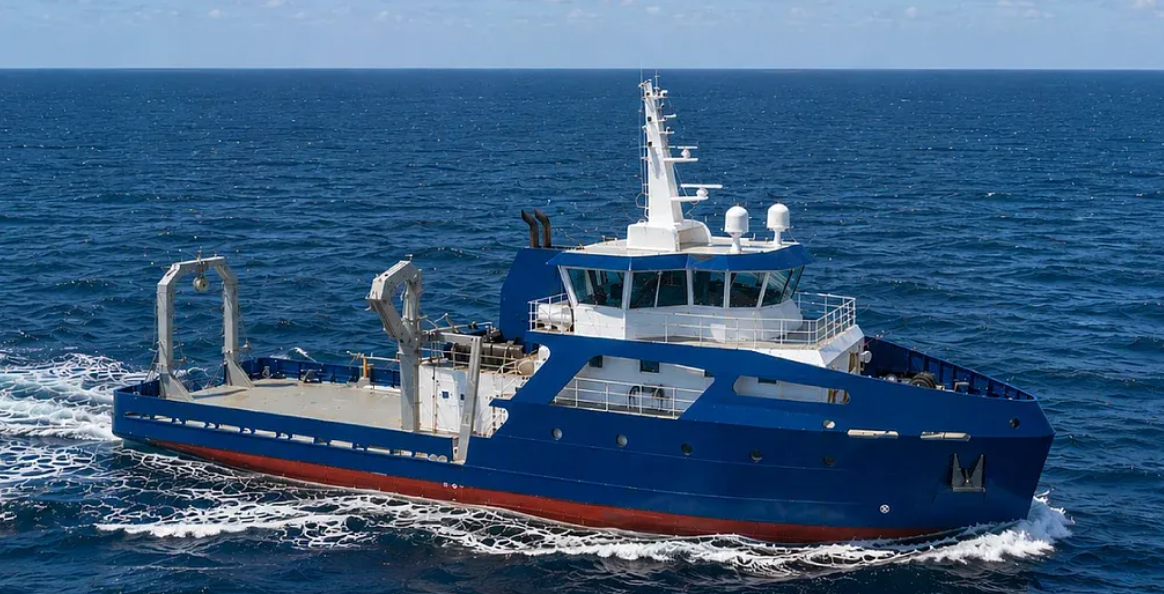
This vessel, designed and built by Asenav, is part of the U.S. academic research fleet. Upon delivery, it will replace the offshore research vessel “Robert Gordon Sproul”, which has been in service for nearly 40 years and is nearing the end of its operational life, and will be used to conduct scientific research in the fields of biology, chemistry, geology, geophysics, and physical oceanography.
The new vessel is 38 meters long, can carry up to 20 people, and is capable of operating at sea for more than 200 days a year, meeting the requirements of high-standard marine scientific research, underwater acoustic detection, and marine environmental protection missions. It features a monohull design and is equipped with two azimuth-rotating L-type stern thrusters and one bow thruster.
The new vessel is equipped with a hybrid battery propulsion system and has received low-emission certification, with the aim of reducing its environmental impact during operations; it will be equipped with a mandatory uninterruptible power supply (UPS) system for core scientific research equipment, navigation, and scientific research operations to ensure the continuous operation of the vessel’s critical systems.
The key technical requirements for this vessel are as follows: it must meet the full set of performance specifications, including speed, range, power quality, airborne noise, and exhaust emissions; and it must strictly control underwater radiated noise within the survey speed range of 1 to 10 knots. This requirement is of critical importance, as it not only prevents interference with scientific data collected by underwater acoustic equipment but also minimizes the vessel’s impact on the marine ecosystem.