


On April 7, at Wuhu Shipyard’s Slipway No. 2, two major production milestones were achieved within a span of two days: the transfer of the midship section of the 18525 chemical tanker (part of the 18500 series) and the launch of the 18532 chemical tanker. This marks the gradual maturation of the shipyard’s serial construction model using inclined slipways.
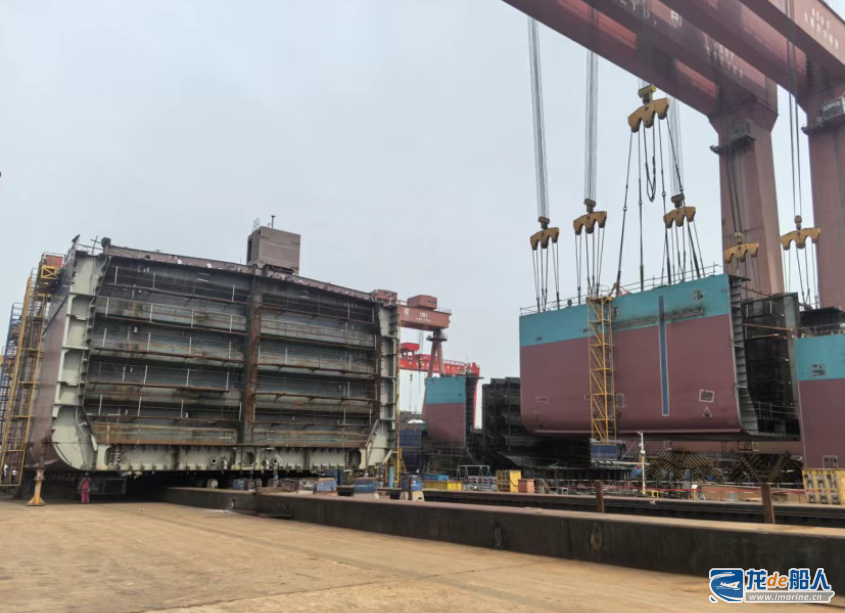
It is reported that during this two-day push to meet both milestones, Wuhu Shipyard fully utilized its proven inclined slipway serial construction method. Relying on a coordinated system of 12 axis-alignment trolleys and a refined process control system, the yard efficiently advanced all operations. During the half-hull block relocation for Vessel 18525, the Wuhu Shipyard team maintained millimeter-level precision control standards, smoothly moving the half-ship assembly block—weighing over 2,200 tons and comprising three large ring-shaped sections and 45 sub-sections (equivalent to the combined weight of over 1,400 passenger cars)—along the inclined slipway to its designated position.
Vessel 18532 was successfully launched onto the slipway, seamlessly connecting with the half-hull relocation operation of Vessel 18525 and advancing in tandem, creating an efficient production momentum characterized by “two vessels proceeding in parallel and consecutive milestones achieved.”
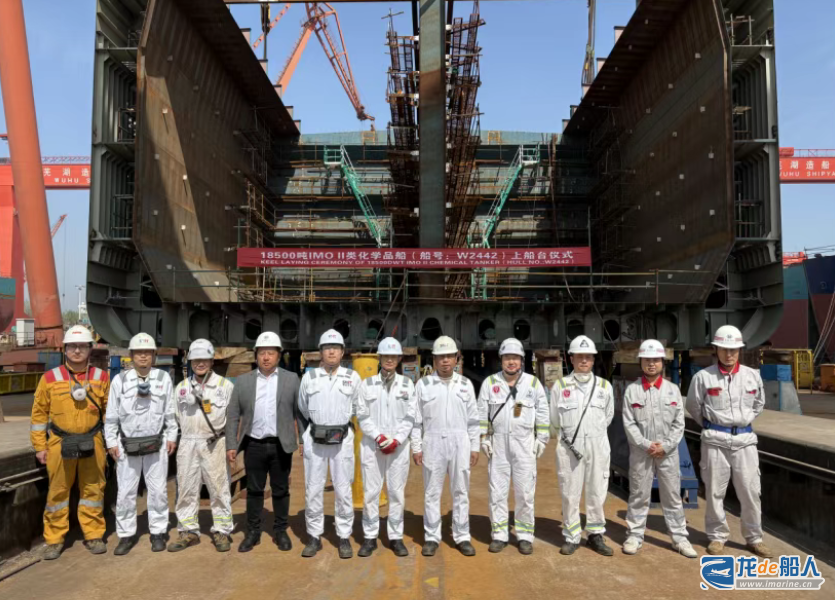
Wuhu Shipyard stated that, from the technical breakthrough of China’s first half-ship transfer on an inclined slipway at the beginning of the year to the successful replication of this process multiple times in a short period, the yard has continuously optimized and standardized construction methods while refining production organization models. This has consistently unlocked the potential of slipway capacity, with slipway utilization rates and construction turnover rates steadily improving. The yard is making steady progress toward the goals of “outfitting upon launch” and “assembly on the slipway, testing at the pier,” laying a solid foundation for the subsequent parallel construction of multiple vessels and for ensuring efficient contract fulfillment.