


The insurance company providing coverage for the Francis Scott Key Bridge in Baltimore, Maryland, reported to the U.S. District Court that it had reached a settlement with the owner and operator of the container ship “Dali.”
On March 26, 2024, the container ship “Dali” struck the bridge in Baltimore while leaving port, killing six road workers and causing the bridge to collapse, resulting in significant economic losses for Baltimore and the state of Maryland.
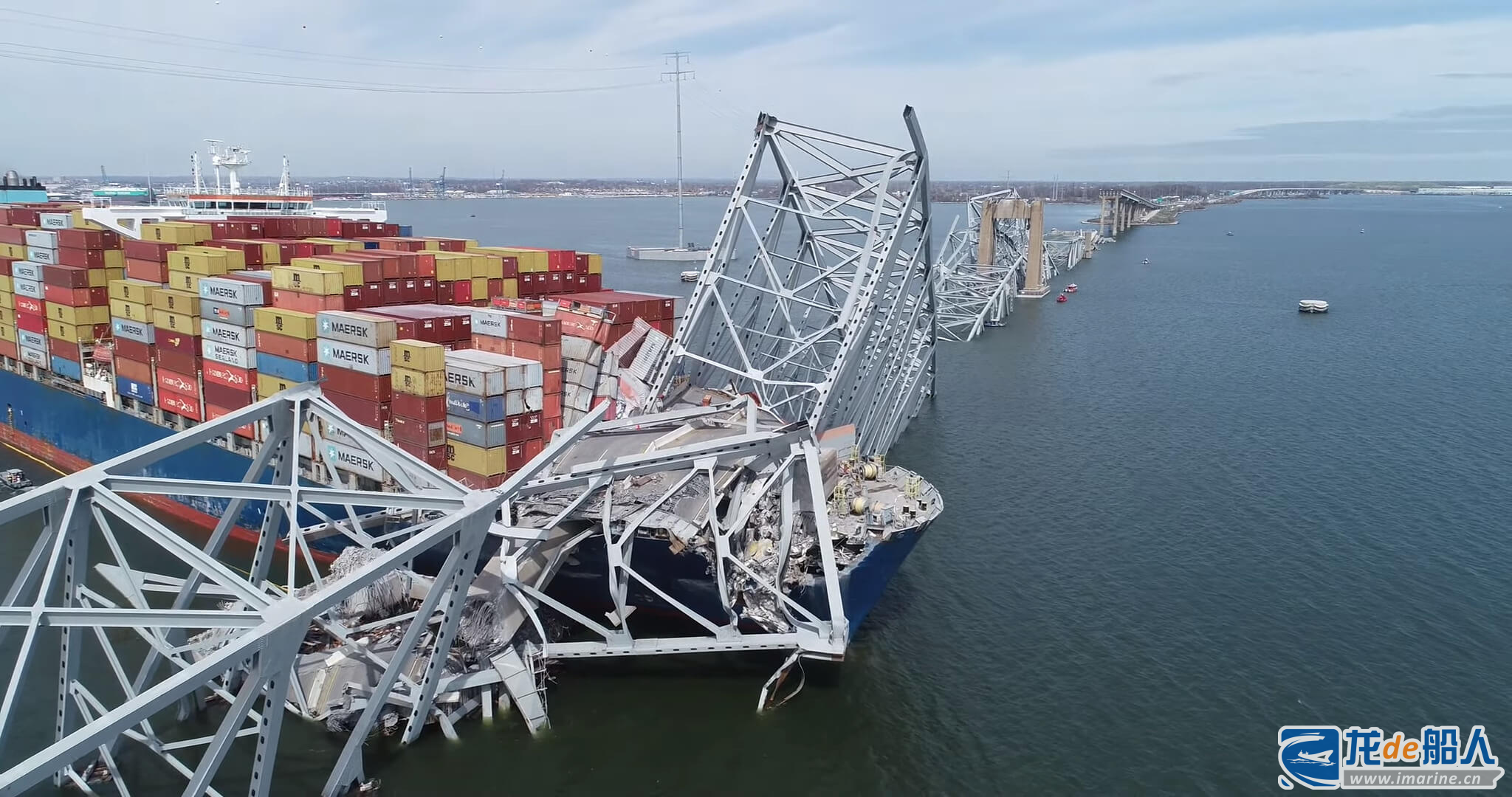
Two years after the incident, a U.S. federal district court judge urged all parties involved in the bridge-collision case to prepare for the civil trial scheduled to begin on June 1. During a case management conference on April 2, the court made it clear to all parties that “the trial schedule must be treated as a top priority.”
Regarding the timeline for the civil litigation, the plaintiffs’ attorneys initially proposed a trial date in December 2025, while the defendants’ attorneys sought to postpone it until 2027. In the meantime, the court has designated 2025 as the discovery and evidence-gathering phase and has already confirmed that the trial will begin in June 2026.
In a significant development regarding the litigation, ACE American Insurance Company—the insurer of the Francis Scott Key Bridge in Baltimore—disclosed at a recent hearing that it had reached a $350 million (approximately RMB 2.4 billion) settlement with Grace Ocean, the owner of the “Dali,” and Synergy Marine, the vessel’s operator. This settlement amount is equivalent to the $350 million paid to the State of Maryland several weeks after the accident—the maximum liability limit specified in the insurance policy.
It is reported that other parties involved in the bridge collision may also reach a settlement in the coming weeks, but the main part of the case is still expected to proceed to trial.
The presiding judge has previously divided the trial proceedings into two phases: first, arguments will be heard on the limited liability claims raised by Grace Ocean and Synergy Marine. Citing the Limitation of Liability of Ships Act (LOLA) of 1851, the two companies argue that the shipowner’s total liability should be limited to the value of the vessel after the accident plus the value of the cargo in transit, amounting to approximately $44 million.
Depending on the outcome of the first phase, the second phase will address the allocation of liability.
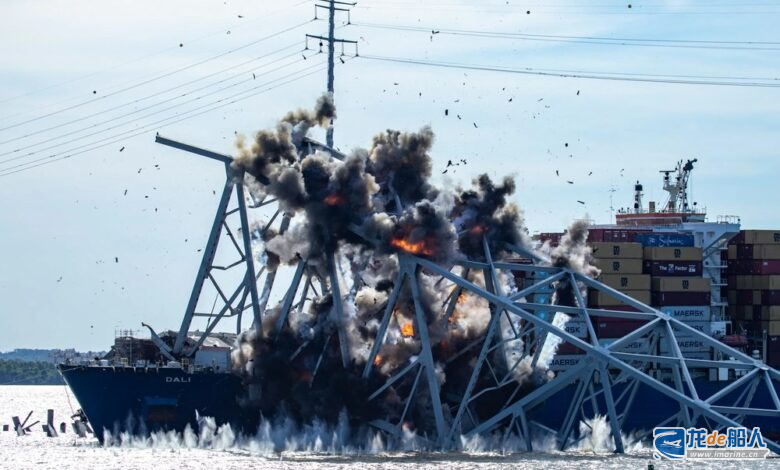
Regarding claims, following the accident, the families of the six victims, several local businesses, and the governments of Maryland and Baltimore have all filed claims, which include the costs of rebuilding the bridge. The total amount of claims is estimated to exceed $5 billion. Although Maryland has received $350 million in insurance payouts, under the law, the state may still file claims for amounts exceeding the insurance payouts.
In October 2024, Grace Ocean and Synergy Marine reached a settlement with the U.S. Department of Justice regarding a $102 million claim. At the time, the companies stated that the settlement did not constitute an admission of liability and explicitly denied responsibility for the events leading to the collapse of the bridge.
In a separate, independent lawsuit, Grace Ocean and Synergy Marine sought to sue the shipbuilder of the “Dali,” HD Hyundai Heavy Industries, alleging that the vessel had construction defects.
The “Dali” was laid down in July 2014 and delivered in March 2015; 2024 (the year of the incident) marked its ninth year in service. Consequently, HD Hyundai Heavy Industries filed for arbitration, citing the vessel’s age and its maintenance records over the years since delivery.
Regarding the cause of the accident involving the “Dali,” the U.S. National Transportation Safety Board (NTSB) determined through its investigation that a loose connection in the signal lines, which caused a power outage, was the primary cause of the collision with the bridge. This failure stemmed from the improper installation of wire identification tags, which resulted in the “Dali” losing its propulsion and steering capabilities near the bridge.
Following the release of these findings, the NTSB issued recommendations to HD Hyundai Heavy Industries, requiring the company to incorporate standardized wire identification installation procedures into the electrical department’s standard operating procedures. In response to the NTSB’s findings, HD Hyundai Heavy Industries argued that the “Dali”’s collision with and collapse of the bridge was caused by modifications made by the operator.
HD Hyundai Heavy Industries pointed out: “Upon delivery, the ‘Dali’ was equipped with numerous redundant systems and automatic restart functions to prevent catastrophic failures. The vessel was originally fitted with four independent diesel generators, two independent transformers, and automatic fuel supply pumps, capable of automatically restarting without crew intervention following a power outage. The company emphasized that these redundant configurations were mandatory requirements of the relevant classification societies. However, shortly after taking delivery of the vessel, the shipowner and operator circumvented the ship’s safety mechanisms by disabling critical redundant systems… The tragedy ultimately occurred due to issues such as improper operation of the ship’s systems and persistent negligence in maintenance and repairs by the shipowner and operator.”