


On March 30, Shanghai Waigaoqiao Shipbuilding (SWS) successfully held the keel-laying ceremony for the H1637, the second 14,000 TEU large container ship being built for TS Line.
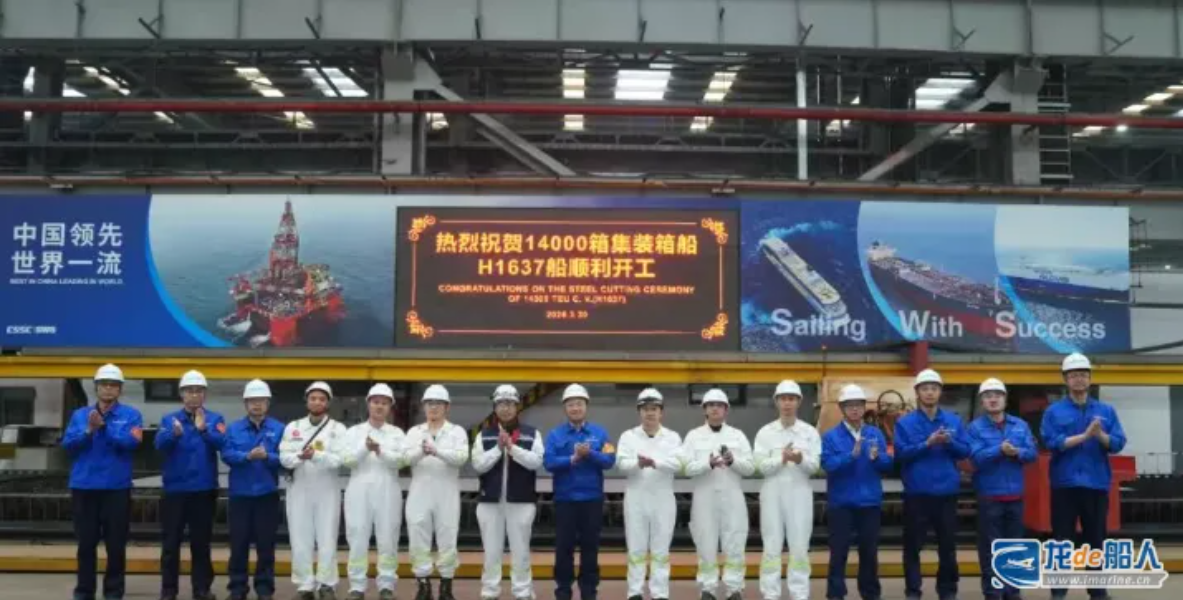
It is reported that the 14,000-TEU container ship is the fourth type of container ship built by SWS. The lead vessel, H1636 (also ordered by TS Line), was laid down on March 13. The other three types of container ships have capacities of 7,000 TEU, 9,200 TEU, and 11,000 TEU, respectively.
Back in June 2024, TS Line placed an order with SWS for two 14,000-TEU Methanol-Ready container ships and two 7,000-TEU medium-sized vessels.
SWS stated that during the construction of the H1637 vessel, the company adopted a “three-stage” construction process for the first time, whereby the entire ship was assembled in the dry dock in three batches, with the vessel being floated twice within the dock before being launched. This approach fully leverages the advantages of the dry dock’s length and optimizes the allocation of dock resources. It focuses on enhancing the integrity of critical sections—such as the engine room and superstructure—while reducing the frequency of dock gate openings to shorten the overall dry-docking cycle. The “three-stage” construction process not only increases the number of launch batches but also ensures the vessel’s condition upon launch.
The 14,000 TEU container ship is a new-generation, eco-friendly large container vessel independently developed and designed by SWS. Capable of carrying 14,000 twenty-foot equivalent units (TEUs), the vessel features a dual-island configuration powered by conventional fuel, with provisions for a methanol fuel propulsion system. This design will significantly reduce the shipowner’s future costs associated with retrofitting for green fuels. Equipped with desulfurization towers, wind baffles, and other devices for desulfurization, carbon reduction, energy conservation, and drag reduction, this vessel will significantly improve speed performance, reduce carbon emissions, and effectively lower fuel consumption and operating costs.