


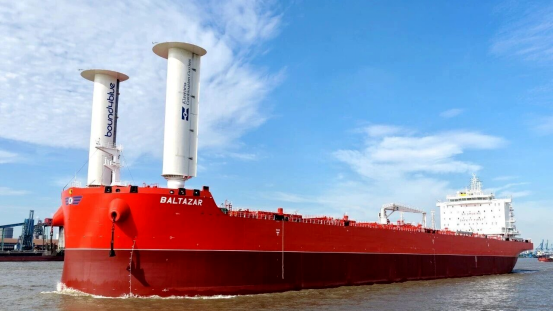
On August 12, Jiangsu New Yangzi Shipbuilding, a subsidiary of Yangzijiang Shipbuilding Group, delivered the 83,300 DWT mixed-cargo vessel “BALTAZAR”, built for the Norwegian shipowner KLAVENESS Mixed Cargo Shipping. The delivery documents were signed on August 6.
In 2023, Yangzijiang Shipbuilding Group signed a contract with Norwegian shipowner Klaveness Combination Carriers for the construction of three third-generation 83,300 DWT caustic soda/bulk combination carriers, all scheduled for delivery in 2026.
This delivery marks the final vessel in the series. The vessel has a length of 228.40 meters, a depth of 20.90 meters, a beam of 34.80 meters, and a structural draft of 14.5 meters. Its deadweight tonnage at full load is approximately 83,300 DWT, and the vessel is classified by DNV.
As a third-generation CABU green mixed-cargo vessel, the “BALTAZAR” retains the core advantages of this vessel type in terms of its ability to carry a wide variety of cargoes. Both its main and auxiliary engines meet the current Tier III emissions standards, the highest available. The vessel features air lubrication, sails, and shaft generators, and is designed to accommodate future conversions to methanol or LNG fuel, providing room for upgrades to support long-term operations.
It is worth noting that the “BALTAZAR” is the first vessel in this class to be equipped with the eSail suction sail wind-assisted propulsion system. Two sets of bound4blue eSail suction sails are installed at the bow of the vessel. This system does not feature a traditional hollow air duct structure; instead, its core consists of a high-lift rigid wing with a built-in fan that generates thrust through active airflow control.
A high-power fan system is integrated within the wing, which draws in air upon activation and accelerates the flow across the wing surface. By utilizing the Coanda effect to keep the airflow tightly attached to the wing, it generates lift/thrust up to 6–7 times that of a traditional sail of the same size. With a robust, wing-like appearance (rather than a cylindrical air duct), the system features automatic rotation, flap adjustment, and suction intensity control. An autonomous control system optimizes its orientation based on real-time wind conditions. It has received DNV type certification and ABS thrust algorithm verification, and is expected to reduce the vessel’s fuel consumption by 10% to 30%.