


Indian shipbuilder Swan Defence and Heavy Industries (SDHI) has signed a contract with a Norwegian shipowner to build a batch of chemical tankers, marking the largest single shipbuilding order ever placed by an Indian shipyard.
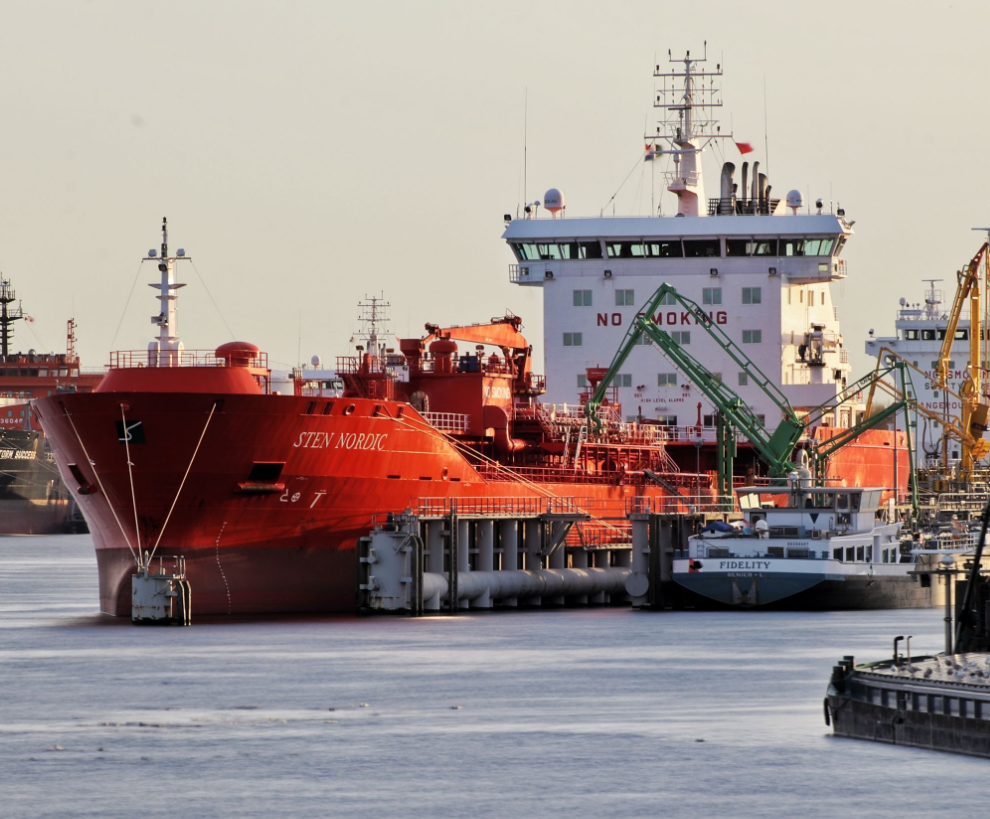
On January 23, SDHI issued a statement announcing that it had formally signed a contract with Norwegian shipowner Rederiet Stenersen for the construction of six 18,000 DWT IMO Type II chemical tankers, with an option for six more vessels. The total contract value amounts to US$227 million. Based on this figure, the unit price for the first six vessels is approximately US$37.83 million each.
The new vessels will be constructed at SDHI’s Pipavav Shipyard in Gujarat, marking the first major shipbuilding order secured by SDHI following its takeover and revitalization of the facility. The first vessel is scheduled for delivery within 33 months, by the fourth quarter of 2028, with subsequent ships to follow at fixed intervals.
Notably, SDHI and Rederiet Stenersen had already reached a letter of intent for up to 12 chemical tankers as early as November 2025. The formalization of this shipbuilding contract not only marks the largest single commercial shipbuilding order secured by an Indian shipyard to date but also represents the first chemical tanker construction contract ever awarded to an Indian shipyard.
This chemical tanker measures approximately 150 meters in length overall and 23 meters in beam. The vessel was jointly designed by Norway’s Marinform AS and Poland’s StoGda Ship Design and Engineering Company, and is classified by Det Norske Veritas (DNV).
The new vessel will be constructed to Ice Class 1A standards and equipped with an automated hybrid propulsion system to enhance maneuverability and operational flexibility. It features “future adaptability,” with a design allowing for future conversion to methanol or liquefied natural gas (LNG) fuel. The design also reserves space for battery capacity upgrades up to 5,000 kilowatt-hours.
According to its official website, Rederiet Stenersen currently owns and operates a fleet of 20 chemical/product tankers with deadweights ranging from 13,000 to 18,500 tons. All vessels are primarily deployed on Nordic routes and equipped to the highest standards to meet customer requirements and withstand the demanding operational conditions of the Nordic shipping lanes.
Data shows that Pipavav Shipyard was established in 1997 and boasts India’s largest dry dock (662 meters long, 65 meters wide). The yard covers an area of 2 million square meters and is capable of constructing VLCCs and offshore equipment. It features a dedicated offshore engineering dock (750 meters × 265 meters). The facility undertakes the fabrication, installation, and loading of large platforms, offshore structures, and heavy engineering modules weighing up to 10,000 tons. Pipavav Shipyard has now completed a $250 million renovation and upgrade project, gaining the capability to build large commercial vessels. The yard currently accounts for nearly 30% of India’s total shipbuilding capacity.
In the shipbuilding business sector, SDHI has recently announced several collaborations, including exploring cooperation with South Korea’s shipbuilding giant Samsung Heavy Industries in areas such as new ship design, procurement, and production management (EPM) as well as offshore engineering projects. Additionally, SDHI has partnered with Dutch ship design company Royal IHC for the design, construction, and conversion of offshore construction vessels, pipe-laying vessels, and multi-purpose support vessels.
India has emerged as a noteworthy emerging market for the global shipbuilding industry. The country has set a development goal for its shipbuilding sector—to be among the top ten global shipbuilders by 2030 and to break into the top five by 2047. To achieve this plan, India has allocated a massive $5.4 billion in subsidies to its shipbuilding industry, including $3 billion in direct shipbuilding subsidies and $2.4 billion in shipyard infrastructure investment. This investment program will continue until 2036 and may be extended to 2047.
This marks the first-ever chemical tanker order secured by an Indian shipyard, representing the latest achievement in India’s efforts to bolster its shipbuilding industry.