


An accident occurred at HD Hyundai Heavy Industries’ (formerly Hyundai Heavy Industries) Ulsan shipyard where a 2.3-ton steel plate fell, resulting in the death of a worker in his 40s. The safety officer responsible for the incident was prosecuted for failing to implement safety measures. His suspended prison sentence has now officially taken effect.
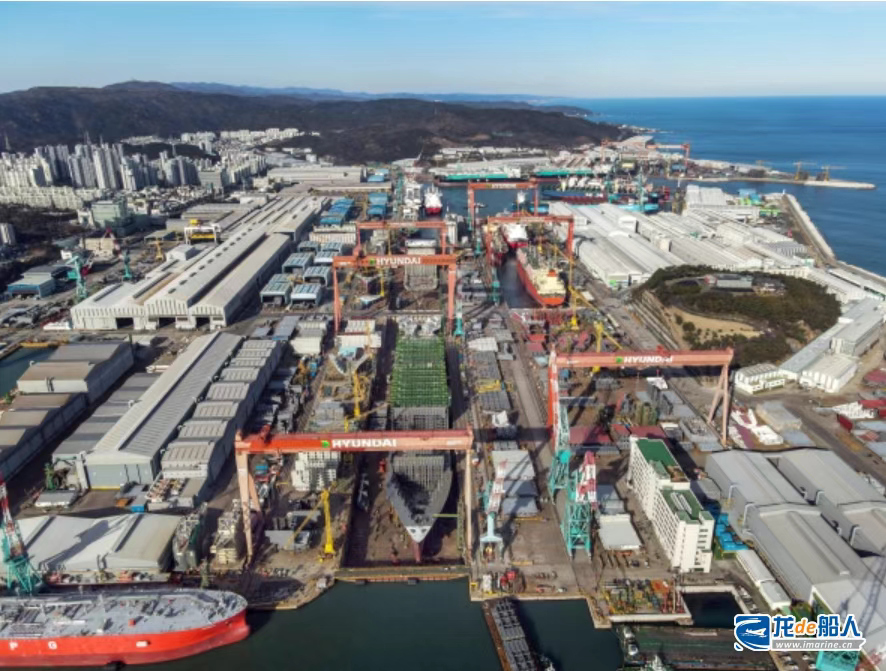
South Korean media recently reported that the court has upheld the original verdict against Mr. Lee, representative of HD Hyundai Heavy Industries’ Shipbuilding & Offshore Division.
Li was sentenced to six months in prison, suspended for one year, on charges of professional negligence resulting in death and violating South Korea’s Industrial Safety and Health Act. HD Hyundai Heavy Industries was fined 20 million won. Three other defendants—including on-site managers and workers—received fines ranging from 5 million to 8 million won.
According to reports, the accident occurred in February 2021 at the Hyundai Heavy Industries Shipbuilding and Offshore Division’s factory in Dong-gu, Ulsan. During the process of arranging steel plates for the ship’s hull, a 2.3-ton outer plate suddenly fell, striking a worker passing by. The outer plate, which had a curved shape on one side, was highly susceptible to losing its balance. The accident occurred while the plate was being lifted by a crane and secured to a support structure.
According to South Korea’s Industrial Safety and Health Act, when companies conduct heavy lifting operations, employers must develop a work plan to prevent fall risks, designate the surrounding area as a restricted zone, or require workers to wear protective equipment and implement other safety measures. However, the investigation revealed significant shortcomings in these safety precautions at the incident site.
Both the first and second instance courts found the person responsible for safety in the case guilty, citing the reason that “the risk of falling during heavy object handling was entirely foreseeable, yet no corresponding accident prevention plan was implemented at the site.”
The appellate court also specifically pointed out that, “Considering the characteristics of the factory premises of large and medium-sized manufacturing enterprises, it is objectively difficult to identify all potential risks in advance and implement corresponding safety measures; however, at the very least, Mr. Li, as the person responsible, should have been able to foresee the occupational safety hazards involved in heavy lifting operations, but failed to take or adequately take appropriate preventive measures.” The Supreme Court of South Korea also found no impropriety in the original judgment and therefore dismissed the company’s appeal.