


Data from the shipping consultancy Alphaliner reveals that the fleet of the world’s largest shipowner, Mediterranean Shipping Company (MSC), has reached another milestone: since August 2020, the company has acquired more than 500 secondhand container ships.
MSC achieved this milestone with the acquisition of the 2,796 TEU Calandra and the 1,732 TEU Fitz Roy, purchased for $27 million and over $26 million, respectively.
In its latest weekly report, Alphaliner described MSC’s buying spree as unprecedented in the history of container shipping—a feat that would be difficult for other liner companies to replicate.
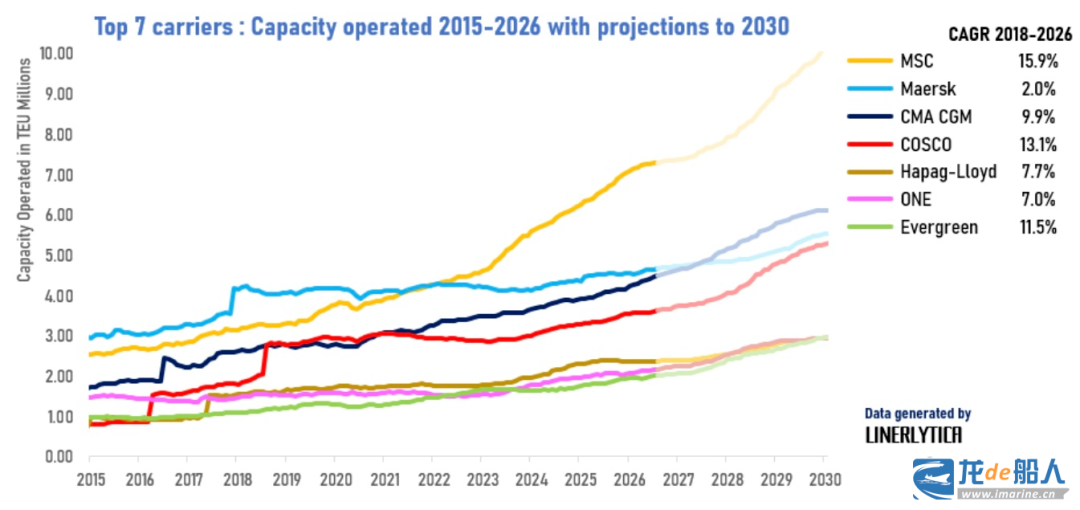
When MSC founder and Captain Gianluigi Aponte launched this aggressive expansion into the secondhand market in August 2020, the company’s fleet capacity stood at approximately 3.8 million TEU. Six years later, MSC’s fleet capacity has surged to nearly 7.4 million TEU, accounting for over 21% of total global liner capacity.
MSC’s initial large-scale acquisition of secondhand container ships was aimed at replacing chartered tonnage with owned vessels; however, this move quickly evolved into a pivotal component of its unprecedented fleet expansion strategy.
Newbuilding programs have also played a crucial role in this expansion. Notably, MSC increased its fleet capacity from 6 million TEU to 7 million TEU in just 15 months—an addition of 1 million TEU that included approximately 799,000 TEU contributed by 68 new vessels.
To date, MSC holds an orderbook exceeding 2 million TEU in capacity. Furthermore, frequent market reports regarding plans to order large dual-fuel container ships indicate that the company’s fleet expansion drive is far from over.
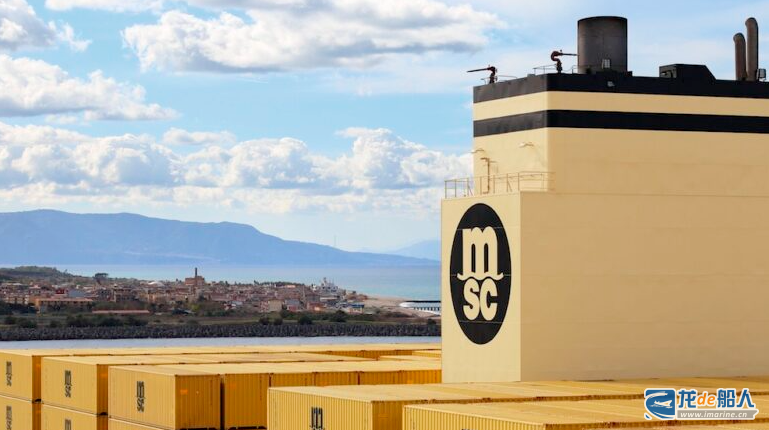
MSC’s aggressive expansion has fundamentally reshaped the global liner shipping landscape.
In early 2022, MSC overtook Maersk to become the world’s largest container shipping company; at that time, each carrier controlled a capacity slightly exceeding 4.2 million TEU.
Four years later, MSC’s fleet capacity has surged to nearly 7.4 million TEU. Meanwhile, Maersk—adhering to a long-standing policy of capping its container fleet capacity—operates a fleet of 4.7 million TEU; notably, this figure far exceeds the company’s previously emphasized strategic target of maintaining capacity within the 4.0 to 4.4 million TEU range. The capacity gap between the two carriers has now widened to approximately 2.7 million TEU.
More importantly, backed by its massive fleet, MSC has achieved something other leading liner operators have not attempted: operating major East-West routes without participating in a global vessel-sharing alliance.
Following the termination of the “2M” alliance with Maersk in February 2025, MSC launched its own independent service network; while it retains selective slot-exchange arrangements—including collaborations with members of the “Premier Alliance”—it no longer relies on alliance partners to provide the vessels needed to build a global network.