


Industry sources report that the U.S. Coast Guard icebreaker “Healy” has once again experienced a “major mechanical failure” and has now been towed back to its home port in Seattle for an investigation into the incident and major repairs. The duration of the repairs has not yet been disclosed. The failure occurred during sea trials following a major overhaul at a shipyard, in waters off the coast of Washington State.
The U.S. Coast Guard stated that at the time of the incident, the “Healy” was conducting sea trials in waters northwest of Port Angeles. Public video footage shows that on July 13, the tugboat “Marshall Foss,” operated by Foss Maritime, was towing the “Healy” from Port Angeles to Seattle. Automatic Identification System (AIS) data also indicates that the vessel was being towed after completing its sea trials in Washington State waters.
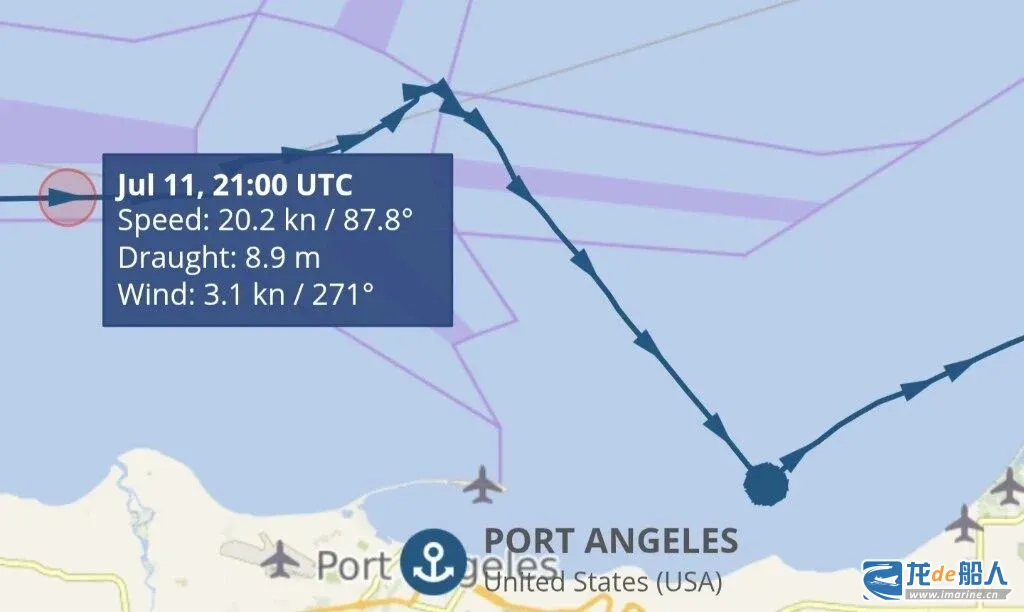
Based on AIS data, in the days leading up to the incident, the “Healy” had been conducting high-speed sea trials west of Port Angeles, with its speed at one point exceeding 20 knots. Its speed then dropped sharply to around 2 knots, and the vessel completely lost its ability to navigate under its own power. Subsequently, the “Marshall Foss” proceeded to Port Angeles and towed the vessel all the way back to Seattle.
According to sources familiar with the matter, The “Healy” recently underwent a major overhaul at a shipyard. The mechanical failure in question involved a crankcase explosion in one of the vessel’s engines during sea trials. No one was injured in the incident, and the affected engine room was immediately taken out of service following the incident.”
As of now, the U.S. Coast Guard has not disclosed the specific cause of the malfunction or details regarding the damage to the equipment.
The report cited a marine engineering expert as saying that the extent of damage caused by a crankcase explosion varies greatly, ranging from minor damage to localized equipment to complete engine destruction in severe cases.
The “Healy” is powered by a diesel-electric propulsion system and is equipped with four Sulzer 12ZAV40S medium-speed diesel generators, housed in two separate engine rooms separated by fire-resistant bulkheads. This propulsion layout, derived from Finnish icebreakers, features a redundant design; both engine rooms can operate independently, meaning that a failure in a single engine room will not directly result in a complete loss of propulsion for the vessel.
Currently, modern marine diesel engines are all equipped with crankcase relief valves, which are designed to release pressure in the event of an internal explosion and, in many cases, can limit the extent of damage. Minor explosions typically require only equipment repairs, cleaning of oil mist from the engine room, and replacement of damaged components (if any).
However, a severe explosion could cause cracks in the engine mount, damage to the crankshaft, or trigger a secondary fire, potentially requiring extensive repairs or even engine replacement. The exact extent of the damage to the USS “Healy” has not yet been disclosed.
Marine engineers point out that even in the event of a severe crankcase explosion, the vessel involved is typically still repairable, and the incident does not necessarily mean the vessel is a total loss. Since the “Healy” is equipped with four main diesel generators located in two separate engine rooms, an accident affecting one of those engine rooms does not necessarily result in the vessel being written off entirely. However, it is expected that the U.S. Coast Guard will suspend the vessel’s operations until the cause of the accident is determined and all repairs are completed.
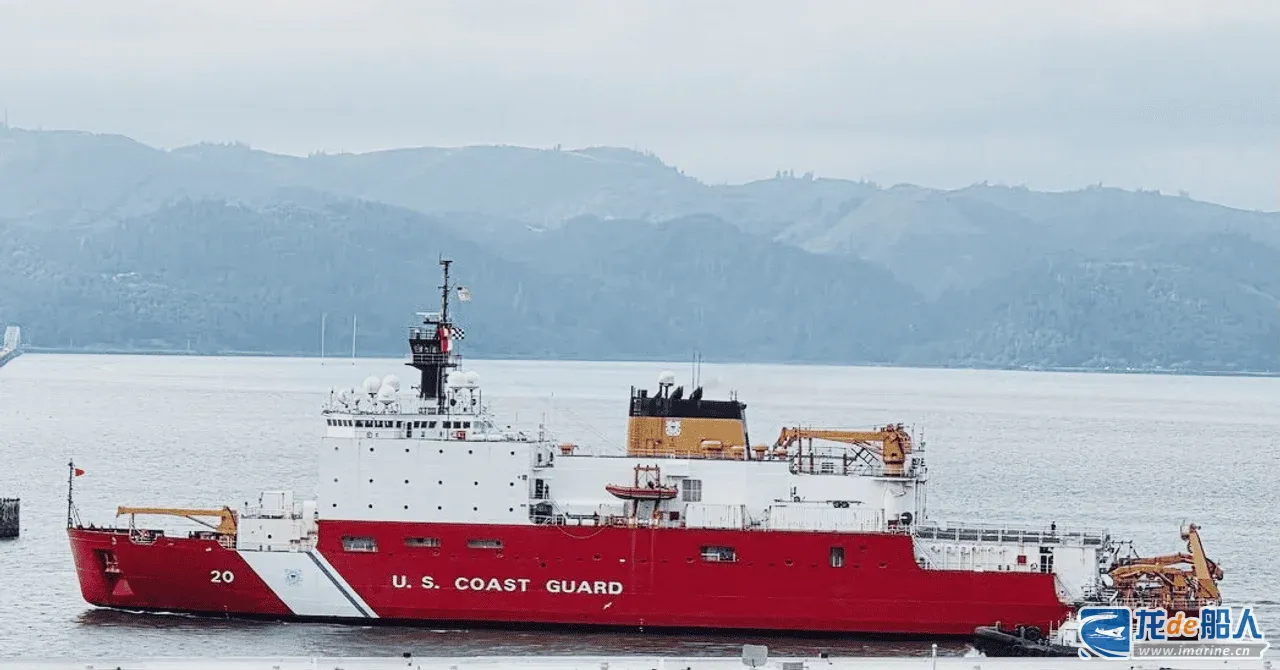
This incident marks yet another major equipment failure recently experienced by the U.S. Coast Guard’s largest and most scientifically capable polar research icebreaker.
In 2020, a fire broke out in the propulsion motor of the “Healy” while the vessel was on a mission in the Arctic, forcing the cancellation of that year’s Arctic deployment. The vessel was subsequently returned to service after undergoing extensive repairs, including the replacement of the starboard propulsion motor. In August 2024, another fire broke out on the vessel, leading to the premature termination of its Arctic patrol mission.
According to records, the USS Healy is 420 feet (approximately 128 meters) long and 82 feet (25 meters) wide. It was officially commissioned in 1999 and has been in service for 27 years. It is currently the U.S. Navy’s primary high-latitude scientific research icebreaker, primarily tasked with conducting marine scientific research, Arctic situational awareness, and national security operations. As sea ice melts, sparking growing commercial and strategic interest in the Arctic from various parties, the ship’s importance has become increasingly prominent.
Currently, the U.S. Coast Guard faces a significant shortfall in icebreaker capacity, with only three vessels in service: the malfunctioning “Healy”, the aging “Polar Star”—which entered service in 1973—and the “Storis”, which was converted from a maritime supply vessel. If the “Healy” requires an extended repair period, it will directly impact its deployment to the Arctic region.