


Following its announcement earlier this year that it intended to resume the construction of liquefied natural gas (LNG) carriers, Japan has set a goal to revitalize its LNG carrier construction capacity by 2035 and is seeking technical cooperation with South Korea. This marks Japan’s return to LNG carrier construction after a seven-year hiatus.
According to the Nikkei, Japan’s three major shipbuilders—Imabari Shipbuilding, Kawasaki Heavy Industries, and Namura Shipbuilding—have decided to resume LNG carrier construction, with plans to achieve an annual production capacity of 3 to 5 LNG carriers by around 2035.
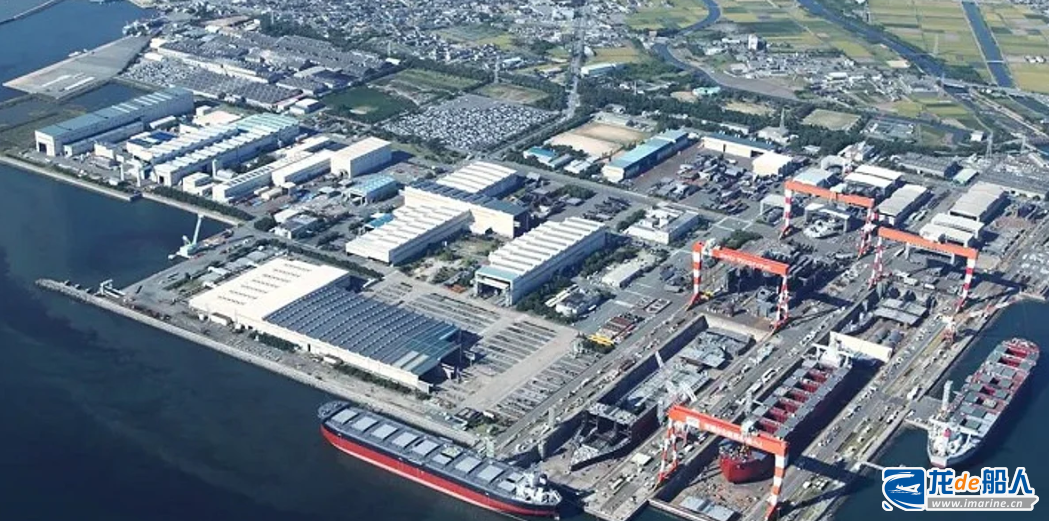
Imabari Shipbuilding, Kawasaki Heavy Industries, and Namura Shipbuilding plan to establish a joint construction system by sharing their respective LNG carrier design technologies and welding technician resources. The Kawasaki Heavy Industries Sakaide Plant is the candidate for the core construction base, and the possibility of other shipyards joining this cooperative alliance in the future has not been ruled out.
At the same time, the Japanese government is considering providing subsidies to shipowners who order LNG carriers from Japanese shipyards to bridge the price gap between Japanese shipyards and those in China and South Korea in the new-build LNG carrier market, thereby enhancing Japan’s competitiveness in this segment.
Currently, Japan has designated the shipbuilding industry as one of 17 key investment sectors, and supporting the construction of LNG carriers is a core investment aimed at driving the industry’s development. According to reports, Japan plans to formulate and release a “Public-Private Investment Roadmap” in June, which will include the resumption of LNG carrier construction by domestic shipyards within the scope of the policy.
Reports indicate that Japan’s resumption of LNG carrier construction is aimed at ensuring energy transportation capacity. Japan relies on imports for as much as 98% of the LNG required for power generation and city gas, and LNG carriers are indispensable for transporting imported LNG. Currently, approximately 100 LNG carriers handle Japan’s LNG import transportation. Based on a 20-year vessel replacement cycle, building five vessels domestically each year would be sufficient to maintain the necessary domestic LNG transport capacity.
Although Japan is striving to enhance its national energy security by resuming the construction of LNG carriers, this is by no means an easy task for the Japanese shipbuilding industry.
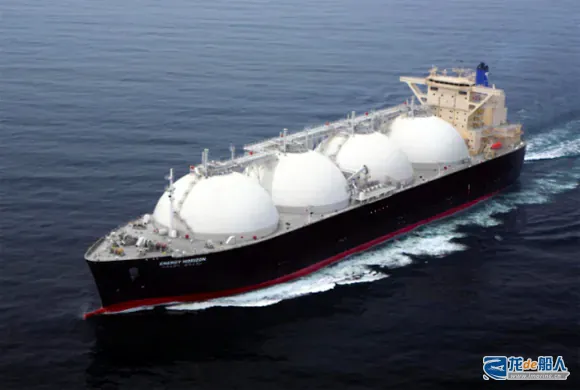
First, Japanese shipbuilders have had a seven-year hiatus in the LNG carrier construction market since Mitsubishi Heavy Industries and Kawasaki Heavy Industries each delivered one LNG carrier in 2019. Second, Japanese shipyards previously focused primarily on building Moss-type LNG cargo tanks, rather than the currently dominant membrane-type LNG cargo tanks; therefore, the shift in cargo tank types presents another major challenge for Japanese shipyards as they resume this business. The combination of these two factors means that the shipbuilding technology previously accumulated by Japanese shipyards no longer holds a competitive advantage.
Thus, Japan is seeking cooperation with South Korean shipbuilders to introduce new LNG carrier construction technologies—such as those for membrane-type LNG cargo tanks—in order to address its technical and production capacity shortcomings.
The Nikkei reported: “The Japanese government and three shipbuilders (Imabari Shipbuilding, Kawasaki Heavy Industries, and Namura Shipbuilding) are seeking to collaborate with South Korean shipbuilders that possess technology for constructing membrane LNG cargo tanks, in order to help Japanese shipbuilders resume the construction of LNG carriers. Japan is exploring plans to obtain technology licenses and complete technology transfers from South Korean shipbuilders, and is seeking technical cooperation with GTT, a French company that holds core patents for membrane-type LNG cargo tanks.”
During the 1980s and 1990s, Japanese shipbuilders held a near-monopoly on the global LNG carrier market. However, as South Korean shipbuilding technology gradually matured in the 2000s, the competitiveness of Japanese shipbuilders was undermined, and their market share declined year by year.
At that time, Japanese shipbuilders insisted on using Moss-type LNG cargo tanks, which consist of multiple spherical tanks. In contrast, South Korean shipbuilders favored membrane-type LNG cargo tanks, which improve storage efficiency, and were the first to popularize them in the market. This allowed them to overtake their competitors and rapidly increase their market share.