


Benefiting from the recovery trend in the global new shipbuilding market, HD Hyundai Heavy Industries’ labor and management have begun negotiations on a collective bargaining agreement for 2026 wages. Intense negotiations are expected regarding the actual wage increases and the proportion of performance-based pay.
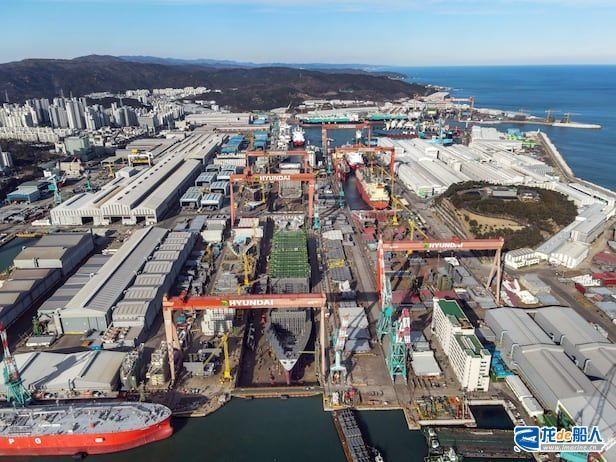
On June 2nd, HD Hyundai Heavy Industries held a kick-off meeting for the 2026 wage and collective bargaining agreement negotiations at its Ulsan headquarters. Members of the negotiation committees from both labor and management attended the meeting, during which both sides reached an agreement on the comprehensive negotiation schedule and operational plan for related matters.
According to the plan, HD Hyundai Heavy Industries and its labor union are set to launch the first round of negotiations regarding 2026 wages and the collective agreement on June 9, with subsequent consultations scheduled to take place twice a week. Executives at the company emphasized the critical importance of labor-management cooperation in navigating changes in the internal and external business environment, expressing hope that both sides would achieve shared goals through constructive dialogue.
The labor union stated that it would avoid unnecessary confrontation while striving to secure job security and improved compensation for its members, emphasizing that the negotiations should chart the right course for safeguarding workplace jobs and ensuring employment stability.
Prior to the official start of negotiations, the HD Hyundai Heavy Industries labor union submitted a list of demands regarding wages and the collective agreement for 2026 to management. These demands include a base salary increase of 141,496 won, a 100% increase in bonuses, an expansion of the scope of “ordinary wages,” new hiring, and a requirement to consult with the union on employment security measures should AI technology be introduced at the shipyard.
Notably, the HD Hyundai Heavy Industries labor union has put forward a bold core demand: that management allocate at least 30% of operating profit to employees as performance bonuses. This marks the first time such a high, fixed-percentage compensation scheme has been proposed in the South Korean shipbuilding industry. The union justifies this by pointing to the recent upswing in the global new shipbuilding market and the significant improvement in shipbuilders’ profitability, arguing that operating profits should be equitably shared with the shipyard workforce.
In 2025, HD Hyundai Heavy Industries distributed approximately 418.2 billion won (approx. US$271 million) in bonuses to its 15,353 regular employees—representing about 20.5% of its 2.04 trillion won operating profit—with each employee receiving an average of 27 million won (approx. US$17,500). In contrast, the union’s demand for 2026 represents an increase of nearly 10 percentage points over the previous year’s level.
Regarding this bold demand, a South Korean shipbuilding executive commented: “While shipbuilders’ profitability has indeed improved over the past few years, shipbuilding profits are subject to extreme cyclical volatility; there are concerns that structurally committing to distribute a fixed percentage of operating profit could undermine the company’s ability to invest in the future.”
Based on the experience of negotiations over the past few years, labor and management at HD Hyundai Heavy Industries are expected to face intense discussions in 2026 as well.