


Defense media outlet Breaking Defense reported that the U.S. Department of Defense is considering commissioning South Korean or Japanese shipyards to build submarines for the U.S. Navy. Potential candidates include three South Korean shipyards—HD Hyundai Heavy Industries, Hanwha Ocean, and Samsung Heavy Industries—as well as three Japanese shipyards—Mitsubishi Heavy Industries, Kawasaki Heavy Industries, and Japan Marine United (JMU).
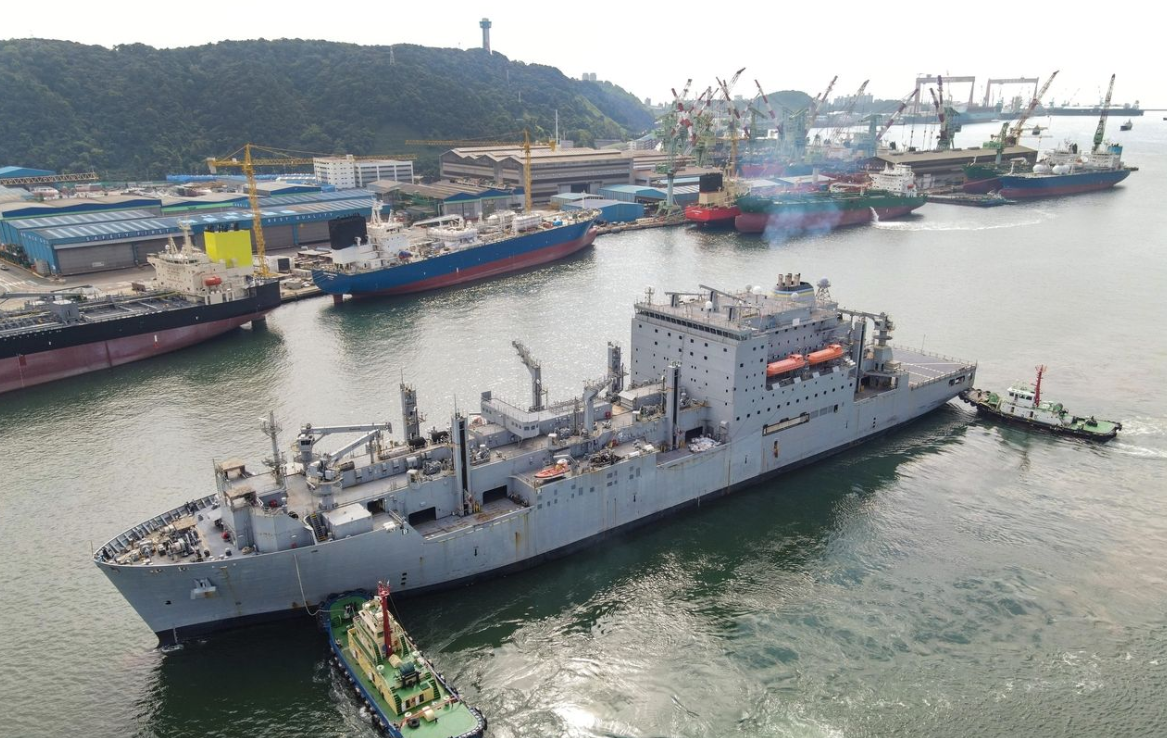
According to reports, the proposed defense shipbuilding project is valued at $1.85 billion. This funding is part of the U.S. Department of Defense’s $350 billion budget coordination plan and will be used to support potential defense shipbuilding projects, as well as to enable the U.S. Navy to assess the capacity of South Korean and Japanese shipyards to build future cruisers, destroyers, and frigates.
Breaking Defense quoted an official from the White House Office of Management and Budget as saying, “The United States plans to fund the construction of the hulls, propulsion systems, and electrical systems—among other basic hull structures—for up to two ships at shipyards in South Korea and Japan; the shipboard combat systems and other military technologies will be integrated and installed at U.S. shipyards.”
This construction model is nothing new for the U.S. shipbuilding industry. A similar approach was previously employed for the polar icebreaker program, where hull sections for the lead ship were built at a Finnish shipyard, while the subsequent final assembly was carried out at a domestic shipyard in Louisiana.
However, U.S. officials emphasized that the plan to outsource the construction of basic ship hulls to South Korean and Japanese shipyards does not represent a long-term shift of U.S. defense shipbuilding projects to overseas facilities; rather, it aims to bolster U.S. shipbuilding capacity by encouraging foreign shipbuilders to invest in domestic shipyards.