


On May 27, Samsung Heavy Industries announced that it had signed an order with a Bermuda shipping company for five new vessels of three types, totaling 1.0018 trillion won (approximately $667 million).
Specifically, the order includes one liquefied natural gas (LNG) carrier, two very large liquefied gas carriers (VLGCs), and two crude oil tankers, all ordered by the same shipowner and expected to be delivered before October 2028.
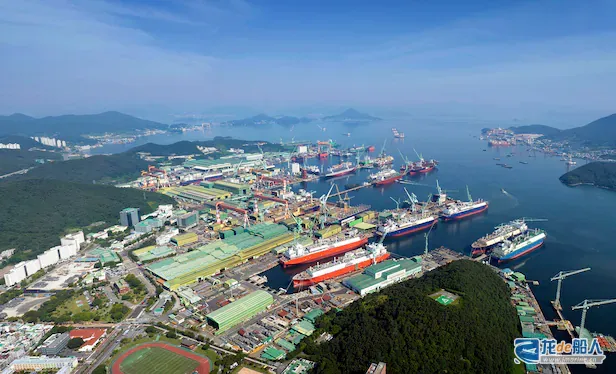
Although Samsung Heavy Industries has not disclosed the shipowner information, market sources indicate that the new vessels are related to US banking giant JPMorgan Chase.
To date, JPMorgan Chase has secured orders for 12 new vessels from Samsung Heavy Industries this year, worth approximately $1.66 billion, including 3 LNG carriers, 4 VLGCs, and 5 crude oil tankers. Based on previously disclosed shipbuilding contracts, the unit prices for LNG carriers, VLGCs, and crude oil tankers are approximately $250 million, $113.5 million, and $90 million, respectively.
For Samsung Heavy Industries, the shipyard has already secured several new orders in the gas carrier market this month. In addition to the newly announced projects, these include 3 LNG carriers ordered by Seapeak, 2 LNG carriers ordered by Greek TMS Cardiff Gas, and a 170,000 cubic meter LNG-FSRU ordered by Malaysian International Shipping Company (MISC).
With the latest orders, Samsung Heavy Industries has secured orders for 27 new vessels, worth approximately $5.4 billion, so far this year, achieving 38.8% of its annual order target of $13.9 billion, equivalent to 68.4% of its 2025 annual order target of $7.9 billion.
By vessel type, these include 12 LNG carriers, 1 LNG-FSRU, 2 ethane carriers, 4 gas carriers, 2 container ships, and 6 crude oil tankers.
A Samsung Heavy Industries representative stated, “It’s rare for a single shipowner to order multiple vessel types from a single shipyard simultaneously. High-value-added vessel types help improve profitability, while conventional vessel types help maximize production stability and efficiency.”