


On March 23, some employees at Bath Iron Works went on strike. As a major U.S. defense contractor, this marked the first strike at Bath Iron Works in six years. The striking workers accounted for about one-tenth of the plant’s total workforce and consisted primarily of designers, administrative staff, and technicians.
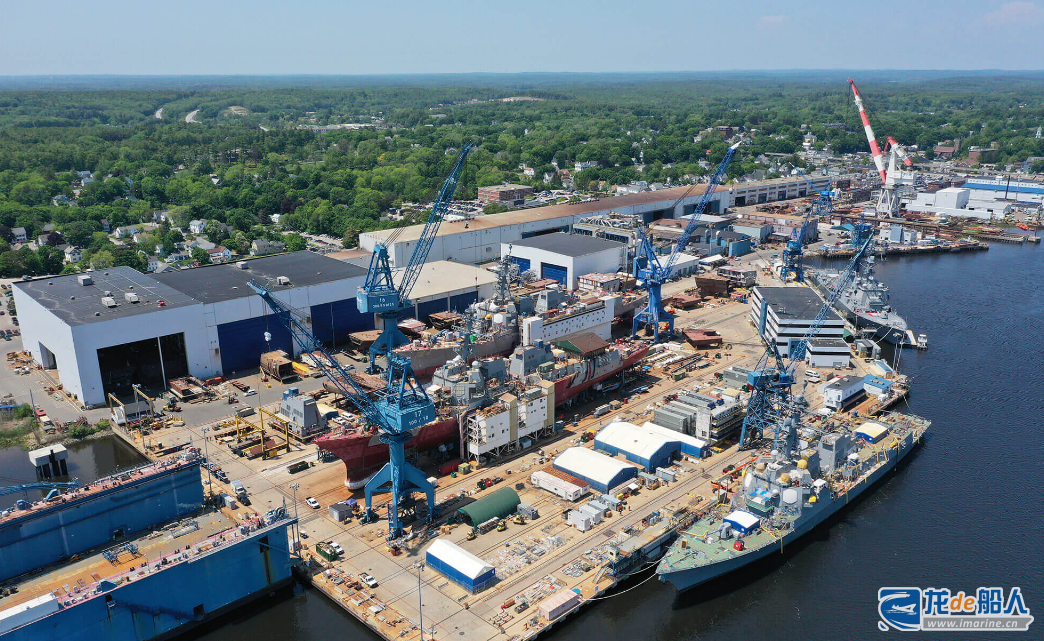
Bath Iron Works reportedly employs over 6,800 people. The strike, initiated by the Bath Marine Draftsmen’s Association, involves more than 620 union members. This union is affiliated with the United Automotive, Aerospace and Agricultural Machinery Workers (UAW), the largest labor union in the United States. The striking employees are primarily responsible for ship design, non-destructive testing, technical clerks, laboratory technicians, and assistant engineers.
The head of the Bath Marine Draftsmen’s Association stated that the union has rejected the pay offer from Bath Iron Works, a subsidiary of General Dynamics, with union members expressing dissatisfaction with the offer, as well as the coverage of insurance and retirement income guarantees.
A Bath Iron Works spokesperson stated that negotiations with the union had lasted three weeks, but no agreement had been reached on a new collective bargaining agreement. The shipyard’s reportedly best and final offer is a combined wage increase of 23.8% over the next four years, with a 10% increase in the first year (2026) and an annual increase of 4% for the following three years.
It is worth noting that more than a month before the strike, U.S. Defense Secretary Pete Hegseth visited Bath Iron Works for what he called a “Freedom Arsenal Tour.” During his visit to the shipyard, Hegseth called for revitalizing American manufacturing, activating the workforce, strengthening the defense industrial base, and emphasized the strategic importance of the shipbuilding industry.
The shipyard stated that it plans to maintain production operations during the strike by mobilizing other paid full-time employees, outsourced workers, and employees who volunteer to come to work. It also stated that it will continue to negotiate with the union in an effort to reconcile the goals of both parties.
It is understood that Bath Iron Works last struck in 2020, six years ago, when the shipyard experienced a two-month-long general strike. At that time, 4,300 employees of the International Union of Machinists and Aerospace Workers (IUMW) went on strike over issues such as outsourcing and seniority rights, causing the factory to shut down.
According to reports, the last strike at Bath Iron Works took place in 2020—six years ago—when the shipyard experienced a two-month-long full-scale strike. At that time, 4,300 employees of the International Association of Machinists and Aerospace Workers walked off the job over issues such as the use of contract workers and seniority rights, bringing production at the plant to a halt.
Currently, Bath Iron Works is the builder of the U.S. Arleigh Burke-class destroyers and received a new order from the U.S. Navy in August 2025.
Bath Iron Works currently has seven ships under construction, including the Arleigh Burke-class IIA destroyers USS Harvey C. Barnum Jr. (DDG 124) and USS Patrick Gallagher (DDG 127), as well as the Arleigh Burke-class III destroyer USS Louis H. Wilson Jr. (DDG 126), the USS William Schult (DDG 130), the USS Quentin Walsh (DDG 132), the USS John E. Kilmer (DDG 134), and the USS Richard G. Lugar (DDG 136).
According to public information, Bath Iron Works was founded in 1884 and is headquartered in Bath, Maine. As a full-service shipyard operating under General Dynamics Marine Systems, it specializes in the design, construction and support of sophisticated surface combatants for the United States Navy.
The main Bath Iron Works facility features a 229-foot-long dry dock, three slipways, three piers, a fitting-out pier, four gantry cranes, and indoor workshops for pre-fitting and assembly. The shipyard has two main assembly shops: the larger shop, spanning 15,000 square meters, houses a plate-making line (the starting point of the steel assembly process) and multiple workstations; the smaller shop, covering 3,700 square meters, is equipped with seven workstations.