


Petrobras, Brazil’s state-owned oil company, has placed orders for 41 new vessels with Brazilian shipyards at a cost of 2.8 billion reais (approximately US$521 million), signaling a potential recovery for Brazil’s shipbuilding industry.
On January 19, Petrobras and its logistics subsidiary Transpetro signed shipbuilding contracts with three Brazilian shipyards under the “Ocean Opening Plan”, according to information from Petrobras’ official website. Brazilian President Lula attended the signing ceremony and witnessed the signing.

The newly contracted shipbuilding project aims to renew and expand Petrobras’ fleet, with a total investment of 2.8 billion reais. It involves the construction of 41 new vessels, expected to create over 9,000 direct and indirect jobs in Brazil. Under the contract, the newly contracted vessels include 5 gas carriers, 18 barges, and 18 tugboats. Upon completion, all vessels will be operated by Transpetro and constructed at shipyards across three Brazilian states.
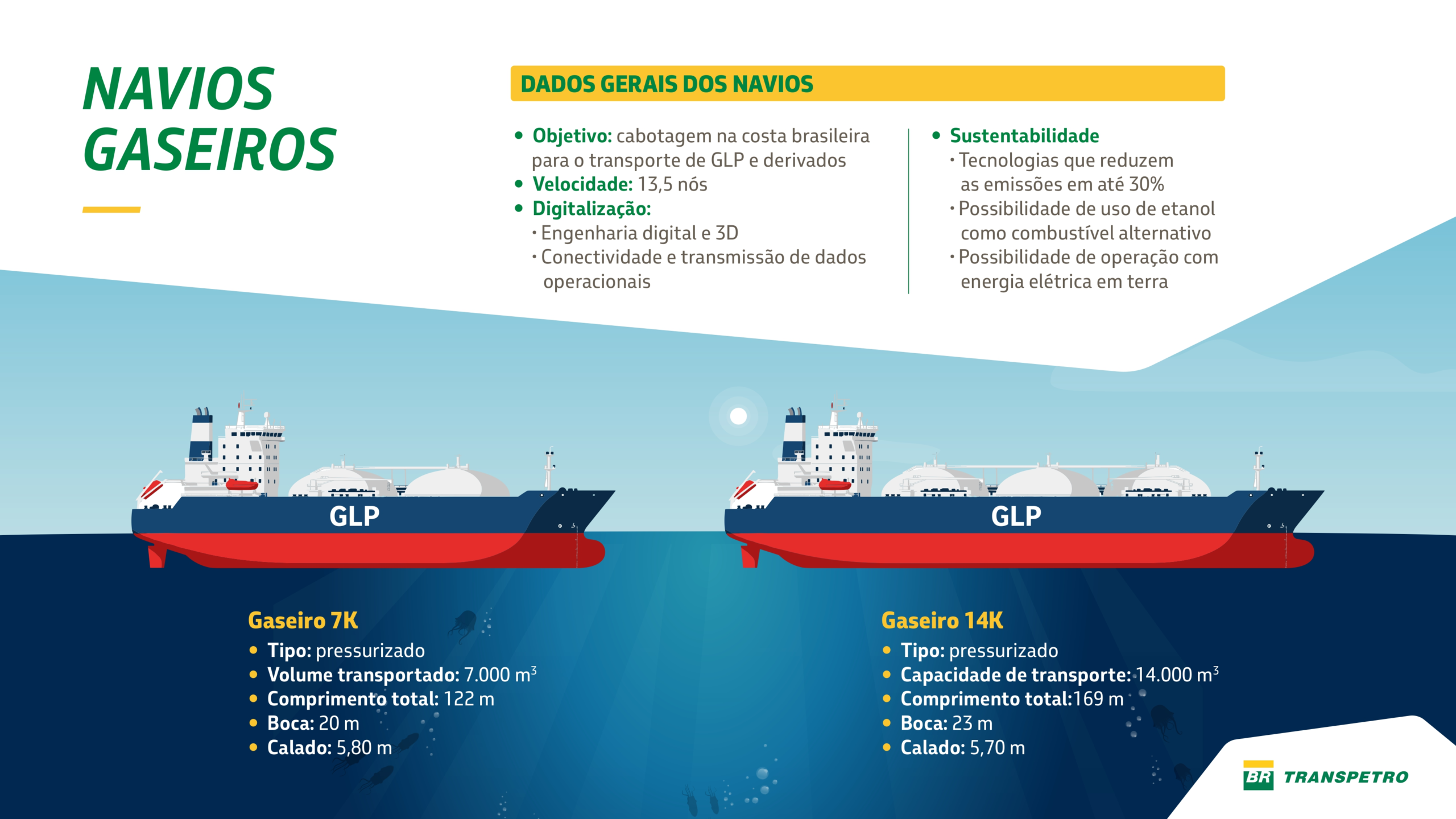
Five gas carriers
The gas carrier project was procured through an international open tender, divided into two contract packages, with plans to construct eight vessels.
The Rio Grande Shipyard in Rio Grande do Sul is constructing five gas carriers with a total investment of 2.2 billion reais. This includes three 7,000 m³ and two 14,000 m³ full-pressure liquefied gas carriers, primarily designed for transporting liquefied petroleum gas and petroleum derivatives.
Another tender involves three 10,000 m³ semi-refrigerated/semi-pressurized liquefied gas carriers, with the bidding results yet to be announced.
If all eight gas carriers are delivered, Transpetro’s fleet will expand from six to fourteen vessels, tripling its capacity to transport liquefied petroleum gas and petroleum derivatives.
It is reported that the energy efficiency of this new fleet will be improved by 20%, greenhouse gas emissions will be reduced by 30%, and the vessels will be capable of operating in electrified ports. The first vessel is expected to be launched within 33 months after commencement of construction, with subsequent vessels delivered every six months thereafter.
Petrobras noted that the order for this fleet of gas carriers fully accounts for the growth in Brazil’s natural gas production and will meet the company’s transportation needs along Brazil’s coastline, as well as in inland waterway shipping areas such as the northern regions and Lake Patus in Rio Grande do Sul.
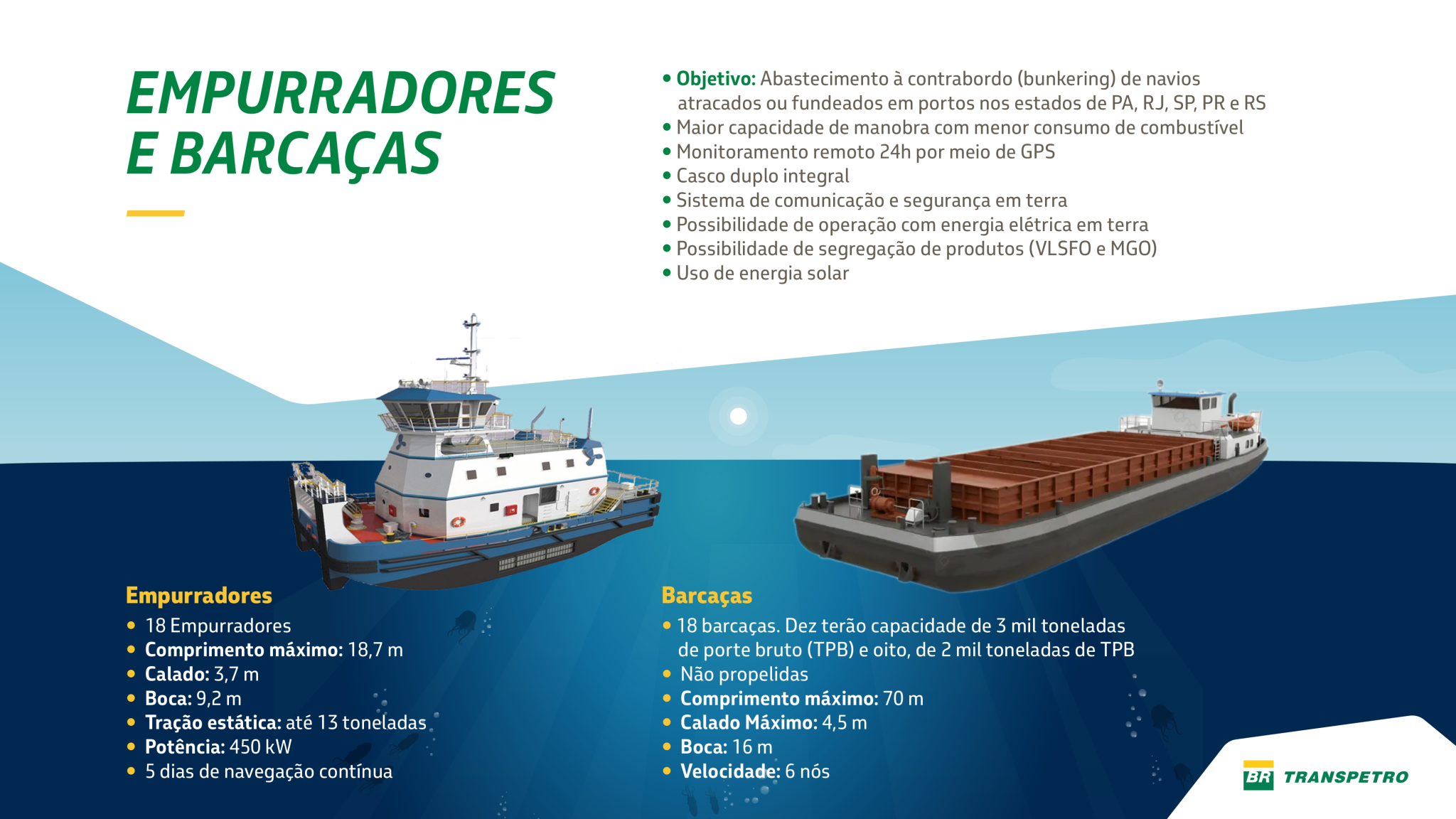
Eighteen barges and eighteen tugboats
The 18 barges in this batch order will be constructed by the Betolínia Amazon Shipyard in Amazonas State; the 18 tugboats will be built by the Santa Catarina Naval Shipyard in Santa Catarina State. The total investment for the 36 new vessels amounts to 620.6 million reais, with the shipyards securing the construction contracts through competitive bidding.
According to the contract, the specifications for the 18 barges are 3,000 tons (10 units) and 2,000 tons (8 units). The first barge is scheduled for delivery three months after commencement of construction. The first of the 18 tugboats is expected to be delivered ten months after commencement of construction.
Petrobras stated that the finalization of these barge and tugboat orders marks the company’s official entry into the inland waterway shipping sector and solidifies its position as the primary transport operator for petroleum derivatives and biofuels within Brazil’s river transport industry.
Meanwhile, the business model adopted by this project will drive vertical integration of bunkering operations, enabling Transpetro to provide fueling services through its own fleet at strategic hubs such as Belém, Rio de Janeiro, Santos, Paranaguá, and Rio Grande. This will enhance operational control capabilities, optimize costs and upgrade logistics efficiency.
Petrobras emphasized that upon delivery of all 41 new vessels ordered, the company will significantly reduce its reliance on chartered vessels, gaining greater flexibility and efficiency in logistics transportation for liquefied petroleum gas and other products. Concurrently, this investment in shipbuilding and offshore engineering orders will catalyze a new wave of commercial cooperation and development opportunities, further strengthening Brazil’s domestic industrial supply chain.
Transpetro officials commented: “The fleet renewal and expansion will enable the company to more effectively meet the nation’s growing production demands, reduce costs and strengthen national energy sovereignty. The signed contracts are expected to create over 9,000 direct and indirect jobs, revitalize the shipbuilding industry, and advance the sector’s production chain development in Brazil.”
According to reports, Petrobras’s “Open Sea Program” is expected to invest $6 billion between 2026 and 2030 to build 20 coastal transport vessels, 18 barges, and 18 tugboats, and to charter 40 new support vessels to modernize its fleet supporting exploration and production activities. The program aims to help Brazil accelerate its energy transition, expedite Transpetro’s modernization of the Brazilian domestic fleet, and support the development of the Brazilian shipbuilding industry through new vessel orders.
It is understood that Petrobras’ “Open Ocean Program” is projected to invest $6 billion between 2026 and 2030 to construct 20 coastal transport vessels, 18 barges, and 18 tugboats, while also leasing 40 new support vessels to renew the fleet supporting exploration and production activities. The initiative aims to accelerate Brazil’s energy transition, expedite Transpetro’s renewal of the domestic fleet, and bolster the Brazilian shipbuilding industry through new vessel orders.