


Imabari Shipbuilding, Japan’s largest shipbuilding group, has incorporated Japan Marine United (JMU), Japan’s second-largest shipbuilder, into its subsidiary structure. The acquisition was completed through an increase in shareholding. The restructuring transaction between Imabari Shipbuilding and JMU was initially announced on June 26, 2025, with all antitrust reviews and approval procedures declared completed on December 24 of the same year.
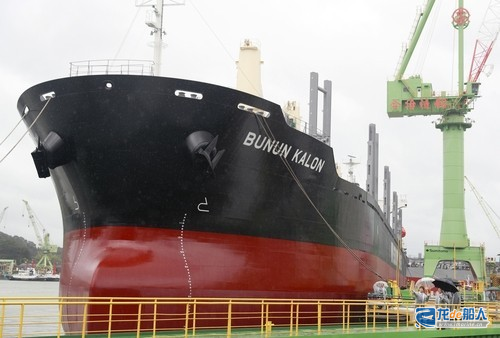
Nikkei News reports that on January 6, 2026, Imabari Shipbuilding held a press conference announcing that the three major shareholders of Japan Shipbuilding Consortium—Imabari Shipbuilding, JFE Holdings, and IHI Corporation—have completed the equity transfer of JMU. Imabari Shipbuilding has acquired 15% of the shares from each of the other two shareholders.
As of this point, the shareholdings of Imabari Shipbuilding, JFE Holdings, and IHI Corporation in JMU have been adjusted from 30%, 35%, and 35% to 60%, 20%, and 20%. JMU has officially become a subsidiary of Imabari Shipbuilding.
At the press conference, Imabari Shipbuilding President Yukito Higaki stated: “For a company to establish itself, it must prevail in international competition. Integrating JMU into our subsidiary structure will enhance competitiveness while enabling efficient management decisions… We hope this move will accelerate the construction of ships powered by alternative fuels such as liquefied natural gas (LNG).”
Nikkei reported that Imabari Shipbuilding accounts for approximately 30% of Japan’s total shipbuilding capacity, primarily undertaking commercial vessel projects; JMU holds a competitive edge in constructing specialized ships such as naval ships and icebreakers. Regarding this acquisition, Imabari Shipbuilding emphasized: “Imabari Shipbuilding will leverage JMU’s experience in constructing ships for the Maritime Self-Defense Force within the defense sector to expand into the fields of naval vessels and specialized ships.”
Data shows that the Japan Shipbuilding Federation comprises seven shipbuilding bases—Ariake Shipyard; Kure Shipyard; Tsu Shipyard; Maizuru Shipyard; Yokohama Shipyard Isogo Works; Yokohama Shipyard Tsurumi Works; Innoshima Shipyard—and operates one technology research and development center.
According to the information, JMU owns seven shipbuilding bases: Ariake Shipyard, Kure Shipyard, Tsu Shipyard, Maizuru Shipyard, Yokohama Shipyard Isogo Works, Yokohama Shipyard Tsurumi Works, and Innoshima Shipyard, along with one technology R&D center.
In 2024, JMU ranked 12th globally with a shipbuilding capacity of 1.41 million gross tons, while Imabari Shipbuilding ranked 6th with a capacity of 3.28 million gross tons. This restructuring means the combined annual shipbuilding capacity of the two companies will reach approximately 5 million gross tons (GT), making them the world’s third-largest shipbuilding group, trailing only China State Shipbuilding Corporation (CSSC) in first place and HD Hyundai Group in second.
In fact, Imabari Shipbuilding and JMU have collaborated for several years. In 2021, the two companies established the joint venture shipyard Nihon Shipyard, aimed at designing and marketing merchant vessels other than LNG carriers, thereby enhancing both shipbuilders’ international competitiveness in the merchant ship sector. Following JMU’s acquisition as a subsidiary of Imabari Shipbuilding, this will not affect Nihon Shipyard’s business operations or the equity stakes held by its two shareholders.
Notably, the restructuring of Imabari Shipbuilding and JMU is viewed as a pivotal move to revitalize Japan’s shipbuilding industry. According to data previously released by Greek shipbroker Intermodal, Japanese shipyards hold over 700 vessels on order, primarily comprising bulk carriers, tankers and container ships.
By October 2025, Japanese shipyards’ share of the newbuild market had fallen from 26% in 2017 to just over 10%, a figure far below that of the top two shipbuilders, China and South Korea. Earlier, Japanese shipyards’ market share had once exceeded 35%.
To reclaim its market share, which has been squeezed to single digits by Chinese and South Korean shipyards, Japan is currently implementing various measures, including mergers, to revitalize its shipbuilding industry.
Beyond corporate restructuring, several months ago, the Shipbuilding Association of Japan (SAJ), representing 17 major shipbuilding groups, planned to invest approximately $2.3 billion in Japan’s shipbuilding industry. It also stated it would actively seek financial support from the public sector to increase its investment scale to $6.5 billion by 2035. This funding will be used for modernizing Japanese shipyards, including replacing outdated shipbuilding equipment, installing large cranes, and adopting advanced automation and digital technologies.
Before Imabari Shipbuilding completed its increased stake acquisition in JMU, Chinese and South Korean shipbuilders had already completed their restructuring processes ahead of schedule by 2025.
China State Shipbuilding Corporation has merged its listed subsidiaries, China CSSC Holdings Limited (CSSC) and China Shipbuilding Industry Company limited (CSIC). The merged entity, CSSC, now owns core shipbuilding and repair yards including Jiangnan Shipyard, Dalian Shipbuilding Industry Corporation (DSIC), Shanghai Waigaoqiao Shipbuilding, Wuchang Shipbuilding, Guangzhou Shipyard International, Beihai Shipbuilding, and CSSC Chengxi Shipyard.
HD Hyundai Heavy Industries and HD Hyundai Mipo, subsidiaries of South Korea’s HD Hyundai Group, have completed their merger and officially launched as “Integrated HD Hyundai Heavy Industries.”