


Capital Clean Energy Carriers (CCEC), a diversified shipping company led by Greek shipping magnate Evangelos Marinakis, has taken delivery of the world’s first 22,000m³ low-pressure liquefied carbon dioxide (LCO₂) carrier, the “Active”, built by HD Hyundai Mipo. The shipyard has since merged with HD Hyundai Heavy Industries.
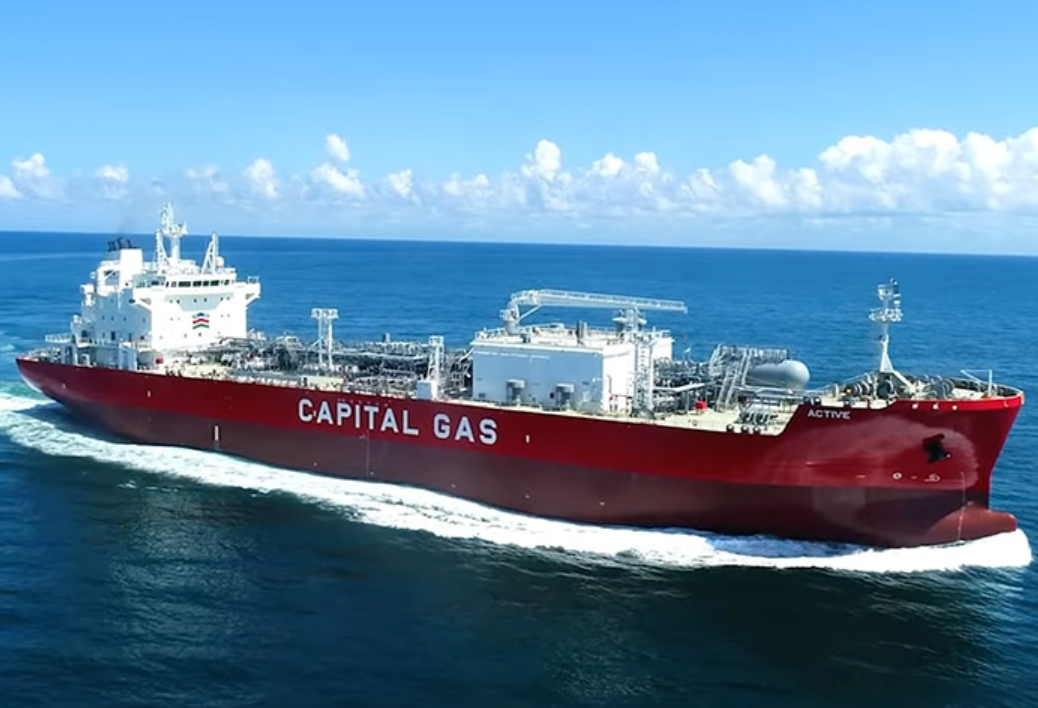
“Active” is the first vessel in a series of four 22,000m³ LCO₂ carriers built by HD Hyundai Mipo for Greece’s CCEC. Designed for LCO₂ transportation, it also competes effectively in the traditional small semi-refrigerated gas carrier market. The vessel will immediately commence operations under a six-month time charter contract to transport liquefied petroleum gas for an energy trading company, with an option to extend the charter period for an additional six months.
It is understood that CCEC placed orders for the above four LCO₂ carriers with HD Hyundai Mipo in July 2023 (two vessels) and February 2024 (two vessels), with a total construction cost of approximately $300 million. This vessel type measures 159.9 meters in length, 27.4 meters in width, and 17.8 meters in height. It possesses multi-cargo transportation capabilities, capable of carrying LCO2, liquefied petroleum gas, ammonia, and specific petrochemical products, demonstrating exceptional deployment flexibility throughout market cycles.
CCEC noted that given the relatively limited order volume for small semi-refrigerated gas carriers, the four new vessels ordered from HD Hyundai Mipo will stand out through their versatility and optionality in adapting to market dynamics. Furthermore, this design is intended to support the emerging carbon capture, utilization, and storage (CCUS) value chain. As global CCUS infrastructure develops, demand for LCO2 is projected to grow steadily, positioning the Active and its sister vessels as readily available capacity for charterers.
According to CCEC analysis, based on projects under construction tracked by the International Energy Agency’s CCUS project database, global carbon dioxide capture capacity is projected to reach approximately 430 million tons per year by 2030, while storage capacity could increase to about 670 million tons per year during the same period. Current global capture capacity stands at around 50 million tons per year.
As capture volumes increase and storage sites become increasingly interconnected with industrial hubs, logistics solutions, including maritime transport, will play a more important role. Driven by supply scarcity, multi-product flexibility, and growing demand for LCO2 transportation, CCEC holds a significant first-mover advantage in this area of structural transformation.