


India has committed a massive $5.4 billion investment, demonstrating its determination to enter the global shipbuilding market. This investment serves as a significant wake-up call for Western shipbuilding companies already struggling to compete with the strong pressure from Asian shipyards.
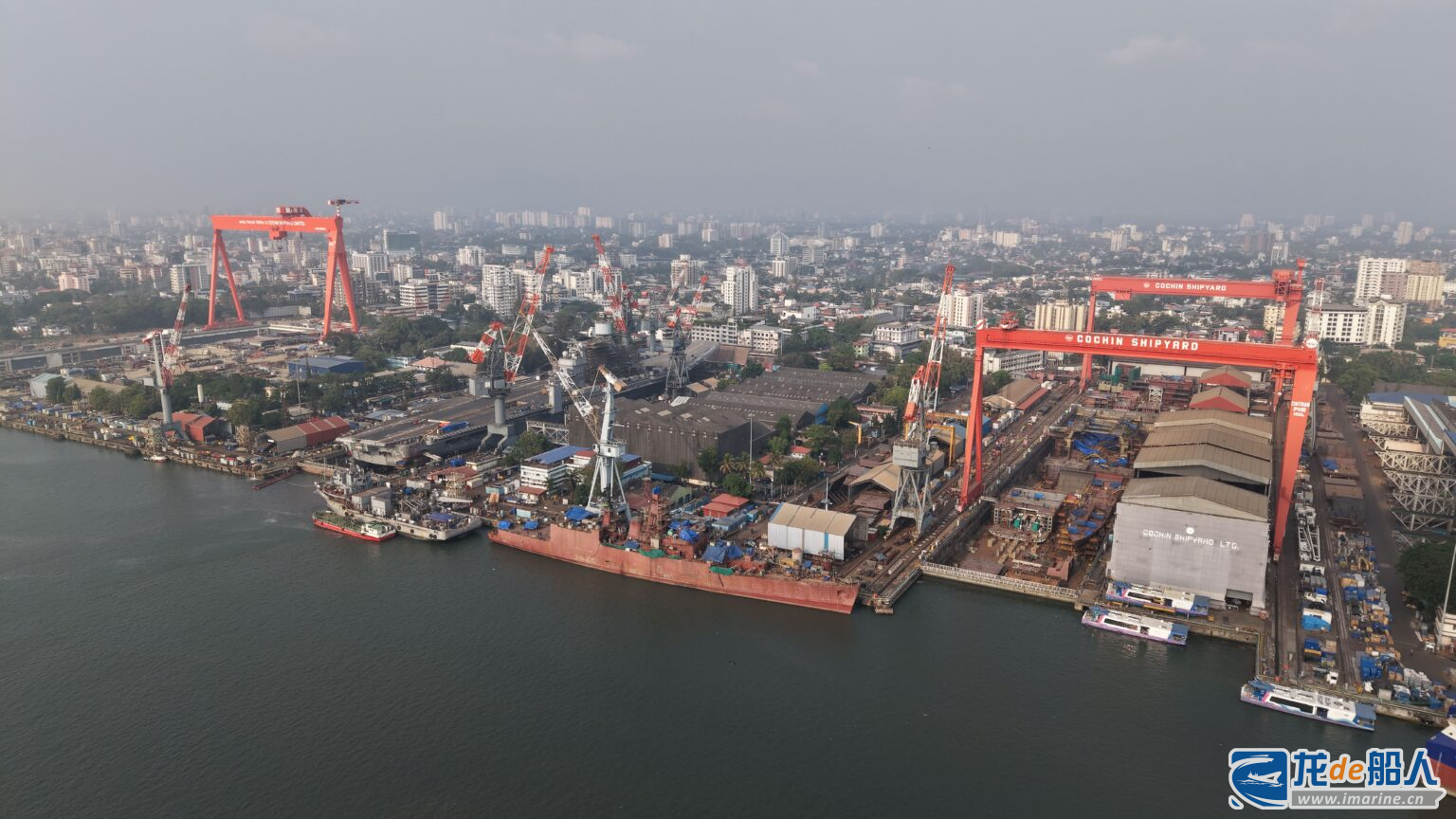
In early 2025, the Indian government approved massive subsidies worth $5.4 billion for the nation’s shipbuilding industry, comprising $3 billion in direct shipbuilding subsidies and $2.4 billion in shipyard infrastructure investments. This investment program will run through 2036 and may be extended to 2047.
Currently, India ranks 20th to 22nd in the global shipbuilding industry, holding only about 0.06% of the worldwide new shipbuilding market share. India spends approximately $70 to $75 billion annually on overseas shipping services, yet only 7% of vessels owned by Indian shipowners are constructed by domestic shipyards.
Therefore, Indian Prime Minister Modi called this shipbuilding support plan the “Maruti moment” for India’s shipbuilding sector. This term originated from the Indian automotive industry revolution in the 1980s, which transformed India from a car importer to a car manufacturer.
Although India’s shipbuilding industry currently holds a minor position in the global shipbuilding market, yet its shipbuilding ambitions are remarkably ambitious: it aims to rank among the top ten global shipbuilders by 2030 and break into the top five by 2047.
According to GCaptain, India makes no secret of its strategic intentions, with Indian officials openly drawing inspiration from China’s industrial policies of the early 2000s, stating that “China used this policy to propel its shipbuilding industry’s global market share from 14% to over 70% today.” Currently, China dominates global merchant shipbuilding, holding a market share between 55% and 74% (depending on different statistical methods), while South Korea and Japan hold approximately 25%-28% and 13%-17% respectively, leaving other countries to compete for the remaining small, fragmented shares.
The Indian government’s shipbuilding support program follows a mature assistance model: on the demand side, it provides a shipbuilding subsidy of 15%–25% for each ship to attract orders; on the supply side, it increases investment in infrastructure to build world-class shipyards; and it provides government-guaranteed loans to match the highly competitive export financing of Chinese and South Korean shipyards.
For European shipbuilding companies, India’s massive investment in the shipbuilding industry is undoubtedly bad news. For years, European shipyards have withdrawn from the conventional merchant shipbuilding market, including bulk carriers, tankers, and container ships, instead focusing on high-end, specialized niche markets such as cruise ships, ferries, and warships. This means that European shipyards rely on high-value-added shipbuilding projects for survival, rather than the volume of newbuildings.
However, the global new shipbuilding market is experiencing moderate growth, currently valued at approximately $160-170 billion, and projected to just over $200 billion by 2030. Given this market size, the entry of new competitors backed by substantial government subsidies will inevitably trigger a price war. If India’s shipyard capacity expansion plans are successfully implemented, and it leverages government guarantees to compete on price, existing commercial orders for European shipyards will face a new round of pressure.
The report indicates that deeper concerns stem from the strategic level. India’s shipbuilding support program includes government-backed pre- and post-delivery risk insurance—precisely the key factor enabling Asian shipyards to build formidable competitiveness through export credit support. European shipyards have long complained about being unable to match China’s financing terms, and with India now stepping up its support, Europe will inevitably feel the impact.
India Invests Heavily in Shipbuilding Industry, Putting the U.S. in an Awkward Position
Besides European shipyards, India’s various initiatives in the shipbuilding industry have also put the United States in an extremely awkward position. Currently, the US market share in the global merchant shipbuilding market is only 0.1%-0.13%, almost negligible. The development of the US merchant shipbuilding market relies entirely on the Jones Act, which requires that US coastal shipping use vessels built in the US, flying the US flag, and staffed with US crew. For decades, no major international shipowner has ordered large merchant ships from US shipyards.
In terms of costs, the gap between U.S. and Asian shipyards is equally staggering: building the same vessel type costs U.S. shipyards 3-4 times more than Asian counterparts, with some analyses indicating the disparity can reach as high as tenfold. For instance, the same container ship built by a South Korean shipyard costs $50 million, but constructing it in the U.S. could run as high as $200 million to $500 million—assuming a shipyard with container shipbuilding capabilities can even be found.
Therefore, the United States has, to a certain extent, completely abandoned the global commercial shipbuilding market. Therefore, the United States has, to some extent, completely abandoned the global merchant shipbuilding market.
In recent years, the focus of the US shipbuilding industry has been on maintaining its naval shipbuilding capabilities and exploring cooperation with South Korean and Japanese shipyards. For example, Hanwha Group acquired the Philly Shipyard and renamed it Hanwha Philly Shipyard, while South Korean shipbuilders such as Hyundai Group and Samsung Heavy Industries have all made moves into the US defense market. Although the Japanese shipbuilding industry is already overburdened, it has still committed to investing huge sums of money in the US. The investment by South Korean and Japanese shipbuilding industries also reflects the decline of the US shipbuilding industry—which is now increasingly reliant on foreign capital investment in domestic facilities.
In contrast, the rise of India’s shipbuilding industry as a government-subsidized, export-oriented competitor has made the cost gap between American and Asian shipyards an unavoidable focal point. If shipowners can order modern ships in India at prices close to those of Asian shipyards while avoiding geopolitical risks, it will intensify their re-evaluation of the “American-built” requirement under the Jones Act, thereby driving up shipping costs in the United States and weakening its competitiveness.