


The latest research from shipping broker Banchero Costa shows that, Chinese shipyards are scheduled to deliver 92.7 million deadweight tonnes (DWT) of bulk carriers and tankers by 2028. This volume is approximately 3.05 times the actual deliveries recorded in 2025 (30.4 million DWT) and significantly exceeds the previous historical peak of 62.6 million DWT set in 2011. These figures have further fueled market skepticism regarding whether such a record-breaking orderbook can be fulfilled on schedule.
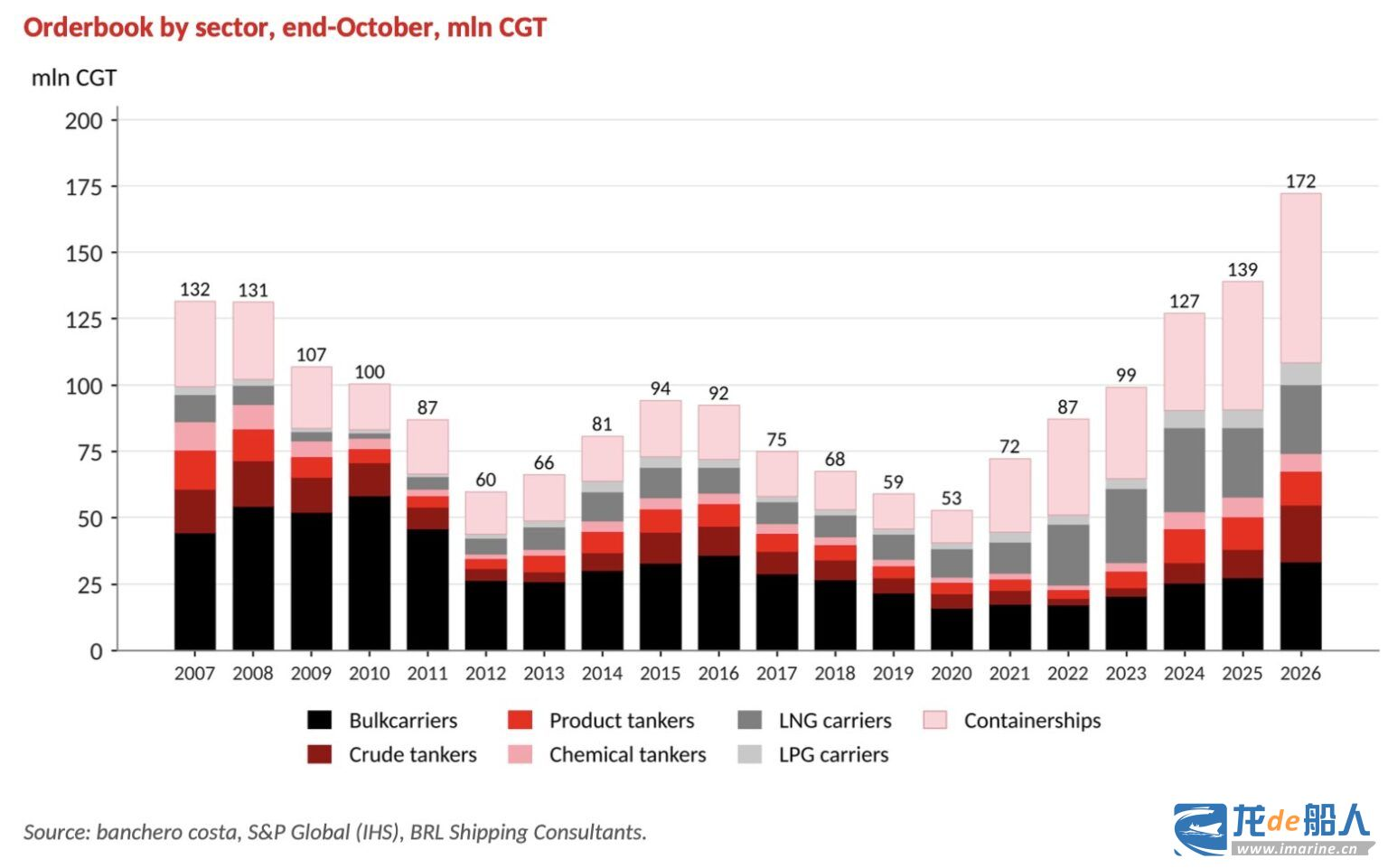
Based on data from Banchero Costa, using the seven major commercial shipping segments—dry bulk carriers, oil tankers, container ships, gas carriers, PCTCs, Ro-Ro vessels, and general cargo and multi-purpose vessels—as a benchmark, as of the end of October 2026, global shipyards’ order books totaled 5,488 vessels/172.3 million corrected gross tons (CGT), representing a 24% year-over-year increase and approximately 31% higher than the historical peak recorded in their database in 2007. These figures are consistent with the broader data disclosed by Clarksons earlier this month.
Reported by Clarkson, based on the entire merchant shipping sector, as of the end of October 2026, global shipyards’ order backlog had reached 226 million CGT, with a contract value of approximately $700 billion. This order volume is three times that of 2020 and represents a 24% increase compared to 2025. This figure has far surpassed the historical record of 225 million CGT set in September 2008 during the previous shipbuilding supercycle.
The establishment of new shipyards or the reactivation of existing ones is the primary source of risk for delayed vessel deliveries.
Most concerning is the concentrated emergence of both newly established shipyards and those that have resumed operations. A report by Banchero Costa indicates that 106 shipyards—which recorded zero deliveries across seven major commercial vessel segments between 2019 and 2023—now hold orders for 909 new vessels.
In 2025, the actual delivery volume from these 106 shipyards totaled only 1 million CGT, yet their production schedule for 2028 reaches as high as 10.1 million CGT—an amount equivalent to one-sixth of the total projected global deliveries across the seven major commercial vessel segments. This implies that a group of shipyards, whose delivery capabilities remain largely unproven, will be tasked with handling one-sixth of the world’s shipbuilding output in 2028.
Amid this unprecedented expansion of production capacity, the Chinese private shipbuilder Hengli Heavy Industries has emerged as a focal point of attention. In 2024, the company resumed commercial vessel deliveries, completing 4 vessels that year, followed by 17 in 2025. By 2026, Hengli Heavy Industries shifted into high gear, delivering 66 new vessels within the first 10 months alone.
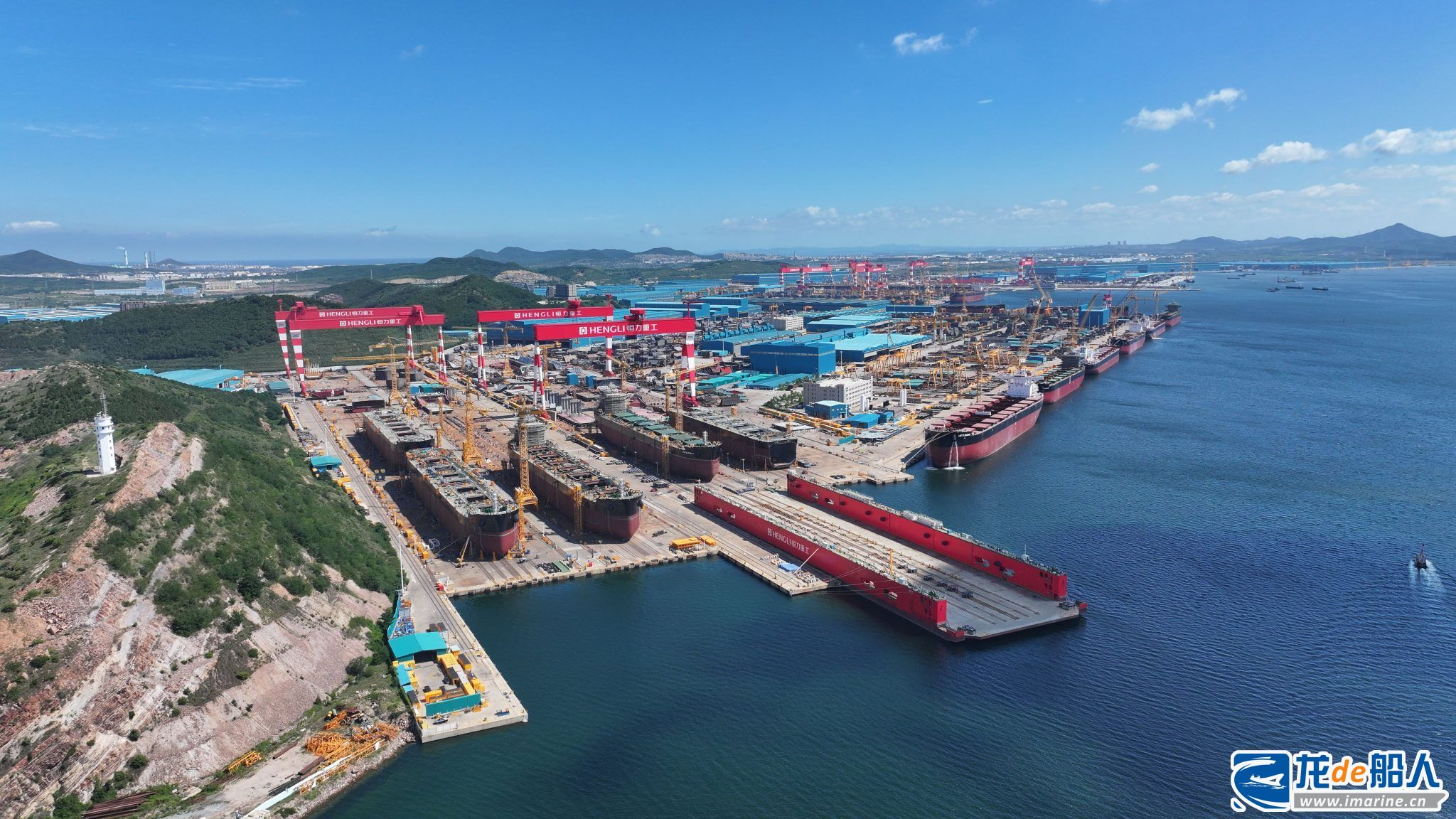
According to Hengli Heavy Industries’ own projections, the company aims to deliver approximately 90 vessels in 2026, around 120 in 2027, and is expected to exceed 200 vessels by 2028. Data from Banchero Costa estimates the company’s delivery volume at 101 vessels for 2027 and 193 for 2028—figures that are slightly more conservative than the shipyard’s own ambitious targets.
Underpinning this delivery pace is a simultaneous expansion of both the order book and production capacity. As of the end of September 2026, Hengli Heavy Industries’ order book had grown to 485 vessels, accounting for 11.2% of the global total—the highest figure for any single shipyard worldwide. In terms of production capacity, the company is actively advancing its expansion plans. Once the three major capacity-building projects are completed, Hengli Heavy Industries will possess 10 berths for vessels under 200,000 deadweight tons (DWT) and 12 berths for vessels of 200,000 DWT or greater, enabling the simultaneous construction of 22 large-scale ships.
There is a significant gap between capacity expansion and the rate of new vessel additions.
Danish Ship Finance shares similar concerns. According to the firm’s research, global shipbuilding capacity has grown by only 30% since 2020, while the volume of the orderbook has expanded to 3.5 times its previous size.
The Danish financial institution estimates that 10 million to 11 million CGT of vessels scheduled for delivery annually between 2027 and 2028 could face delays. For some leading shipyards, the orderbook for 2028 has already reached 164% of their available capacity.
Beyond shipyard capacity, the supply of auxiliary equipment—particularly marine engines—poses another major challenge to delivery schedules. An executive at the Greek dry bulk owner Star Bulk revealed that “some shipyards have even asked owners to procure the main engines themselves.”
Given that 55% of new orders placed in 2026 are already scheduled for delivery in 2029 or later, Banchero Costa anticipates that the fervor for new shipbuilding orders may cool by 2027.
For the freight market, the greatest risks lie in the container ship and crude oil tanker sectors; vessels scheduled for delivery in 2028 alone account for 17.3% and 12% of their respective existing fleets. The extent of delivery delays could ultimately prove to be one of the most critical factors determining the profitability of the shipping industry for the remainder of this decade.