


Since the beginning of November, the cost of transporting crude oil via Very Large Crude Carriers (VLCCs) has fallen sharply. This decline reflects both weakening demand for VLCC charters and the fading of the geopolitical risk premium that had previously driven freight rates to historic highs in October.
Data from the Baltic Exchange shows that on November 13, VLCC freight rates on the Gulf of Oman to China route (as measured by the Worldscale index) fell to approximately 308 points, a sharp drop of 64% from the all-time high (841 points) reached on October 8.
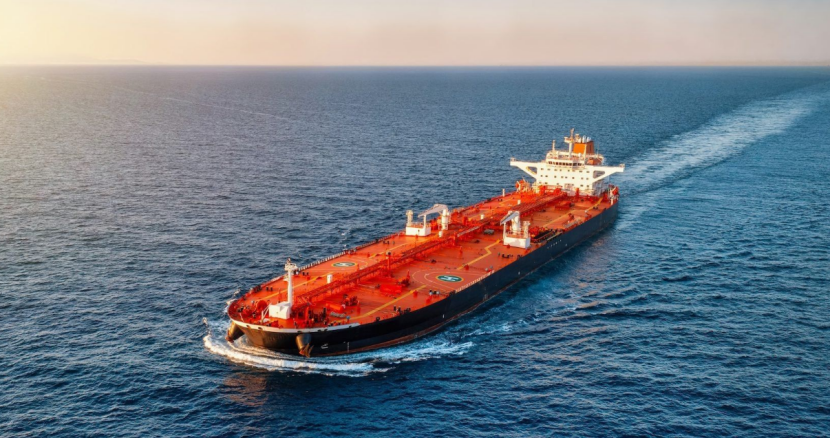
As VLCC freight rates plummet, oil-exporting nations in the Gulf have ramped up their crude exports to levels seen before the onset of the U.S.-Iran conflict. Despite ongoing attacks on vessels, the market has managed to sustain crude outflows through workarounds such as ship-to-ship transfers and “dark voyages”—where tankers disable their tracking signals to evade detection. This rise in crude exports from the Gulf has dampened demand for oil from other regions, thereby freeing up VLCC capacity.
As VLCC freight rates plummet, oil-exporting nations in the Gulf have ramped up their crude exports to levels seen before the onset of the U.S.-Iran conflict. Despite ongoing attacks on vessels, the market has managed to sustain crude outflows through workarounds such as ship-to-ship transfers and “dark voyages”—where tankers disable their tracking signals to evade detection. This rise in crude exports from the Gulf has dampened demand for oil from other regions, thereby freeing up VLCC capacity.
Delia He, an analyst at Arrow Shipbroking, noted: “Crude exports from the Gulf have recently rebounded to near pre-conflict levels, which has reduced demand among Asian buyers for crude from the U.S. and the North Sea—and, consequently, lowered the demand for tanker charters.”
Vortexa analyst Ioannis Papadimitriou stated: “The recent surge in freight rates has dampened demand in the Asian market for long-haul crude oil—such as that from the U.S., West Africa, and the North Sea—prompting Asia to increase its procurement of crude from the Middle East instead. This shift has led to a decline in demand for Very Large Crude Carriers (VLCCs) on long-haul routes. Meanwhile, the available capacity in the market has continued to rise as vessels complete their discharge operations in East Asia. This influx of additional capacity is exerting downward pressure on freight rates.”
Beyond the route from the Gulf of Oman to China, freight rates on other routes—such as those from West Africa to Asia—have experienced even sharper declines.
The surge in VLCC freight rates was partly driven by market concerns over heightened operational risks in the Persian Gulf—such as the mutual targeting of oil tankers by the U.S. and Iran—a factor that also pushed up oil prices. This month, crude oil futures (LCOc1) have fallen by 20%, partly due to the potential for an easing of tensions with Iran.
Delia He noted: “The significant pullback in VLCC freight rates is only partially rooted in market fundamentals; such extreme volatility essentially reflects an over-correction of the geopolitical risk premium.”