


COSCO Shipping Energy Transportation Co., Ltd. (hereinafter referred to as “COSCO Shipping Energy”) has issued several announcements, declaring that it will place orders for 10 very large crude carriers (VLCCs) with two shipyards, while simultaneously entering into bareboat charter agreements for another 14 newly built VLCCs.
10 VLCCs, shared between two shipyards
On November 9, COSCO Shipping Energy announced that its wholly-owned subsidiary, Hainan COSCO Shipping Energy Transportation Co., Ltd. (“Hainan Energy”), has entered into shipbuilding contracts with COSCO Shipping Heavy Industry (Yangzhou) and Dalian Shipbuilding Industry Corporation (DSIC) Under these agreements, a total of 10 VLCCs have been ordered, with a total investment of approximately 9.572 billion yuan (including tax, approximately $1.435 billion) and a contract price of 948 million yuan per vessel (including tax).
Specifically, Hainan Energy has signed a contract with COSCO Shipping Heavy Industry (Yangzhou) for the construction of six VLCCs. The total contract price (including tax) is 5.689 billion yuan; when accounting for capitalized costs—such as interest incurred during the construction period and vessel supervision fees—the total investment reaches approximately 5.743 billion yuan (including tax, approximately $853 million). The vessels are scheduled for delivery between August 2029 and November 2030.
Hainan Energy has signed a contract with DSIC for the construction of four VLCCs. The total contract price (including tax) is 3.793 billion yuan. Including capitalized costs—such as interest during the construction period and vessel supervision fees—the total investment amounts to approximately 3.829 billion yuan (including tax; approximately $574 million). The vessels are scheduled for delivery between September 2029 and May 2030.
Based on the announcement, this batch of new buildings will be equipped with clean propulsion systems such as the LNG/methanol dual-fuel READY system, as well as energy-saving and intelligent systems. This actively responds to the global trend toward carbon reduction in shipping, aligns with COSCO Energy’s sustainable development strategy, and will help enhance the vessels’ competitiveness throughout their entire lifecycle.
COSCO Shipping Energy stated that the 10 VLCCs ordered are expected to be delivered and enter service between 2029 and 2030. This move represents a key initiative for the company to capitalize on market opportunities, optimize its fleet structure, and advance its commitment to green, low-carbon development. Through this transaction, COSCO Shipping Energy will strengthen and expand its tanker fleet capacity, while enhancing its service capabilities and competitiveness in the international crude oil transport market—a strategy aligned with the company’s long-term development goals and the interests of all its shareholders.
Bareboat chartered in 14 newbuild VLCCs
On the same day, COSCO Shipping Energy announced that its wholly-owned subsidiary, Pan Cosmos Shipping & Enterprises, plans to lease 14 newly built VLCCs (comprising 4 conventionally powered VLCCs and 10 LNG dual-fuel powered VLCCs) from six financial leasing companies via bareboat charters. The lease terms for these vessels will not exceed 20 years, with the total rental payments over the lease periods capped at 17.4 billion yuan (approximately $2.608 billion). This transaction is subject to approval by the shareholders of COSCO Shipping Energy.
14 newbuild VLCCs are expected to be delivered progressively by 2030, with details as follows:
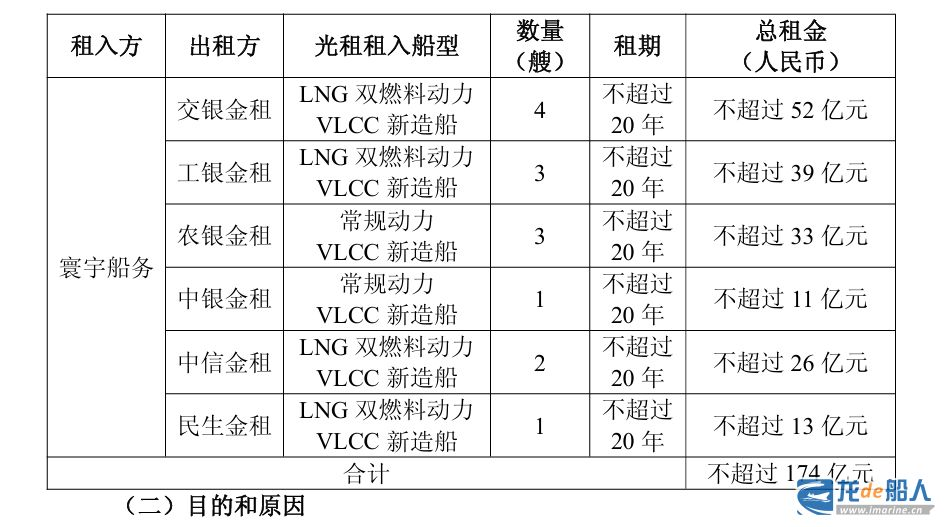
COSCO Shipping Energy stated that the newly built VLCCs acquired through this transaction feature clean propulsion systems—such as LNG/methanol dual-fuel readiness or LNG dual-fuel capability—and are equipped with energy-saving and intelligent systems. Supplementing its VLCC fleet capacity via bareboat charters helps effectively reduce overall financial costs and upfront capital expenditure, while enhancing the operational efficiency of the fleet and strengthening its capacity for sustainable profitability.