


Orders for alternative-fuel vessels rebounded strongly in the third quarter of this year. September saw the highest monthly order volume in nearly two years, with liquefied natural gas (LNG) remaining the preferred fuel for newbuilds.
Data from DNV’s Alternative Fuels Insight (AFI) platform shows that shipowners ordered 69 alternative-fuel vessels in September, marking the highest monthly total since October 2024.
Driven by the strong performance in September, the total number of vessel orders for the third quarter reached 168—the highest figure since the third quarter of 2024. Year-to-date, DNV has recorded orders for 311 alternative-fuel vessels, a 53% increase compared to the same period last year.
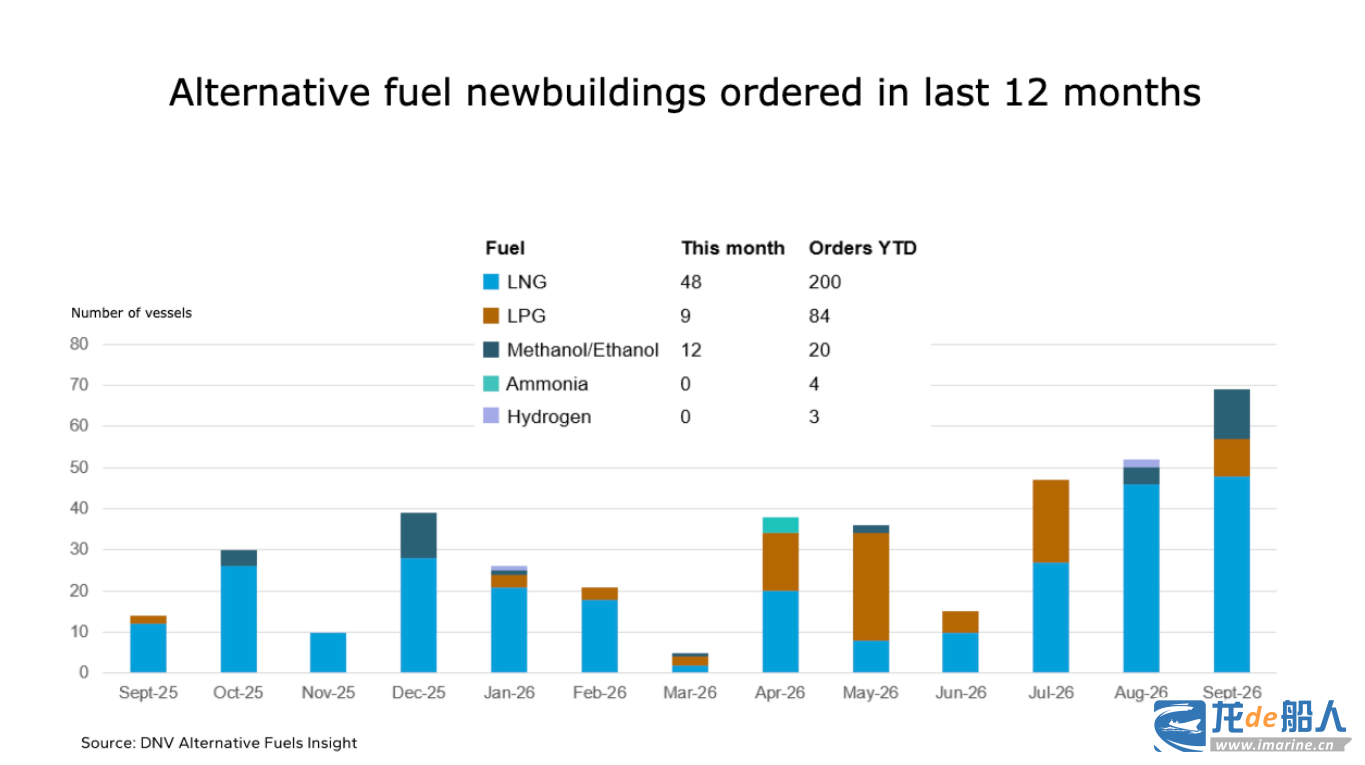
This growth trend stands in stark contrast to the first half of this year. In a report released in July, DNV noted that in the first half of 2026, global shipowners ordered a total of 137 alternative-fuel vessels, down from 155 during the same period last year.
In terms of fuel type, LNG-powered vessels accounted for 48 of the 69 orders placed in September—spanning container ships, car carriers, bulk carriers, and Ro-Ro vessels—while there were 12 orders for methanol-powered bulk carriers and 9 for LPG-powered vessels.
By fuel type, of the 69 orders placed in September, 48 were for LNG-powered vessels, including container ships, car carriers, bulk carriers, and Ro-Ro vessels; 12 were for ethanol-powered bulk carriers; and 9 were for liquefied petroleum gas (LPG)-powered vessels.
Jason Stefanatos stated: “Order activity this quarter demonstrates how quickly market conditions for newbuilds can shift. The variations in fuel and vessel type mixes across different segments reflect the distinct operational models and commercial realities within the shipping industry.”
Despite uncertainties surrounding fuel costs, bunkering infrastructure, and future emissions regulations, the volume of new vessel orders has continued to rise.
In its latest “Maritime Forecast to 2050”, DNV warns that regulatory policies could affect the operational lifespans of vessels currently on order and significantly alter the economics of various alternative fuels.
DNV states that the tonnage of the global fleet capable of using alternative fuels has grown from 0.4% in 2020 to 5.2% in 2026, driven primarily by the adoption of LNG and methanol propulsion systems.
Jason Stefanatos stated: “Shipowners continue to invest in alternative-fuel vessels as part of their long-term fleet strategies.”