

On August 14 local time, a hydrogen sulfide poisoning incident occurred at the Ferdous Steel shipbreaking yard in Chittagong, Bangladesh, resulting in the deaths of nine shipbreaking workers and injuries to six others. The incident has raised questions within the industry about the safety standards at Bangladesh’s “green-certified” shipbreaking companies.
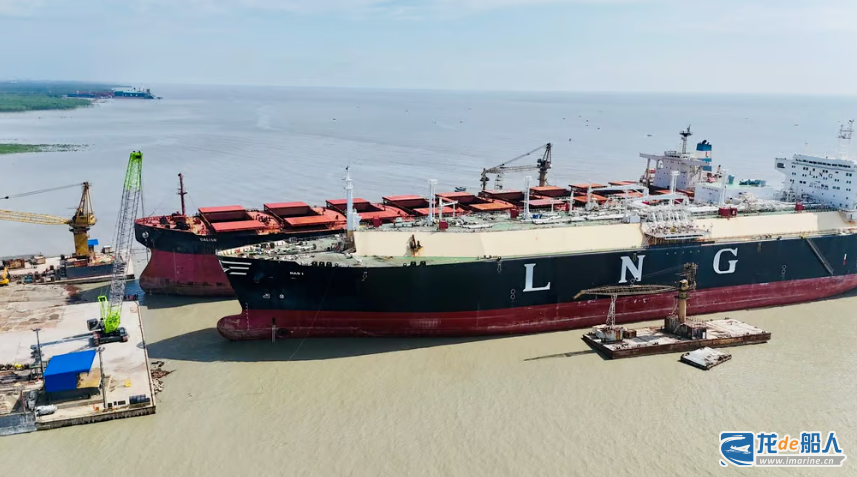
Ferdous Steel reported that the incident occurred on the liquefied natural gas (LNG) carrier “Rasi” (formerly known as Ras Laffan, IMO: 9176008), which ran aground in Chittagong in July 2025 and has been under dismantling at the shipbreaking yard for over a year.
At the time of the incident, shipbreaking workers were drilling openings in the ballast tanks of the “Rasi” when a large amount of hydrogen sulfide gas leaked from the ballast tanks and flooded into the enclosed compartment where the workers were located.
According to Bangladesh’s Business Times, the first responders detected high concentrations of ammonia and methane upon arriving at the scene; three days after the accident, hydrogen sulfide levels inside the vessel remained at dangerous levels. The report also revealed that the family of each victim will receive approximately $8,000 in compensation.
It is understood that hydrogen sulfide is produced by anaerobic bacteria during the decomposition of organic matter. It has a pungent, rotten-egg odor. When its concentration exceeds 50 ppm, the gas is considered harmful to health; at concentrations above 100 ppm, it is considered hazardous; and at concentrations between 700 and 1,000 ppm, it can cause instant poisoning and loss of consciousness, leading directly to death.
Reports indicate that there appeared to be an anomaly with the ballast tank involved in the accident; cutting operations on the Rasi’s three other ballast tanks had previously been completed without incident. The shipbreaking workers’ union stated, “The vessel had obtained gas safety certification prior to the commencement of dismantling in 2025… yet Ferdous Steel, the yard responsible for the dismantling work, harbored safety hazards and violated occupational health and safety regulations.”
Local authorities have established a special district-level investigation committee regarding the toxic gas incident at the Ferdous Steel ship-breaking yard, but labor unions are calling for a higher-level inquiry. Operations at the yard have been completely suspended.
Although the scale of casualties at the Ferdous Steel shipbreaking yard was exceptionally severe, fatal accidents at shipbreaking yards are by no means uncommon. Data indicates that since the Hong Kong Convention came into effect in June 2025, 84 accidents have occurred at shipbreaking yards in Bangladesh. During this period, 15 workers died and 81 were injured, with one-third of the accidents taking place at a yard named KR Steel Yard.
The Bangladesh Environmental Lawyers Association (BELA) has linked the major casualty incident at the Ferdous Steel ship-breaking yard to systemic flaws in the Hong Kong Convention. The organization argues that the Hong Kong Convention offers less protection for workers than the Basel Convention, although the shipping industry generally considers the Basel Convention unsuitable for regulating ship recycling.
According to data from the Bangladesh Ship Breakers and Recyclers Association, certification under the Hong Kong Convention is widespread among the country’s ship-breaking enterprises; 23 of its 31 ship-breaking yards have already obtained this certification—including Ferdous Steel, the yard where the recent accident occurred—while the remaining yards are nearing the completion of the audit process.