


HD Hyundai Heavy Industries, a shipbuilding subsidiary of HD Hyundai, has once again experienced a major safety incident, sparking concerns within South Korea’s shipbuilding industry about the ineffectiveness of the group’s overall safety management system. Some have even gone so far as to say that its safety investment of 3.5 trillion won (approximately $2.352 billion at current exchange rates) is “nothing more than a formality.”
According to a statement released by HD Hyundai Heavy Industries, on July 9, a fatal fall occurred at the Ulsan plant of HD Hyundai M&S—a subsidiary of HD Hyundai Heavy Industries (formerly HD Hyundai Mipo, acquired at the end of 2025).
At the time of the incident, the worker was performing maintenance on a shipyard overhead crane when he unfortunately fell from a height and was killed. An investigation confirmed that no other injuries were reported in connection with this accident.
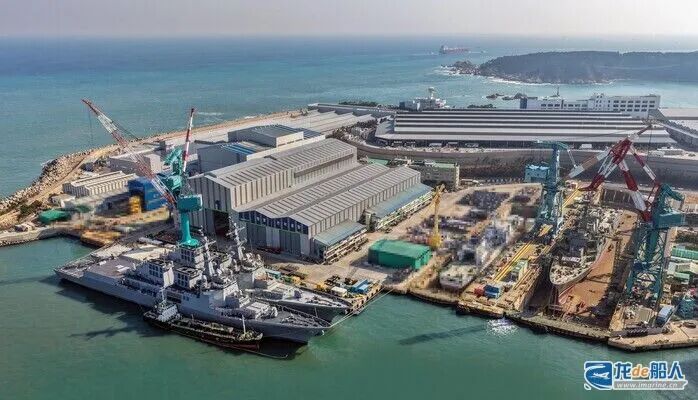
Following the accident, South Korea’s Ministry of Employment and Labor and the police immediately launched an on-site investigation. The Ulsan Branch of the Busan Regional Employment and Labor Office has issued a partial work suspension order regarding crane maintenance and inspection operations at the affected factory site. HD Hyundai Heavy Industries stated that it will conduct special safety training company-wide and develop a corrective action plan to prevent such accidents from recurring.
Since the beginning of this year, there have been multiple fatal accidents at shipyards operated by HD Hyundai.
In April, a fire broke out on a submarine under repair at HD Hyundai Heavy Industries’ Ulsan shipyard, resulting in the death of a subcontractor responsible for sea trials. At the time of the incident, the worker was cleaning the interior of the submarine.
In June, a safety incident involving a mooring line occurred at HD Hyundai Samho. A line used to secure a vessel to the dock suddenly snapped and struck a shipyard worker who was performing mooring operations, ultimately resulting in the worker’s death.
Combined with a fatal fall from a height that occurred on July 9, South Korean authorities believe that HD Hyundai may have structural deficiencies in its safety management.
According to statistics from South Korea’s Ministry of Employment and Labor, the number of work-related fatalities at HD Hyundai Heavy Industries surged from 11 in 2024 to 21 in 2025, marking the highest increase among South Korea’s major shipbuilding companies. The Korean Metal Workers’ Union believes that poor workforce management and lax enforcement of safety protocols are the root causes of the frequent accidents and has called for a special labor inspection.
In 2025, HD Hyundai had high-profile announced that it would invest a total of up to 3.5 trillion won in the shipbuilding sector by 2030 to ensure shipyard safety. Specific measures included establishing advanced safety systems, upgrading and expanding safety facilities and equipment, raising employee safety awareness, and supporting safety initiatives at partner companies.
However, as accidents continue to occur at shipbuilding sites, the South Korean shipbuilding industry has begun to question whether HD Hyundai’s massive investment can truly reduce risks in actual work environments.