


South Korean media reports indicate that controversy surrounding surveillance cameras in the country’s shipbuilding industry continues to escalate. On one hand, there are growing calls to strengthen on-site safety systems to prevent major accidents and advance the development of smart shipyards. On the other hand, South Korean labor groups are concerned that installing such equipment “could become a tool for monitoring shipyard workers.”
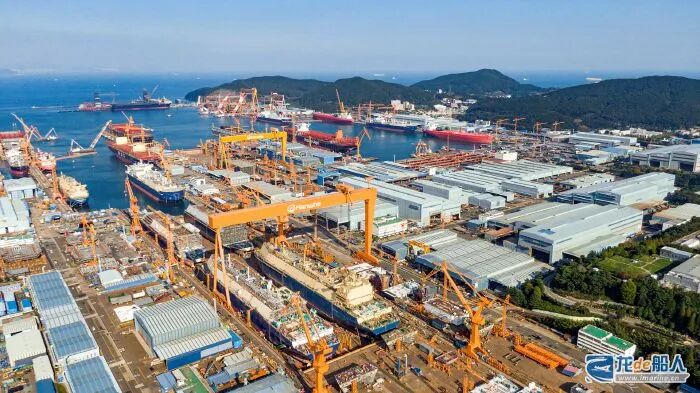
Taking major South Korean shipyards such as HD Hyundai Heavy Industries and Hanwha Ocean as examples, the installation of surveillance cameras has been slow to progress due to opposition from labor unions. Although all parties agree on the importance of safety management, differences over specific implementation methods remain difficult to bridge.
According to reports, in recent years, the South Korean shipbuilding industry has not only prioritized shipbuilding efficiency but has also regarded safety management as a core element of its global competitiveness. The industry believes that equipping shipyards with real-time monitoring and accident prevention systems to enhance safety is just as important as improving shipbuilding efficiency.
In response to this issue, a Hanwha Ocean representative stated: “The company is well aware of employees’ concerns regarding personal surveillance, but relevant analyses indicate that the introduction of a smart safety system could reduce accidents by 20% to 30%. At the same time, we can address these concerns through technical measures such as facial blurring, disabling facial recognition, and the immediate destruction of data.”
Most stakeholders in South Korea’s shipbuilding industry also argue: “The purpose of installing surveillance cameras is not to monitor workers’ activities around the clock, but to identify potential accident risks in advance, which means that introducing such a management system is essential.”
On the other side of the debate, the South Korean shipyard labor union has taken a particularly hardline stance: “Even if the original intent of installing surveillance was to improve shipyard safety, we cannot rule out the possibility that it will be used on-site as a means of control, such as for personnel management or disciplinary action. This means that regardless of the original intent behind the technology’s introduction, sufficient trust has not yet been established regarding how it will actually operate on-site.”
As one of South Korea’s three major shipbuilding giants, Samsung Heavy Industries’ Geoje Shipyard established a comprehensive monitoring center in 2025 and installed artificial intelligence (AI) monitoring equipment and mobile cameras in high-altitude work areas at the shipyard. In addition, shipyards in Singapore, the Middle East, and other regions have widely implemented comprehensive monitoring systems based on surveillance cameras.
South Korean media believe that the country’s shipbuilding industry is undergoing a major transformation, including the maintenance, repair, and overhaul (MRO) of U.S. naval vessels, the expansion of specialized vessel operations, and the construction of smart shipyards. The introduction of systems capable of reducing accidents and improving shipbuilding efficiency will ultimately be closely linked to competitiveness in securing orders. However, for years, discussions among shipyards regarding surveillance cameras and smart safety systems have failed to yield any substantial progress.
Industry insiders in South Korea believe: “Since both the necessity of technology adoption and the concerns of frontline workers cannot be ignored, rather than endlessly debating the pros and cons, it would be better to further clarify standards and principles. The urgent and more practical discussions should focus on how to define the ‘boundary between safety and surveillance’ and ‘how to build trust on the ground.’”