

According to South Korea’s mainstream media outlet The Chosun Ilbo, mid-sized South Korean shipbuilder HJ Heavy Industries has taken delivery of two 11,000 TEU eco-friendly container ships from a European shipowner. This marks the first time in the shipyard’s nearly 90-year history that it has secured orders for container ships exceeding 10,000 TEU capacity.
For shipbuilders, constructing a single large vessel offers greater profitability than building multiple smaller ships. However, for HJ Heavy Industries’ Busan Yeongdo Shipyard, its dock length of only 300 meters makes it difficult to build large vessels typically requiring 300-400 meters of dock space, resulting in a long-term inability to secure such orders.
HJ Heavy Industries overcame this shipbuilding constraint through technological breakthroughs in vessel design. By adopting a laterally widened hull design (compared to traditional container ships) and employing advanced design techniques to maximize cargo hold space efficiency, the company successfully built large container ships within narrow dry docks while maintaining a total cargo capacity of 11,000 TEU. This solution stems from strategic efforts to enhance profitability.
In 2025, mid-sized South Korean shipbuilders such as HJ Heavy Industries, DH Shipbuilding, and K Shipbuilding doubled their annual operating profits compared to the previous year, achieving growth rates on par with the three giants: Hyundai Heavy Industries, Hanwha Ocean, and Samsung Heavy Industries. South Korean media reports that during the decade-long downturn in the shipbuilding industry, major mid-sized Korean shipbuilders consistently invested in R&D for eco-friendly shipbuilding and design technologies, reaping the rewards during this current shipbuilding boom cycle.
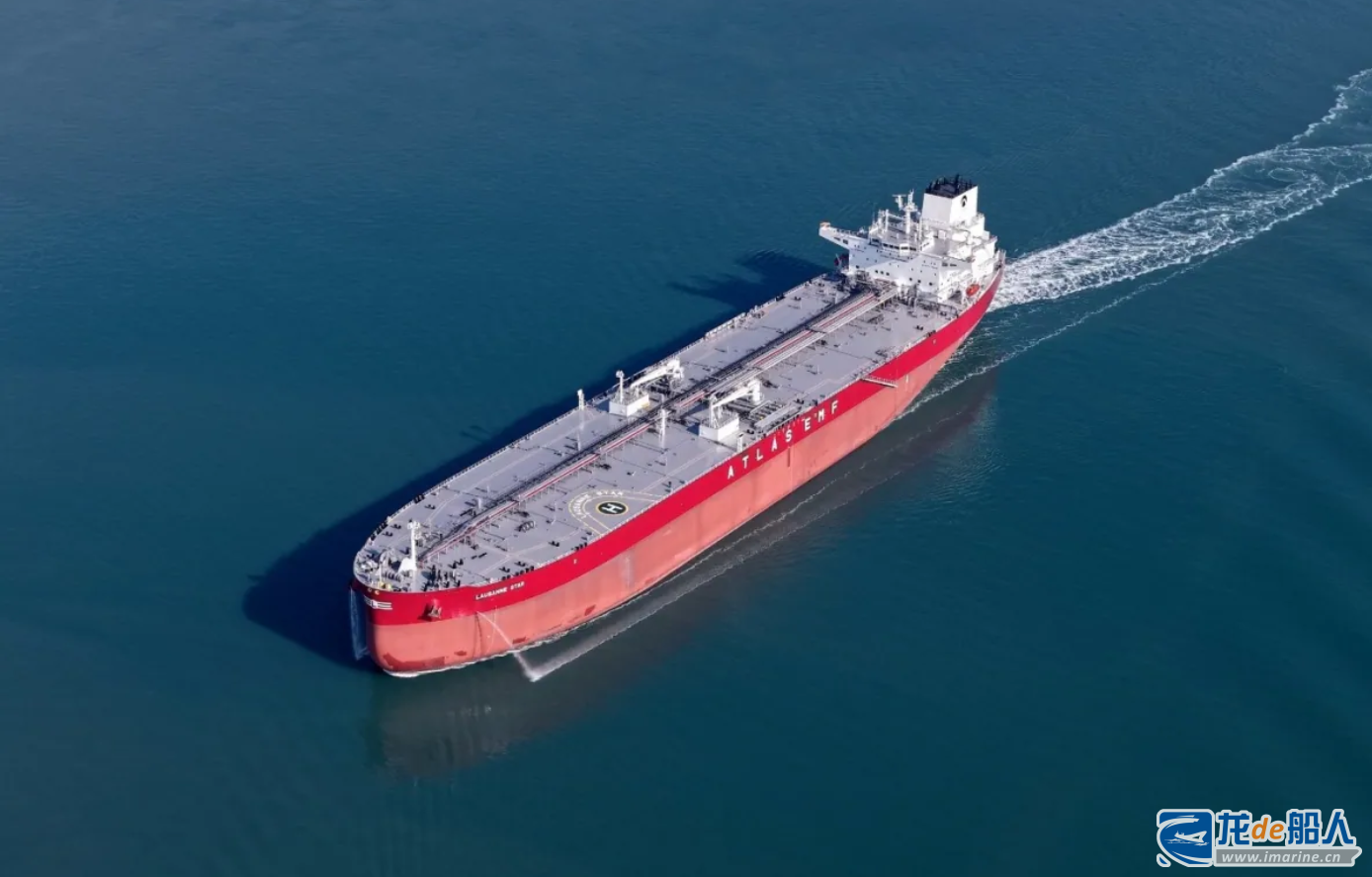
DH Shipbuilding reported an operating profit of 294.1 billion won in 2025, surging 86% year-on-year, according to recent earnings reports from mid-sized Korean shipbuilders. HJ Heavy Industries recorded an operating profit of 67 billion won in 2025, surging 824.8% year-on-year—eight times its 2024 operating profit (7.2 billion won). K Shipbuilding, which will soon announce its full-year results, achieved an operating profit of 84.7 billion won in the first three quarters of 2025, seven times its total profit for the entire year of 2024.
DH Shipbuilding has enhanced profitability by expanding its portfolio of high-value-added vessel types. A decade ago, its core products were 80,000- to 120,000-tonne Aframax tankers. In recent years, through technological development, the company has expanded into 120,000- to 200,000-tonne Suezmax tankers. This expansion requires DH Shipbuilding to invest in upgrading its hull block production and assembly capabilities.
By 2026, Suezmax tankers had become the dominant vessel type for DH Shipbuilding’s new orders, with the company securing contracts for eight newbuilds worth 1.2 trillion won in January and February alone.
Additionally, starting in 2024, DH Shipbuilding has focused on developing shuttle tankers—a high-value-added vessel type—which has positively impacted its performance. Shuttle tankers are specialized vessels designed to transport crude oil directly from offshore drilling platforms to onshore facilities. During the transport process, they rely on high-value positioning equipment to maintain a stationary position, making them high-value-added orders.
K Shipbuilding has learned from the lessons of STX Shipbuilding’s over-expansion into ultra-large container ships and offshore equipment, which led to its operational crisis. It has now refocused on the MR product/chemical tanker market, which was once its core business.
Recent geopolitical events, including the Russia-Ukraine conflict and the Red Sea crisis, have extended the transportation cycle for petrochemical products, driving up market demand for MR product tankers. K Shipbuilding capitalized on this trend, securing 15 orders in 2025 and adding another five in the first two months of 2026.
Reports indicate that mid-sized South Korean shipbuilders are actively entering the eco-friendly vessel market, traditionally dominated by large shipbuilders. Their core objective lies in profitability: eco-friendly vessels equipped with advanced emission-reduction technologies can command higher prices than conventional vessels of comparable size.
For example, in September 2025, K Shipbuilding’s liquefied natural gas (LNG) bunkering vessel received Approval in Principle (AiP) from DNV. LNG bunkering vessels, known as “floating bunkering stations,” are designed to supply fuel to LNG-powered ships. K Shipbuilding aims to secure orders for eco-friendly gas carriers through this certification.