


The White House recently released America’s Maritime Action Plan (hereinafter referred to as the “Plan”), aimed at revitalizing the U.S. merchant fleet and shipbuilding industry. This 34-page plan is a follow-up to an executive order signed by the U.S. President in April 2025, and aims to develop a strategy to reverse what is perceived as “insufficient strategic focus on the maritime domain.”
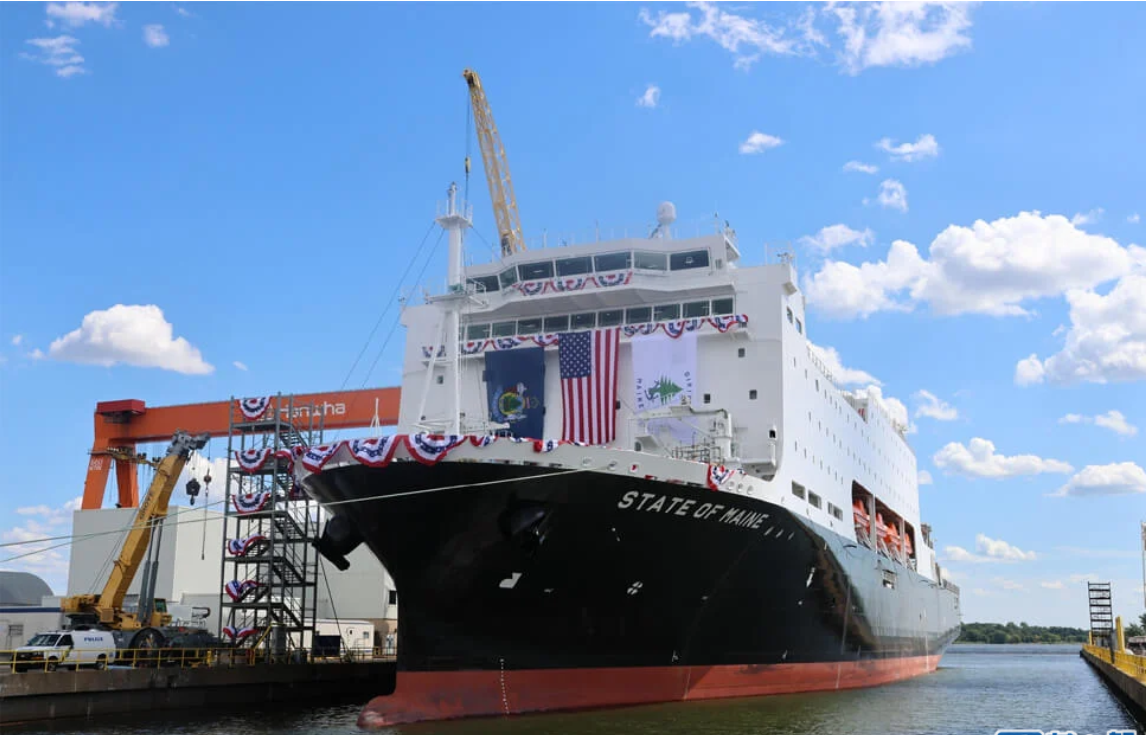
The Plan points out that the number of ships flying the U.S. flag is declining (claiming it harms the U.S. economy and security) and that the U.S. shipbuilding and repair capacity is severely insufficient. According to its statistics, the U.S. currently has 66 shipyards, of which only 8 are active, 11 have shipbuilding slipways, 22 focus on dry dock repair, and 25 are engaged in superstructure repair.
The plan’s introduction emphasizes: “The U.S. lacks the capacity to scale its domestic shipbuilding industry to meet national priorities. This situation raises significant security and supply chain dependency issues. Establishing a self-sufficient domestic shipbuilding industry is critical to national and economic security.”
The plan outlines initiatives to rebuild shipbuilding capacity and technological capabilities, expand the workforce through education and training, and protect the so-called “maritime industrial base.” However, the plan also emphasizes that “realizing this vision requires more than just investment…it calls for accelerating shipbuilding processes and reducing costs through modernizing government procurement processes and streamlining regulations.”
In addition to launching a comprehensive incentive program that includes shipyard support, tax breaks, and loan schemes, the plan also advocates for the establishment of “Maritime Prosperity Zones” to catalyze investment growth, while calling for the creation of a U.S. strategic merchant fleet and relying on international partnerships to “reduce dependence on unreliable suppliers”.
The plan also calls for the implementation of a U.S. maritime priority policy and the expansion of cargo priority transportation requirements. As a transitional measure, the plan encourages foreign-built ships to fly the U.S. flag to enhance U.S. international trade and transportation capabilities.
To raise funds for expanding incentives and government support programs, the plan proposes “a uniform fee on foreign-built vessels entering U.S. ports.” Based on tonnage: a fee of only 1 cent per ton could raise $66 billion over 10 years; a fee of 25 cents per ton would generate nearly $1.5 trillion over 10 years.
All funds will be channeled into the newly established Maintenance Trust Fund, which aims to “ensure continued long-term investment in U.S. shipbuilding capacity, fleet expansion, and the maritime workforce.” The plan requires the Office of Management and Budget, in collaboration with the Department of Transportation, to submit legislative proposals to establish a reliable funding mechanism to support the implementation of all initiatives within the plan.
Furthermore, the plan calls for establishing a funding mechanism to address key gaps. By setting up a land port maintenance tax (fee), funds could be raised while ensuring a “fair sharing” of the costs of maintaining and upgrading critical trade infrastructure at land ports. The plan proposes levying a “moderate tax” (equivalent to 0.125% of the value of goods entering the U.S. via land ports), stating that it is comparable to the existing port maintenance tax (fee). The plan points out that there are currently incentives for freight forwarders to transport imported goods to nearby ports for transshipment into the United States. Up to 10% of the funds would be injected into the Land Port Maintenance Trust Fund.