


The latest data from Det Norske Veritas (DNV) indicates that despite a significant decline in global new vessel orders by 2025, the shipping industry’s transition toward alternative fuels remains firmly on track. LNG-powered container vessels are emerging as the primary driver of this decarbonization process.
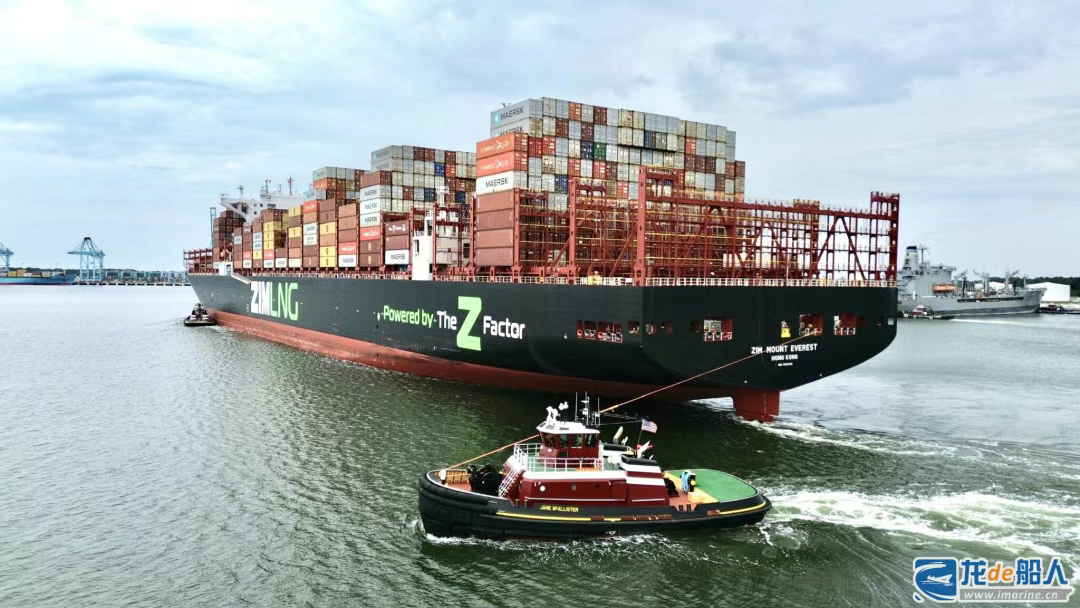
Data from DNV’s Alternative Fuels Insight (AFI) platform shows that despite a sharp decline in total global newbuild orders from 4,405 vessels in 2024 to 2,403 vessels in 2025, alternative fuel vessels still accounted for 38% of the global order tonnage. This proportion is almost entirely driven by the container vessel sector, where orders surged from 447 vessels in 2024 to 547 vessels in 2025, marking a significant year-on-year increase.
Specifically, in 2025, container vessels accounted for approximately 49% of the total deadweight tonnage of new vessel orders globally, representing a significant 68% share of all new orders for alternative-fuel vessels. By fuel type, LNG remained the dominant market choice, capturing 58% of the market share; conventional fuels and methanol fuels accounted for 36% and 6%, respectively.
A DNV representative stated, “Despite the market slowdown and regulatory uncertainty, cargo owners are setting their own emissions reduction targets, which is a major driver of the resilience of alternative fuel orders in 2025. Cargo owners are prioritizing investments in fuel infrastructure, areas where regulatory certainty and commercial viability are highly aligned—particularly in the container shipping sector, where LNG and methanol fuels have secured both mature supply chains and strong customer demand.”
In contrast, the shipping sector outside container vessels showed markedly weaker market performance. Orders for liquefied petroleum gas (LPG) and ethane carriers plummeted 73% year-on-year, while car carrier orders collapsed by 90%. Bulk carriers, crude oil tankers, and product/chemical tankers also experienced steep declines, with shipowners generally focusing on cost control rather than alternative fuel investments.
In terms of vessel type, LNG-powered vessels lead the market with 188 vessels, accounting for 31% of the total tonnage of new ship orders worldwide; orders for methanol-powered vessels plummeted from 149 in 2024 to 61 in 2025, while orders for ammonia-fueled and LPG-powered vessels saw limited growth.
Regarding the decline in new ship orders in 2025, DNV Maritime CEO Knut Ørbeck-Nilssen stated, “The slowdown in orders in 2025 reflects both greater challenges to strategic decision-making and a natural decline following several years of exceptionally active ordering. Looking ahead, future developments will depend on the implementation of effective global regulations—regulations that should incentivize the use of alternative fuels, establish a level playing field and promote healthy competition.”
Additionally, infrastructure investment continues to underpin the transition process: in 2025, a total of 22 LNG bunkering vessels were ordered globally, while new ship orders capable of supplying methanol and biofuels were also secured. This signals growing industry confidence in the LNG supply chain, with emerging multi-fuel capabilities also reducing operational risks for shipowners.
Data from DNV indicates that the shipping industry is currently at a crossroads: regulatory uncertainty and market pressures are slowing down investments in certain sectors, while shipper commitments and mature infrastructure are sustaining growth momentum in others.