


Everbright Shipbuilding, a time-honored shipyard in China that once struggled in a quagmire for years under the burden of nearly 400 million yuan in debt, has finally broken free from its debt predicament, achieved a rebirth, and embarked on a brand-new journey.
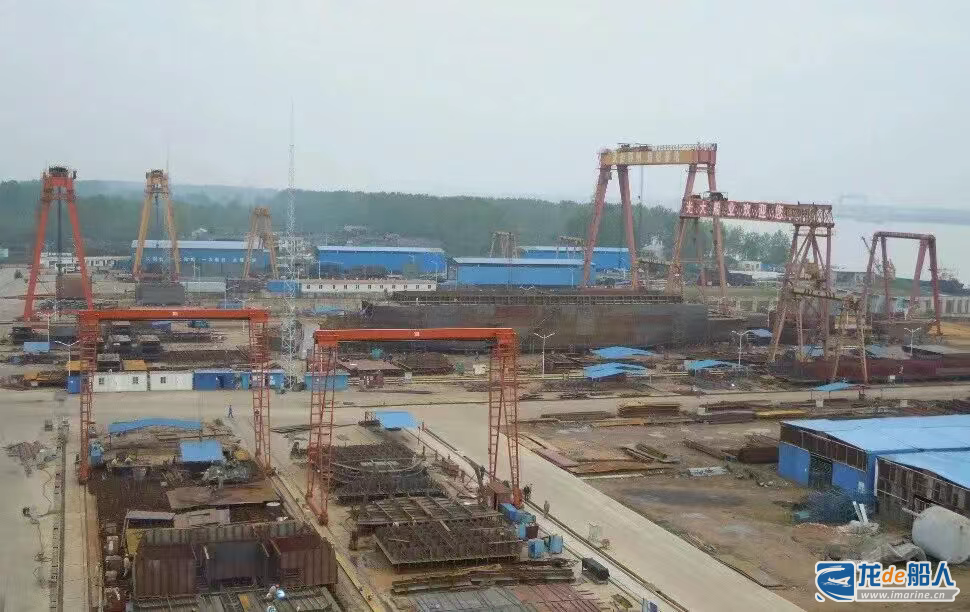
Records indicate that Everbright Shipbuilding was established on November 29, 2006, with a registered capital of 80.8 million yuan. Its origins trace back to the Ezhou Shipyard established in 1959, which served as a designated collaborative manufacturer for the former Ministry of Communications and China State Shipbuilding Corporation. By 2008, it had risen to become one of Hubei Province’s top ten shipbuilding enterprises, establishing itself as a benchmark for the shipbuilding industry in Ezhou and Hubei Province. As a long-established shipbuilder holding Class II Level I shipbuilding qualifications from the State Commission of Science, Technology and Industry for National Defense, Everbright Shipbuilding possesses the capability to construct various vessels under 35,000 tons.
However, beset by multiple factors including market fluctuations, internal mismanagement and long-standing historical issues, Everbright Shipbuilding suffered a capital chain rupture and was mired in a debt crisis of nearly 400 million yuan. Its assets and equipment were seized in multiple rounds, and its core shipyard fell into idleness and paralysis. In 2017, after an unsuccessful attempt to introduce strategic investors for self-rescue, Everbright Shipbuilding completely suspended its operations, declining from a once-celebrated “star enterprise” to a nearly bankrupt “zombie enterprise”.
After a six-year suspension of production, on October 10, 2023, Wuhan Lante Automation System Engineering Co., Ltd. and Wuhan Gaoren Welding Materials Co., Ltd. (collectively referred to as the creditors) filed an application for bankruptcy liquidation against Everbright Shipbuilding with the Intermediate People’s Court of Ezhou City, Hubei Province (Ezhou Intermediate People’s Court), on the grounds that Everbright Shipbuilding was unable to pay off its mature debts and clearly lacked solvency. On November 9, Ezhou Intermediate People’s Court ruled to accept the bankruptcy liquidation case of Everbright Shipbuilding and appointed Beijing Guantao Zhongmao (Xiamen) Law Firm as the case administrator.
On March 29, 2024, the proposal on Whether to Convert the Bankruptcy Liquidation Case of Everbright Shipbuilding into Bankruptcy Reorganization Procedure was voted through during the first creditors’ meeting. Subsequently, the case administrator submitted the Draft Reorganization Plan of Everbright Shipbuilding to Ezhou Intermediate People’s Court. On December 17, Everbright Shipbuilding filed an application for reorganization with Ezhou Intermediate People’s Court on the grounds that it met the conditions for reorganization. On December 24, Ezhou Intermediate People’s Court confirmed that Everbright Shipbuilding had reorganization value and feasibility, and ruled that the reorganization procedure should be formally initiated as of December 24, 2024.
On February 19, 2025, the third creditors’ meeting approved the draft restructuring plan for Everbright Shipbuilding through a group vote. On February 24, the Ezhou Intermediate People’s Court ruled to approve the restructuring plan and terminate the restructuring proceedings for Everbright Shipbuilding.
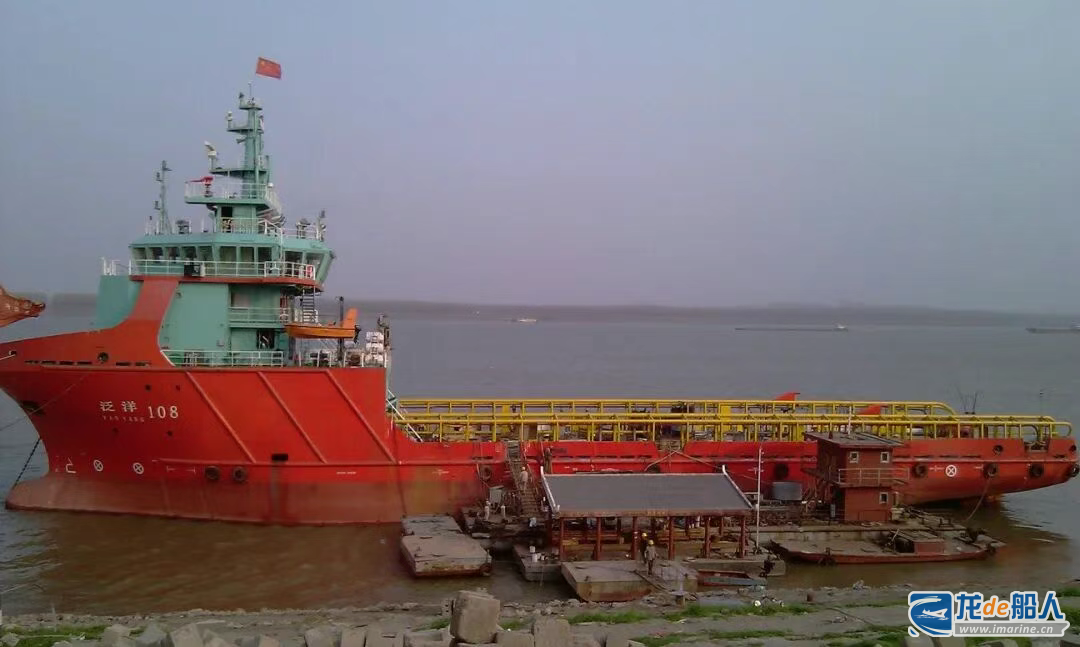
It is understood that Everbright Shipbuilding possesses scarce shoreline resources, shipbuilding facilities such as slipways and gantry cranes, and has the capability to repair and construct small and medium-sized vessels. Preserving high-quality production capacity to the greatest extent possible, maintaining the stability of the industrial chain, and revitalizing scarce resources are key priorities during the restructuring of Everbright Shipbuilding by the Ezhou Intermediate People’s Court.
In terms of revitalizing scarce resources, Ezhou Intermediate People’s Court adopted a dual-track advancement model of “setting aside disputes and prioritizing asset revitalization”. To address the challenge where disputes over the ownership of core assets had deterred potential investors, the court introduced a mechanism of “priority tenancy rights under equal conditions”, guiding Ligong Shipbuilding to take the lead in entering the premises and resuming production on the premise of setting aside disputes. This model enabled the parallel progress of two tracks: “litigation-based resolution of asset disputes” and “synchronized resumption of production and operations”. It not only generated rental income of RMB 5.9 million in the first year, but also activated the long-idle 766-meter Yangtze River coastline resources.
It is also worth noting that following the signing of the restructuring agreement and the disbursement of the first tranche of funds, the 3.687 million yuan in wages owed to 80 employees of Everbright Shipbuilding for eight years was fully paid. This effectively mitigated potential mass incidents and ensured social stability.
With the resolution of the “five major challenges” – namely “difficulty in asset disposal”, “difficulty in debt resolution”, “difficulty in internal coordination”, “difficulty in resuming production and operations”, and “difficulty in asset protection” – Everbright Shipbuilding is no longer the once moribund “zombie enterprise”. Today, it is sailing back into the blue ocean of the market, with welding sparks flying and machines roaring across its premises.