


A worker at Hanwha Ocean’s Geoje Shipyard died during a night shift break, prompting the shipbuilder to issue a major disaster notice. Concerns have resurfaced that safety risks at the shipyard remain unresolved.
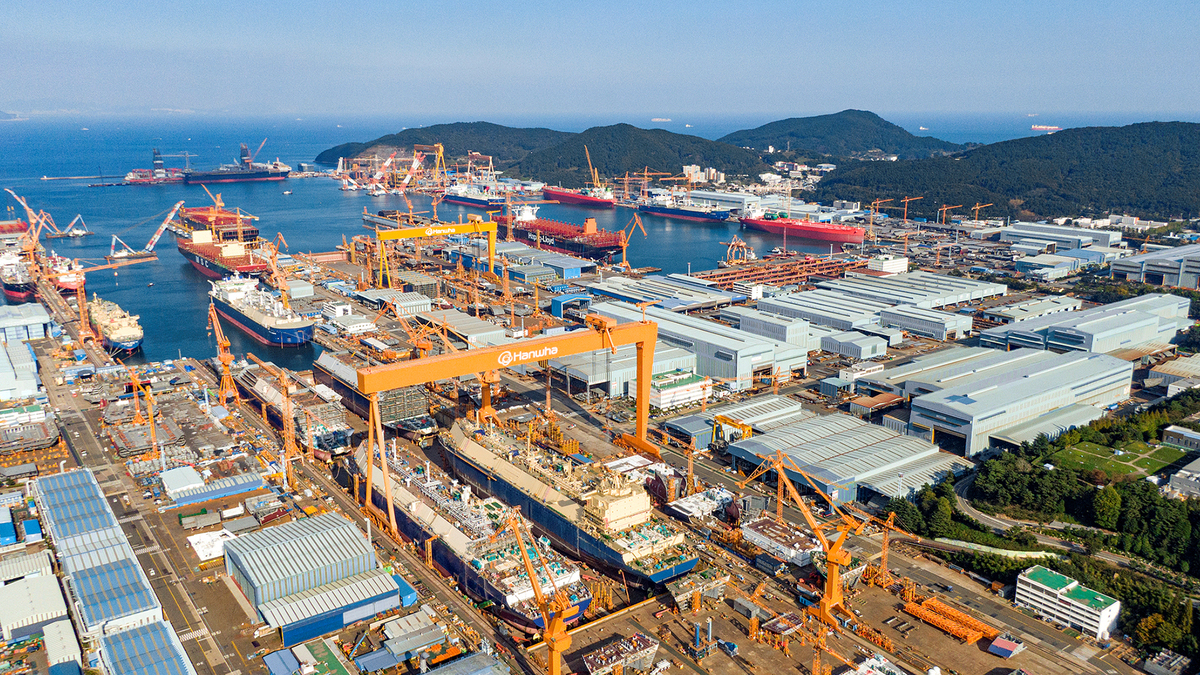
According to a report from the Geoje Police Station in Gyeongsangnam-do, South Korea, on January 8th, a man identified as A (in his 50s) was found unconscious in a rest area of the intermediate assembly plant at the Hanwha Ocean Geoje shipyard at approximately 4:35 AM that day.
During the incident, individual A was working the night shift performing welding work and was taking a scheduled break in the rest area, but did not return to his workstation after the break.
After discovering that Mr. A had lost consciousness, his colleagues immediately performed CPR. Hanwha Ocean’s internal fire brigade also rushed to the scene, but Mr. A died en route to the hospital. As the cause of Mr. A’s death remains unclear, local police stated, “An autopsy will be conducted on January 9 to determine the specific cause of death.”
The Ministry of Employment and Labor (MOEL) stated: “The on-site investigation has concluded, and preliminary findings indicate that the fatal incident was not caused by external impact.” It emphasized that “a decision on whether to launch an investigation into potential violations will be made after the autopsy results are confirmed.”
In the past two years, a series of fatal accidents have occurred at Hanwha Ocean’s Geoje shipyard. According to incomplete statistics, in 2024, one contract worker died when a grinding machine exploded during rudder polishing work, and another contract worker drowned while diving to remove foreign objects from a ship’s hull; in 2025, one worker died in a traffic accident on his way to work, a Brazilian shipowner’s supervisor died after falling into the sea due to a structural collapse during work at the shipyard, and another contract worker was killed when struck by a collapsing component during the assembly of system scaffolding.
Due to frequent accidents, Hanwha Ocean announced a massive safety investment plan, aiming to invest approximately 2 trillion won (about $1.371 billion) by 2026 to upgrade outdated shipyard equipment, establish smart safety systems, enhance safety training, and allocate a separate budget for the Chief Safety Officer. Ironically, however, major accidents and fatalities at Hanwha Ocean’s Geoje Shipyard have not ceased.
The shipbuilding industry is inherently a high-risk sector. According to data from the MOEL and the Korea Occupational Safety and Health Agency, the number of industrial accidents in the South Korean shipbuilding and repair industry increased from over 2,400 in 2020 to over 3,700 in 2023. During the same period, the number of deaths due to accidents or illnesses remained consistently around 10 per year, but this number surged to over 20 in 2024.
According to data from the South Korean National Statistical Office website, the accident rate in the shipbuilding industry in 2023 was 2.95%, and the number of deaths per 10,000 employed workers (mortality rate) was 4.01. Both indicators were the highest among all manufacturing industries, thus confirming that the accident rate and fatality rate in the shipbuilding industry are higher than in other manufacturing sectors.
In relevant statistical data, Hanwha Ocean stands out particularly. Based on 2024 figures, it ranks highest among South Korea’s three major shipbuilders in terms of workplace injury rates, the number of labor loss accidents, and the number of fatal accidents. It is classified as a workplace with relatively high accident risk.
In contrast to the continuous string of accidents, the shipbuilding industry is once again becoming a core industry amidst the restructuring wave in the global shipping and energy markets, with the order books of South Korea’s three major shipbuilding companies already filled for at least the next three years.
Although orders remain strong, frequent major accidents at shipyards will inevitably lead to increased safety costs, operational disruptions, and reputational damage, ultimately reducing the competitiveness of orders. If a company’s large-scale safety investment plan fails to translate into a reduction in actual accidents and an improvement in safety indicators, its stock price and enterprise value will remain under pressure, failing to reflect its true value.